


 2
2
Following a short-term recovery above $64,000, Bitcoin ($BTC) rapidly reversed and plummeted toward $62,000 in the night between July 7 and 8, leading one popular cryptocurrency analyst to warn that $56,550 might be its next target.
Specifically, in a Wednesday X post, Ali Martinez explained that $BTC was rejected after reaching the top of the channel at $63,600 and that it now faces a potential drop toward $59,700.
The ultimate target of the downside, the on-chain expert added, could be as low as $56,550, considering that the price represents the bottom of the channel.
Bitcoin $BTC is getting rejected at the top of its channel.
— Ali Charts (@alicharts) July 8, 2026
This could trigger a pullback toward $59,700, with $56,550 as the next downside target. pic.twitter.com/GvI9fMFQbD
How a reversal in Iran negotiations triggered a Bitcoin price crash
Meanwhile, Bitcoin’s latest downward move appears directly linked to the July 7 escalation in the Middle East.
Specifically, Iran fired at several commercial vessels attempting to cross the Strait of Hormuz using a southern corridor close to the coast of Oman without receiving authorization from the country’s military.
In response, the U.S. carried out a wave of aerial attacks against the Islamic Republic with an explicitly punitive goal. The escalation was made worse by President Donald Trump declaring that the ceasefire was over on the morning of July 8, though the gravity of the remarks remains somewhat in question.
Nonetheless, the sequence of events led to a selloff extending beyond Bitcoin and the cryptocurrency market, with most equities appearing poised to begin trading on Wednesday in the red, and with oil prices seeing a sudden jump after spending days on a downtrend.
Why Bitcoin will likely remain in a downtrend
Elsewhere, $BTC’s most recent crash cannot be attributed solely to geopolitical factors. The world’s premier cryptocurrency reversed already on July 6 after temporarily approaching $64,500 and then, one day later, only briefly held a lower high near $64,000.
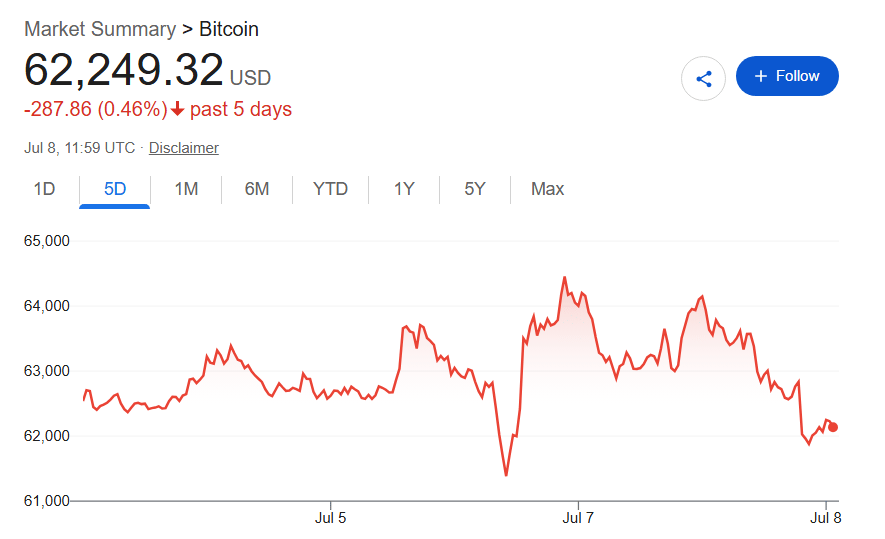
By press time on July 8, it would appear that the driving forces behind the continued long-term downtrend remain underwhelming institutional demand and negligible, if positive, exchange-traded fund (ETF) flows.
Lastly, Michael Saylor may have also contributed to the deteriorating sentiment by selling more than $200 million worth of $BTC earlier in the week in stark contrast to Strategy’s (NASDAQ: MSTR) image as a ‘diamond hands’ perpetual buyer.
Featured image via Shutterstock

 coinpedia.org

 u.today
 coinedition.com