


 1
1
The 2026 market appears to be different from previous years. This, because the behavior of long-term Bitcoin [$BTC] holders (LTHs) has been significantly different from that of the 2024 ETF-driven rally.
Back then, a lot of them took advantage of the spike in demand and rising prices to profit and sell their coins. However, with the price of Bitcoin falling, these same holders are now buying instead of selling.
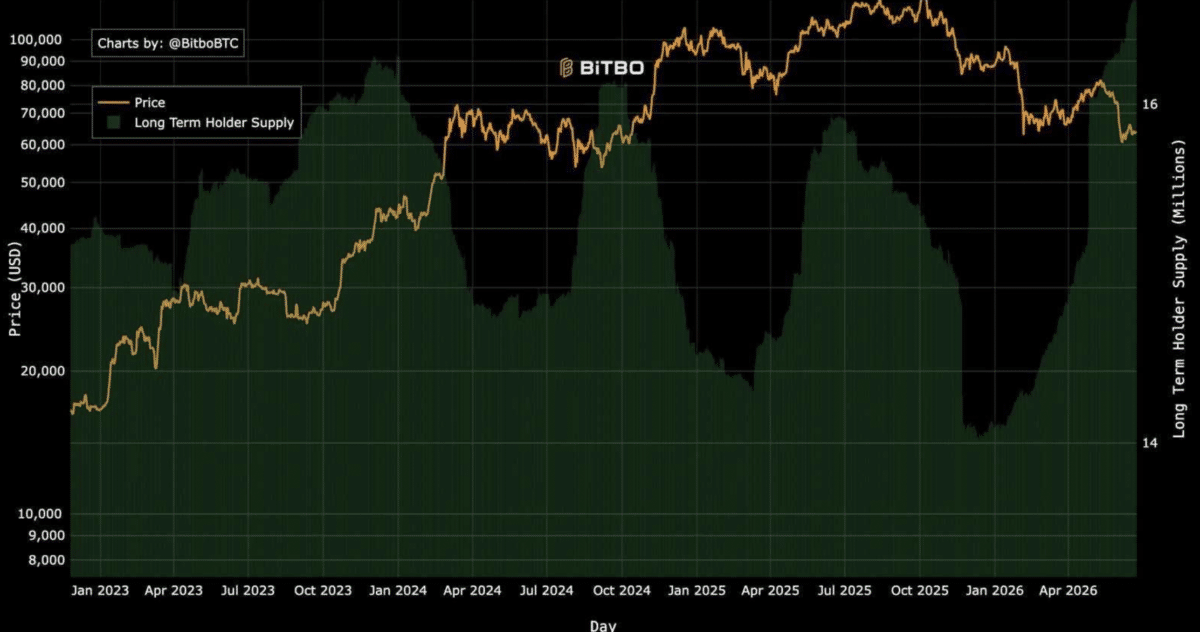
2026: A different year for long-term $BTC holders
The fact that a record 83% of Bitcoin’s supply is currently held by long-term holders suggests that more Bitcoin is entering solid hands with little chance of being sold.
Interestingly, this type of accumulation during price weakness has historically been seen as a bullish signal. This is because it lowers the quantity of Bitcoin available on the market and could lead to a supply squeeze if demand increases.
Analyst compares Bitcoin to gold
Adam Livingston, however, recently contended that a $200,000 Bitcoin is not as unrealistic as many people think. According to him, Bitcoin would only require an additional $2.75 trillion in market capitalization to climb from $63,000 to $200,000. Gold, for its part, added about $12 trillion in value during a time of demand for safe haven investments in 2025.
His idea is that Bitcoin’s fixed 21 million supply and smaller market size may make such a price target attainable if it can seize even a small portion of the money moving into gold.
At the same time, Livingston also believes that everything depends on investors’ growing perception of Bitcoin as a digital substitute for gold.
Supporters back Bitcoin
Echoing somewhat similar sentiments, Bitcoin Therapist pointed out,
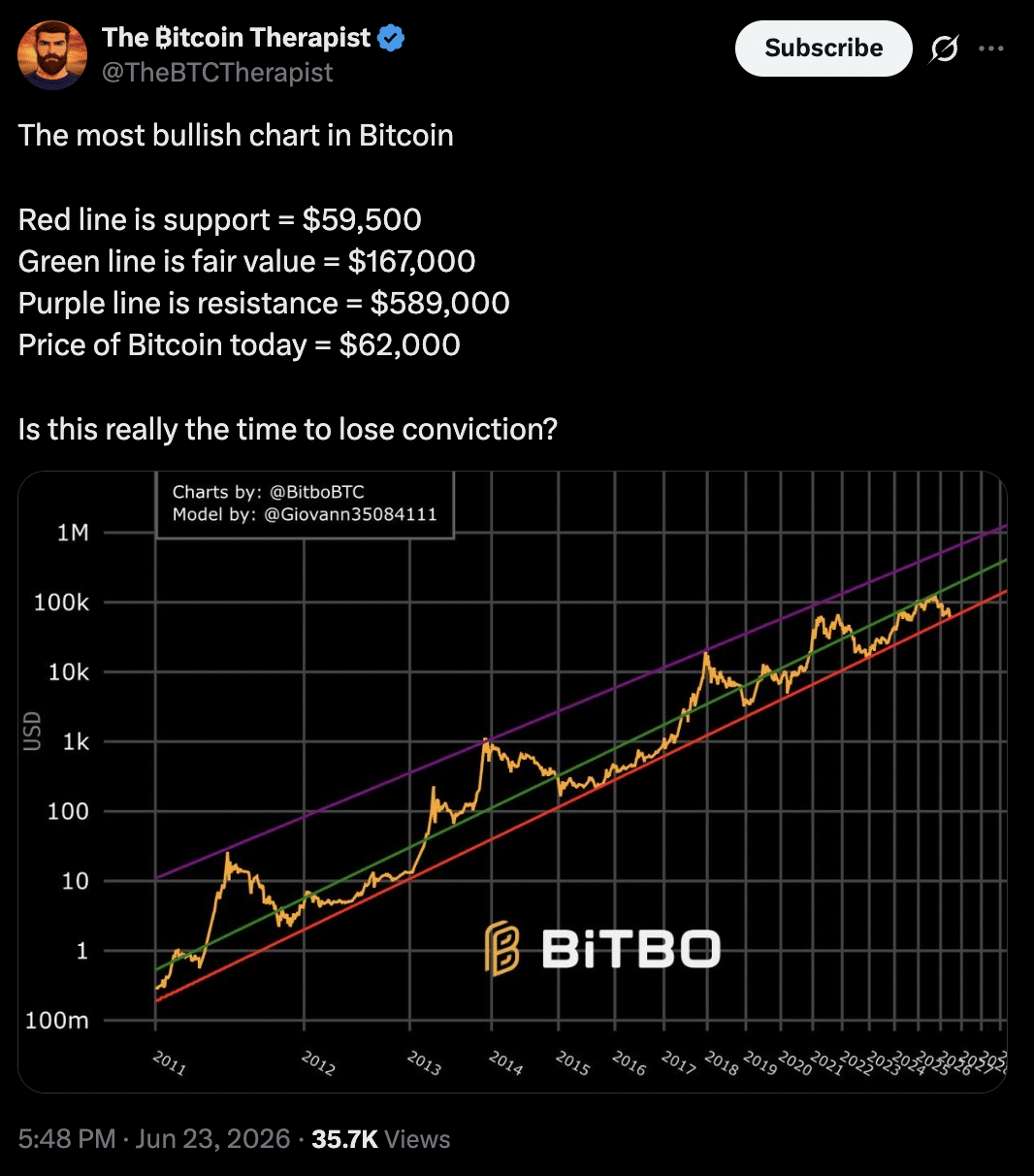
With the help of this, the analyst indicated that Bitcoin may be trading close to a modelled support level of $59,500, with long-term resistance at $589,000. Its estimated fair value seemed to be $167,000.
According to the bullish view, Bitcoin is more likely to be near the bottom of its historical valuation range than the top. This suggested that the ongoing decline could be an opportunity for accumulation, rather than a cause for alarm.
On-chain metrics suggests otherwise
Meanwhile, Bitcoin’s 90-day Futures Taker CVD became neutral in June 2026 following almost five months of buyer-dominated Futures activity.
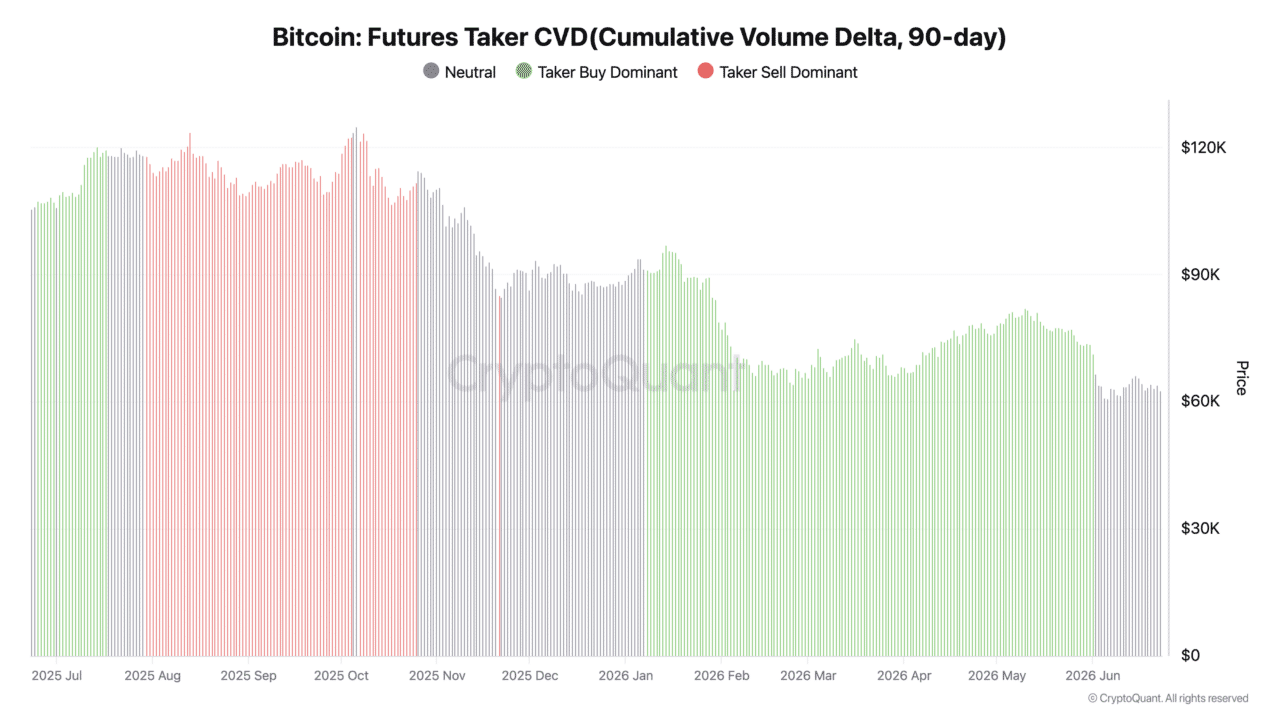
The change implies that traders may be entering a consolidation phase rather than actively pushing prices higher. This could be evidence that aggressive accumulation has slowed down.
Interestingly, the lack of seller-dominated bars also suggested that broad-based selling pressure might not have supplanted bullish conviction yet.
It further coincided with Bitcoin seeing $169.28 million in liquidations during that time, wherein long liquidations comprised the majority. In fact, a total of $612.04 million has been liquidated across the market, of which $548.72 million were bullish wagers.
Final Summary
- 83% of Bitcoin’s supply is currently held by long-term holders.
- The Futures Taker CVD chart indicated that selling pressure has not yet replaced bullish conviction.

 en.bitcoinsistemi.com
 coinedition.com
 protos.com