


 1
1
Breaking down Tron, the settlement rail for stablecoins
by Josh Olszewicz, portfolio manager and head of trading, Canary Capital
The Tron
Launched in 2018, Tron began as an ERC-20 token on Ethereum before migrating to its own independent blockchain. Its founding vision centered on decentralizing content distribution; over time, however, the network's primary use case shifted substantially. Today, Tron is best understood as global payment infrastructure, one that has become particularly attractive in emerging markets where low transaction costs and fast settlement matter more than cutting-edge programmability.
Tron uses a delegated proof-of-stake (DPoS) consensus mechanism. Under this system, $TRX holders stake their tokens to gain voting power and use that power to elect 27 Super Representatives, the validators responsible for producing blocks and maintaining the network. Because block production is concentrated among a limited, elected set of validators rather than distributed across a broad network of participants, Tron can achieve fast confirmation times and low computational overhead.
Stablecoins and the payments use case
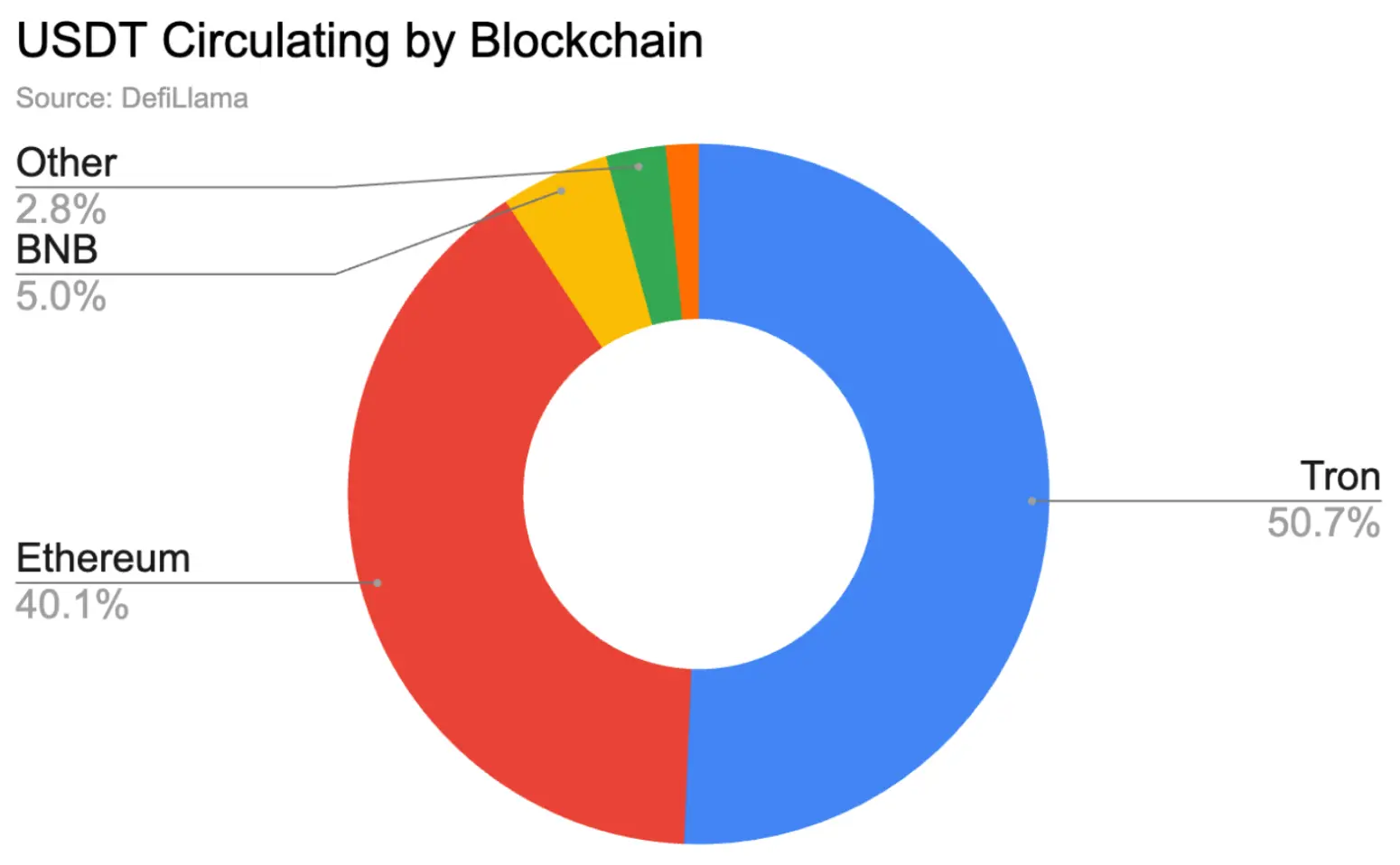
The single most important development in Tron's evolution has been its emergence as the leading settlement network for stablecoins. A substantial share of global $USDT circulation now resides on Tron, and this characteristic separates Tron from many of its layer-1 peers: rather than competing primarily on DeFi innovation or consumer applications, Tron has positioned itself as digital payment rails for dollars.
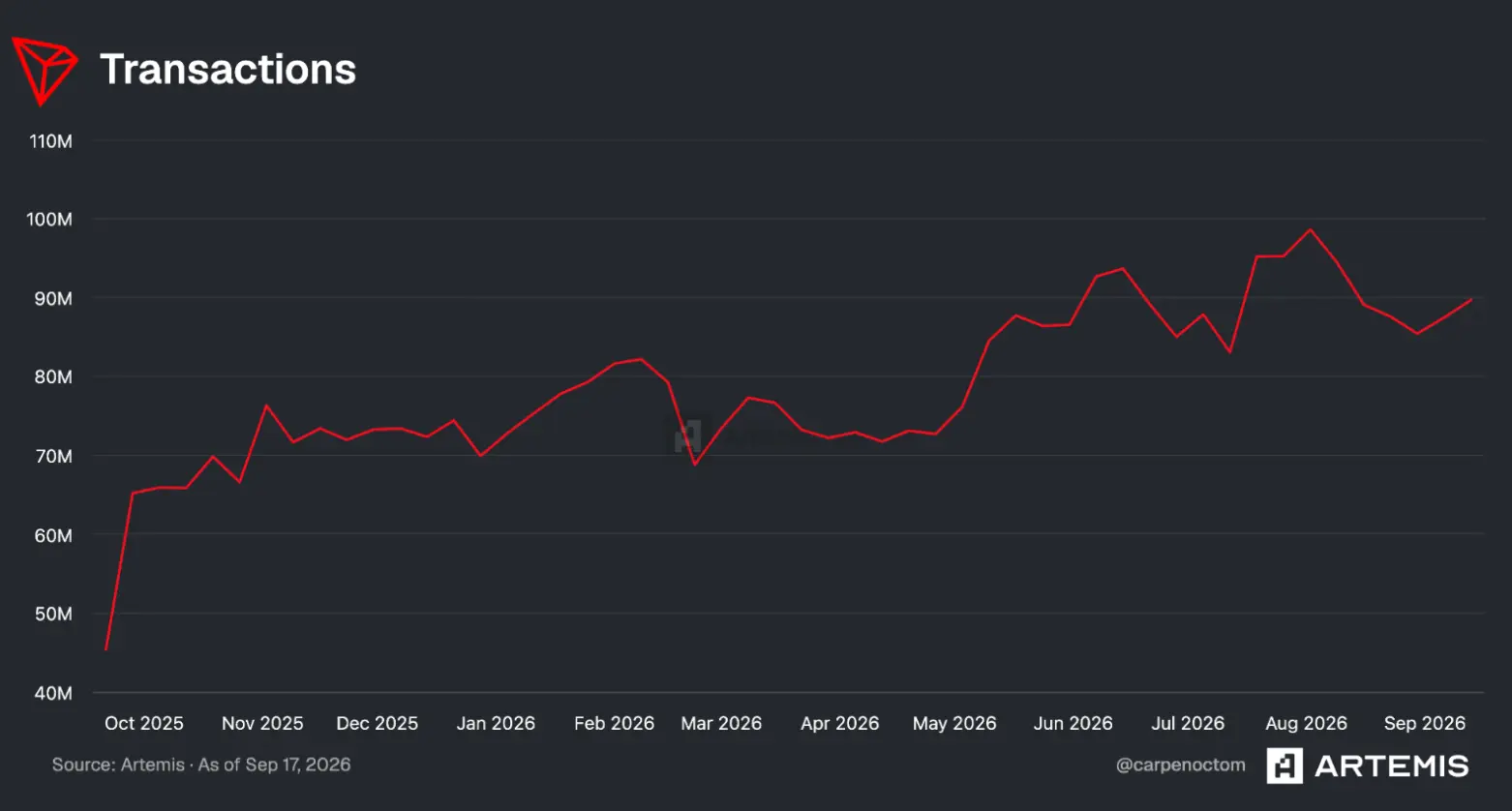
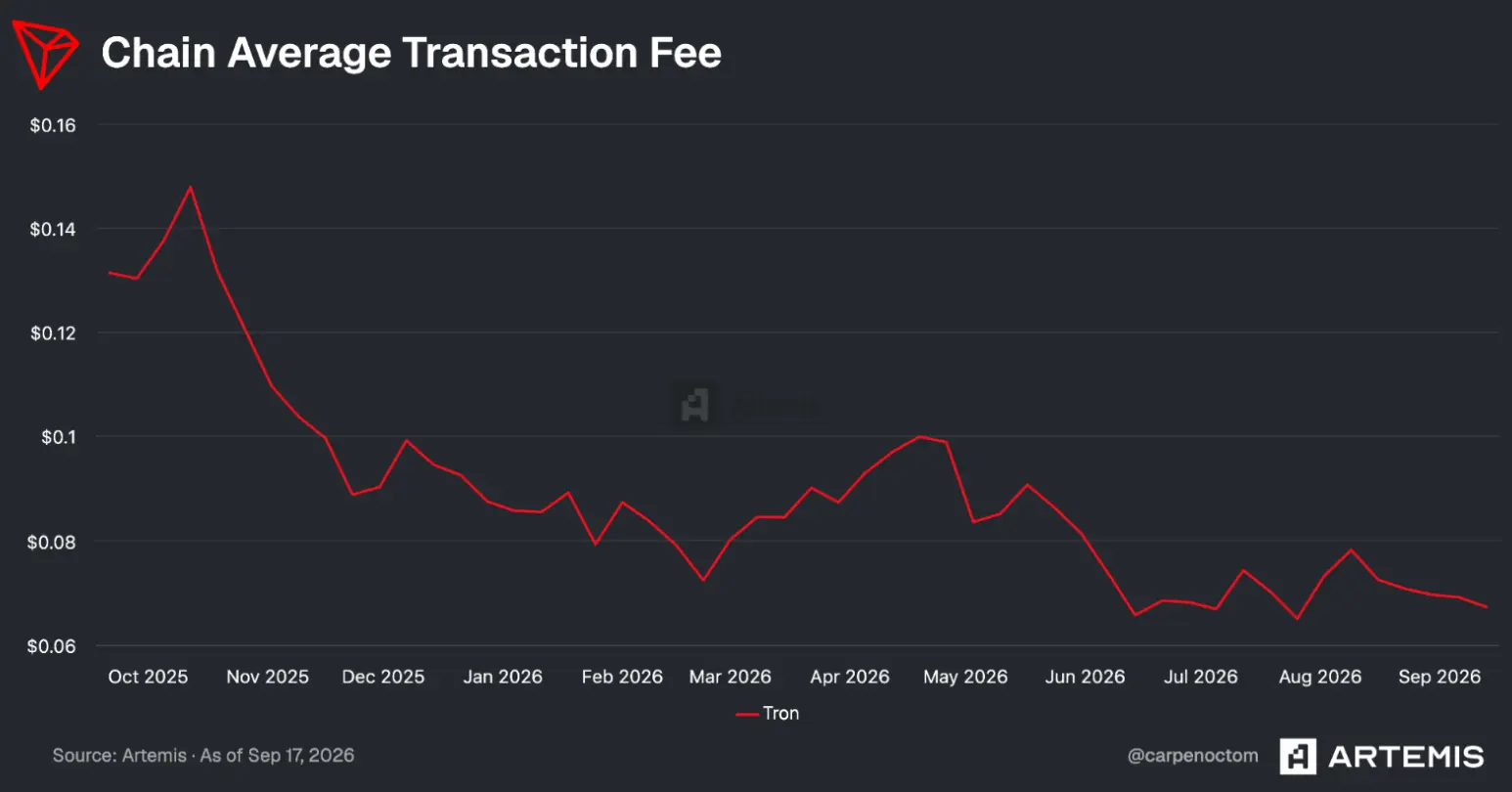
That positioning shows up clearly in the network's usage data. According to Tron’s blockchain explorer, weekly transaction counts on Tron have climbed to record highs, recently approaching 100 million transactions per week, even as the average onchain transaction fee has fallen to around seven cents, a multiyear low.
Weekly active addresses, a measure of unique wallets transacting on the network over a seven-day period, have also been climbing toward record levels, reflecting broad and sustained usage rather than a narrow base of activity. Stablecoin transfer volume on Tron has grown alongside this activity, recently running at roughly $150 billion to $190 billion per week.
Chart of the Week
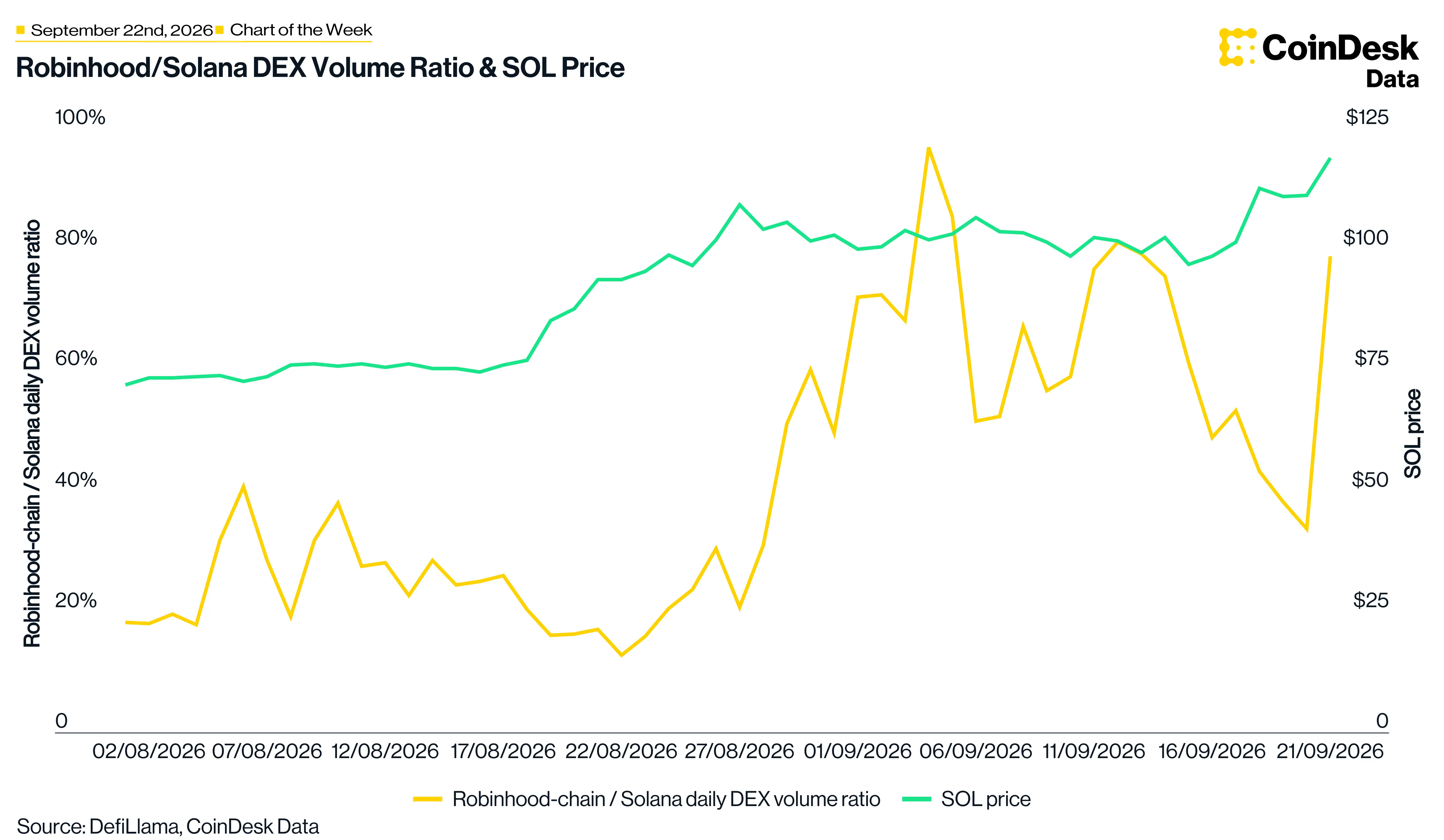
Robinhood-chain's DEX volume surge against Solana cools off, even as $SOL keeps climbing
The Robinhood-chain/Solana daily DEX volume ratio surged from 18% to a peak of 97% on Sept. 4, then contracted to 34% by Sept. 20, with a 79% spike on Sept. 21. $SOL price climbed steadily throughout, up 65% overall and 17% since the ratio's peak, showing the pullback in relative volume wasn't a $SOL price effect.
Looking for more? Receive the latest crypto news from coindesk.com and market updates from coindesk.com/institutions.

-
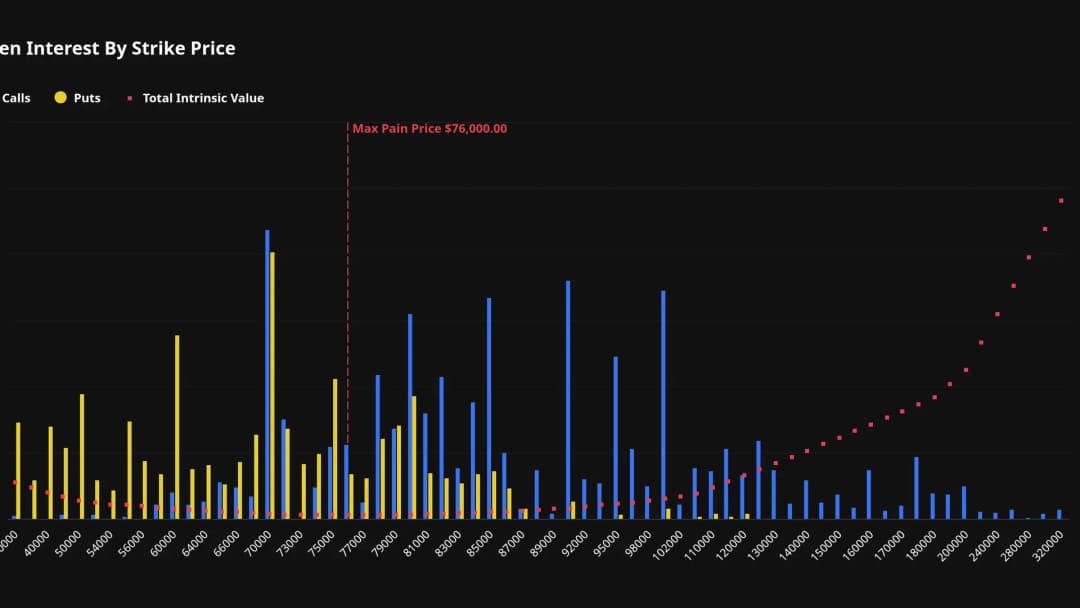
1Bitcoin's $16 billion quarterly options settlement arrives with a 'call-heavy' book
-
2MoonPay to acquire SEC-registered North Capital in $60 million all-stock deal
-
3Live updates: Bitcoin slips as higher rates and dollar pressure markets
-
4The S&P 500 has a 'breadth' problem. Crypto doesn’t.
-
5Bitcoin consolidates near $86,000 as rally narrows and Brent slips below $100
-
6BitMEX shuts down: perpetuals pioneer officially closes it doors after 11 years
-
7FTX, Alameda-linked wallets send $75 million in ether to Wintermute, onchain data shows
-
8AI agents will soon buy their own computing power and data using stablecoins, according to BlackRock
-
9Coinbase users can now borrow USDC against bitcoin at a fixed rate
-
10XRP Ledger retries upgrade that lets banks split payment and compliance duties

The Definitive Stablecoin Landscape Series: Asia Pacific
The Definitive Stablecoin Landscape Series: Asia Pacific
As stablecoins move into regulated finance, APAC is becoming a key proving ground. This report maps the region’s rules, use cases, and $RLUSD’s role.
As stablecoins move into regulated finance, APAC is becoming a key proving ground. This report maps the region’s rules, use cases, and $RLUSD’s role.
Why it matters:
As stablecoins move into regulated finance, APAC is becoming a key proving ground. This report maps the region’s rules, use cases, and $RLUSD’s role.

Crypto for Advisors: The case for diversifying beyond bitcoin and ether

Crypto Long & Short: Six signs a crypto winter is ending

Crypto for Advisors: Hyperliquid and the future of finance
Bitcoin's $16 billion quarterly options settlement arrives with a 'call-heavy' book

MoonPay to acquire SEC-registered North Capital in $60 million all-stock deal

 cryptonews.net
 en.bitcoinsistemi.com
 u.today


 thecryptobasic.com
