

 3
3
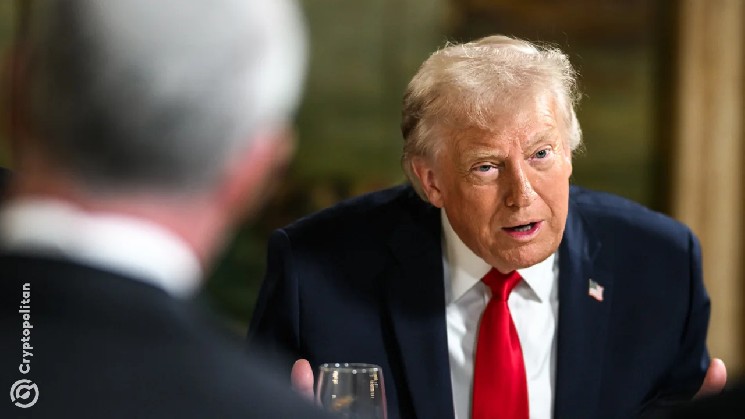
President Donald Trump signed a memo on August 12 that gave a green light to vetted US companies to hack foreign criminal networks.
That includes the crypto scam operations that fleeced Americans out of billions last year. The leash is held by federal agencies.
Vetted companies get an offensive role
The memorandum directs the work to go through the National Coordination Center, which is part of the Homeland Security Task Force.
The Center must create a program for approved firms, the memo’s “Participating Companies,” to carry out what it terms Cyber Surveillance Operations and Cyber Effects Operations against foreign Cyber-Enabled Transnational Criminal Organizations.
The attorney general and the homeland security secretary will lead the effort. Companies must enter into contracts with the Justice Department or DHS, undergo vetting, and work only as directed by the government.
The targets are foreign criminal groups, not foreign governments. Any operation involving a US person brings additional legal scrutiny, including from the Justice Department.
The White House cites a fair amount of damage as crypto-flavored. The fact sheet says American consumers reported more than $20.8 billion in losses to cyber-enabled crime in 2025. It includes financial fraud, sextortion, and impersonation schemes organized by groups based outside the country.
The FBI’s 2025 Internet Crime Report, as reported by Cryptopolitan, recorded over $11.3 billion related to 181,565 cryptocurrency complaints, with a 21% increase in filings from the previous year.
Many of those cases follow the “pig butchering” script, with scammers building fake trust for months before steering victims into fake crypto platforms.
An FBI-led operation with UAE, Thai, and Chinese authorities this year resulted in 276 arrests, nine scam centers shut down, and more than $701 million in crypto restrained.
The Treasury’s Scam Center Strike Force has seized more than $700 million in crypto tied to Chinese organized crime operating through middlemen in Southeast Asia.
Former officials split over the ‘cyber privateers’
The new entrants are called “cyber privateers.” Cynthia Kaiser, a former senior FBI cyber official, said outside help could free up agencies like the FBI and Cyber Command to focus on nation-state threats like China.
Chinese state-backed hackers outnumber FBI cyber personnel 50 to 1, former FBI director Christopher Wray has said.
Andrew Schoka, who worked at US Cyber Command, warned that the real danger is “a bunch of cyber privateers running around without any clear coordination or direction at the federal level.”
Chris Wysopal, co-founder of Veracode, raised the possibility of something going wrong overseas, such as a strike on a foreign data center that accidentally hits a hospital. He said employees traveling overseas could be treated as targets for detention.
A second former Cyber Command official, Jason Kikta, said the memo leaves civil liberties oversight thin. “There is no clear oversight or review process on the determinations that will be made by unnamed political appointees,” he said, adding that the order “pushes liability on to the companies.”

 en.cryptonomist.ch
 u.today
 bitcoinworld.co.in