


 2
2
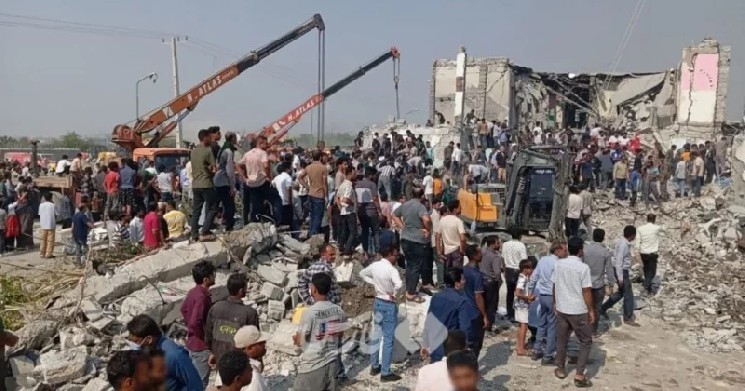
A US missile struck a sports hall in Lamerd, a city in Iran’s Fars province, killing at least 21 people, including four children and members of a women’s volleyball team. Iran’s Foreign Ministry says the final death toll may reach 24, with approximately 100 people injured.
The attack occurred on February 28, 2026, the same day the US launched Operation Epic Fury, a broader military campaign targeting sites across Iran. It also coincided with a separate US Tomahawk strike on a school in Minab, Iran, making the Lamerd strike one of at least two incidents involving civilian infrastructure on the operation’s opening day.
What hit the sports hall
Iran’s Foreign Ministry identified the weapon as a Precision Strike Missile, or PrSM, a short-range ballistic missile manufactured by Lockheed Martin. The PrSM is one of the US Army’s newer munitions, designed to replace the aging ATACMS system with greater range and accuracy.
Independent munitions experts and news organizations that reviewed video evidence and blast patterns from the scene have supported Iran’s identification of the weapon. The forensic indicators, according to those analyses, are consistent with PrSM characteristics rather than Iranian-made ordnance.
US Central Command offered a starkly different account. CENTCOM denied responsibility for the strike entirely, claiming the explosion resulted from an Iranian missile misfire. The US military pointed to what it described as characteristics consistent with Iranian missile systems, though it did not provide detailed evidence to support that assertion publicly.
The target and the victims
The sports hall was hosting a women’s volleyball team at the time of the strike. Among the dead were four children and teenage players. The venue was a civilian facility, not a military installation, which makes the strike particularly significant under international humanitarian law.
Approximately 100 additional people were injured. The Minab school strike on the same day adds another layer. Two civilian sites hit within hours of each other, on the first day of a major military operation, creates a pattern that will be scrutinized heavily by international observers, human rights organizations, and legal bodies.
Geopolitical fallout and market implications
For traditional markets, defense stocks may see increased attention as the scope and intensity of US operations in Iran become clearer. Lockheed Martin, the manufacturer of the PrSM, sits at the center of that conversation whether the attribution is confirmed or not.
Energy markets are the more immediate concern. Any sustained military operation targeting Iranian territory puts oil supply chains at risk. Iran remains a significant crude producer, and disruption to its output or export infrastructure would ripple through global energy prices quickly.
Continued instability in the region could drive investors toward safer assets, potentially influencing the demand for cryptocurrencies as alternative stores of value amid crises.

 crypto.news
