
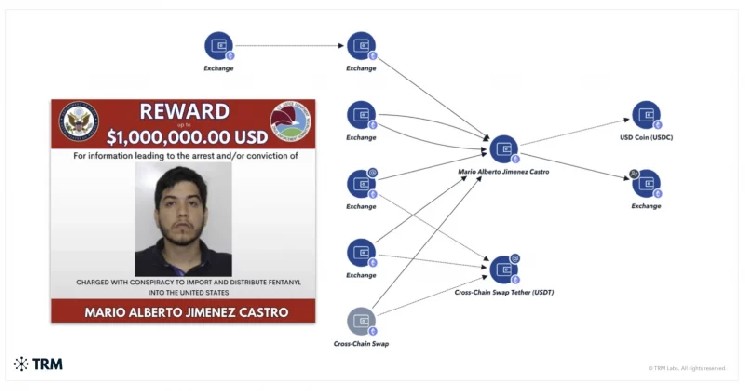

The US Treasury just put a money laundering network on blast for converting fentanyl street profits into cryptocurrency and wiring the proceeds south of the border. On May 20, the Office of Foreign Assets Control (OFAC) designated 11 individuals and two Mexican companies as part of a Sinaloa Cartel-linked operation, adding six Ethereum addresses to the Specially Designated Nationals (SDN) list in the process.
For crypto exchanges and DeFi platforms operating in or serving the US market, those six wallet addresses are now radioactive. Any entity that processes transactions involving them faces strict liability, meaning civil penalties can land even without intent or knowledge.
A restaurant, a security firm, and a cartel walk into a blockchain
The two companies named in the designation are Gorditas Chiwas, described as a restaurant, and Grupo Especial Mamba Negra, a security firm. Both were allegedly used as front operations to launder drug sales proceeds.
The scheme, according to the Treasury’s action, worked like a classic layering operation with a modern twist. Cash from fentanyl sales in the US was converted into cryptocurrency, which was then transferred to Mexico. Think of it as the cartel version of a remittance service, except the “remittance” is drug money routed through Ethereum wallets instead of Western Union.
In English: dirty dollars went in one side, and cleaner-looking crypto came out the other, landing in accounts tied to cartel-affiliated entities across the border.
The designation of specific Ethereum addresses is the part that matters most to the crypto industry. Once an address hits the SDN list, every US person and entity is legally prohibited from transacting with it. That obligation doesn’t come with a grace period or a good-faith defense. Strict liability means if your platform routes a transaction through one of those wallets, you own the consequences.
Part of a much larger campaign
This action isn’t a one-off. The Treasury has sanctioned over 600 individuals and entities connected to the Sinaloa Cartel since 2024, reflecting a sustained, escalating campaign to choke off the financial infrastructure supporting fentanyl trafficking.
The focus on crypto-specific infrastructure marks a notable evolution in how OFAC approaches cartel finance. Traditional sanctions targeted bank accounts, real estate, and shell corporations. Now, blockchain addresses sit right alongside those legacy financial tools on the same blacklist. The message is clear: the Treasury views crypto not as a peripheral concern but as a core component of modern drug money laundering.
This isn’t the first time OFAC has put blockchain addresses on the SDN list. The agency has previously targeted North Korean hacking operations, Russian ransomware groups, and other narcotics networks using the same approach. But the steady accumulation of cartel-linked designations suggests the fentanyl crisis has become a primary driver of crypto-focused enforcement actions.
The Sinaloa Cartel, one of the most powerful drug trafficking organizations in the world, has long been a target of US law enforcement. Its operations span the production and distribution of fentanyl, methamphetamine, and other narcotics. The cartel’s adoption of cryptocurrency for money laundering reflects a broader trend among organized crime groups seeking to exploit the speed, pseudonymity, and cross-border nature of digital assets.
What this means for crypto companies and investors
Here’s the thing. Every time OFAC adds Ethereum addresses to the SDN list, the compliance burden on the crypto industry ratchets up another notch. Centralized exchanges already screen against the SDN list as standard practice. But the implications extend further, into DeFi protocols, wallet providers, and even individual users.
For centralized exchanges like Coinbase, Kraken, or Binance’s US arm, the operational impact is relatively straightforward. They update their screening tools, block the designated addresses, and flag any historical interactions for review. It’s a cost of doing business in regulated markets.
DeFi is where things get complicated. Protocols that operate without centralized intermediaries face an awkward question: who exactly is responsible for blocking a sanctioned address when there’s no compliance department? The legal answer, at least under US law, is that the obligation falls on every US person interacting with the protocol. The practical answer is murkier, and regulators have shown little patience for ambiguity.
The Tornado Cash precedent looms large here. OFAC’s 2022 sanctioning of the Ethereum mixing service established that smart contracts themselves can be designated, not just the people behind them. While courts have pushed back on some aspects of that action, the regulatory posture hasn’t softened. If anything, the cartel designations reinforce the Treasury’s willingness to extend sanctions deep into on-chain infrastructure.
For investors, the direct market impact of this particular action is minimal. Six Ethereum addresses getting blacklisted won’t move ETH’s price. But the cumulative effect of repeated enforcement actions shapes the regulatory environment in ways that matter over longer time horizons. Every designation strengthens the case for mandatory compliance tooling, KYC requirements at the protocol level, and potential liability frameworks that could reshape how DeFi operates.
The risk to watch isn’t any single sanctions action. It’s the trajectory. Over 600 Sinaloa Cartel-linked designations in roughly two years, with crypto addresses increasingly woven into the mix, suggests the Treasury is building institutional muscle memory around blockchain-based enforcement. Crypto companies that treat SDN screening as a checkbox exercise rather than a core operational function are playing a dangerous game with strict liability on the other side of the bet.

 en.bitcoinsistemi.com
 1
1


 bitcoinworld.co.in
 coinfomania.com
 decrypt.co