

 3
3
Federal prosecutors secured convictions against 25 defendants in a $215 million business email compromise scheme that affected more than 1,000 victims. Authorities said cryptocurrency was among assets traced in a global fraud network spanning 47 states and 19 countries.
Key Takeaways:
- Authorities detailed a global email fraud scheme using hacked accounts and deceptive payment requests.
- Losses totaled $215 million, routed through shell companies, banks, and cashier’s checks.
- Next steps include sentencing decisions based on each defendant’s role and conduct.
Global Email Fraud Network Reached Thousands Of Victims
The U.S. Department of Justice (DOJ) announced on April 30, 2026, that a long-running business email compromise case had produced convictions against 25 defendants, with cryptocurrency listed among assets connected to the broader financial trail. The U.S. Attorney’s Office for the Northern District of Ohio said the $215 million scheme used hacked email accounts, deceptive payment instructions, and laundering methods to target more than 1,000 victims. The DOJ stated:
“After a four-day trial, a federal jury found two men and a woman guilty of involvement with an international email hacking scheme that defrauded more than 1,000 victims out of approximately $215 million. The scheme spanned 47 states and 19 countries.”
According to prosecutors, Oluwafemi Michael Awoyemi, Aruan Drake, and Peter Reed were found guilty of wire fraud conspiracy after trial in Toledo. Awoyemi and Drake were also convicted on a money laundering conspiracy charge. The case centered on business email compromise, a fraud method that used email access and familiar-looking communications to redirect payments.
Victims ranged from individuals to businesses and organizations across the United States and overseas. After gaining access to email accounts, conspirators reviewed activity, contacts, and business relationships. That information allowed them to tailor payment requests that appeared legitimate. Victims then wired amounts ranging from tens of thousands to millions of dollars. One company sent $2.7 million to a shell company account controlled by a conspiracy member.
Laundering Network Used Checks, Shell Firms, And Crypto
Prosecutors described the laundering network as layered rather than dependent on one route. Methods included fraudulently created bank accounts, cash transfer systems, shell companies, and cashier’s checks. About $50 million was converted into cashier’s checks later presented at New Dolton Currency Exchange, a Chicago-area money service business operated by co-defendant Lon Goodman. Goodman accepted checks from people using false identifications or checks payable to others.
Authorities said he continued processing activity after banks warned that checks were tied to stolen or fraudulent funds. Prosecutors said the operation later shifted toward checks payable to shell companies when earlier methods became riskier. Items seized or subject to forfeiture included:
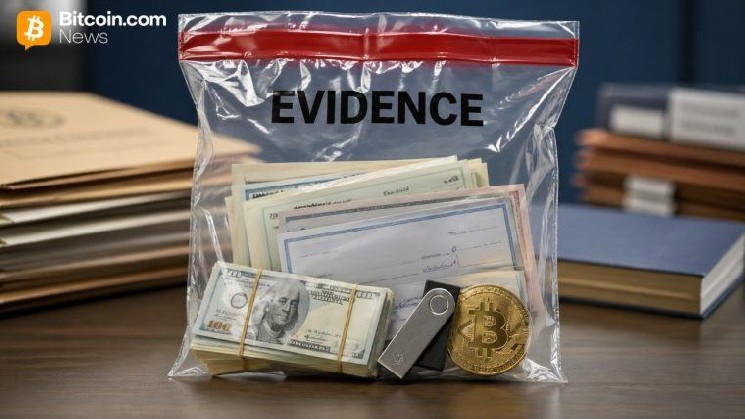
“Nearly $1.2 million worth of cashier’s checks, cryptocurrency, and cash.”
Seized assets also included three luxury watches: a Patek Philippe Nautilus valued at $45,000, an Audemars Piguet Royal Oak valued at $30,000, and a Richard Mille Felipe Massa watch valued at $140,000. Authorities also listed a 4,423-square-foot residence in Lawrenceville, Georgia.
The victim list showed the reach of the case. Ohio locations named by prosecutors included Norwalk, Kent, Akron, Hudson, Maple Heights, Westfield Center, New Riegel, and Greenwich. The case also involved victims in many other states and countries, including Canada, Mexico, Great Britain, Germany, Italy, Kuwait, the United Arab Emirates, Australia, New Zealand, Malaysia, Panama, Bermuda, and Romania. Sentences will be set by the court after reviewing each defendant’s role, record, and offense conduct. The case shows how routine payment workflows can become part of a larger fraud and laundering chain when email access is compromised.

 bitcoinworld.co.in
 beincrypto.com

 cryptopolitan.com
 1
1
