


 6
6
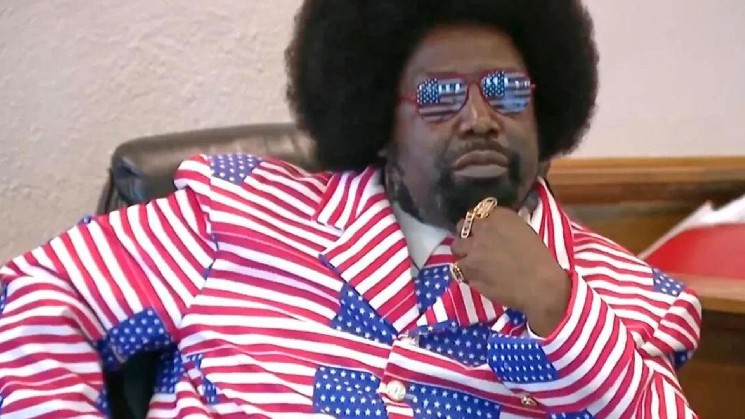
Revolutions leave behind artifacts. In August 2022, seven Adams County sheriff’s deputies in Ohio executed a search warrant on the home of Joseph Foreman — better known to the world as Afroman. They found nothing (save the lemon pound cake), and no charges were filed. What followed was a First Amendment masterclass in an American flag suit.
Using footage from his own home surveillance system, Foreman turned a botched raid into songs, videos, and a public record the Ohio deputies could no longer control. The officers later sued him for defamation, emotional distress, and invasion of privacy, claiming the videos ridiculed them and damaged their reputations. In March 2026, a jury ruled in Afroman’s favor. But by then, the videos and songs had grown exponentially beyond anything a courtroom could contain.
Born Joseph Edgar Foreman in Los Angeles, most people still know him from “Because I Got High” — the 2001 breakout hit that made him a household name. But what happened in Ohio revealed something more enduring beneath the comedy: an instinct for turning humiliation into visibility, and visibility into power. In his own telling, the deputies “brought me material.” What they intended as force became fodder. What could have remained a private violation became songs, satire, and evidence.
What unfolded was not just a legal victory. It was protest art in the modern age — raw, low-budget, absurdist, and deeply American. Wearing the flag while defending free speech. Turning ridicule back on the people who expected silence. Alongside Mear One’s Occupy Wall Street murals and Kolin Burges’ Mt. Gox vigil sign, Afroman’s American flag suit belongs to a lineage of cultural objects created when people refuse to let institutions bury the story. That suit will be on display at Bitcoin Conference 2026 in Las Vegas as part of Relics of a Revolution, an exhibition exploring protest art and asymmetric responses to institutional power.
I sat down with Joseph Foreman to talk about the raid, the songs, the verdict, and what it means to turn injustice into art.
BMAG: You testified that “the whole raid was a mistake” and that “all of this is their fault.” Seven deputies with assault rifles found nothing in your home and filed no charges. What was the first thing you did after they left?
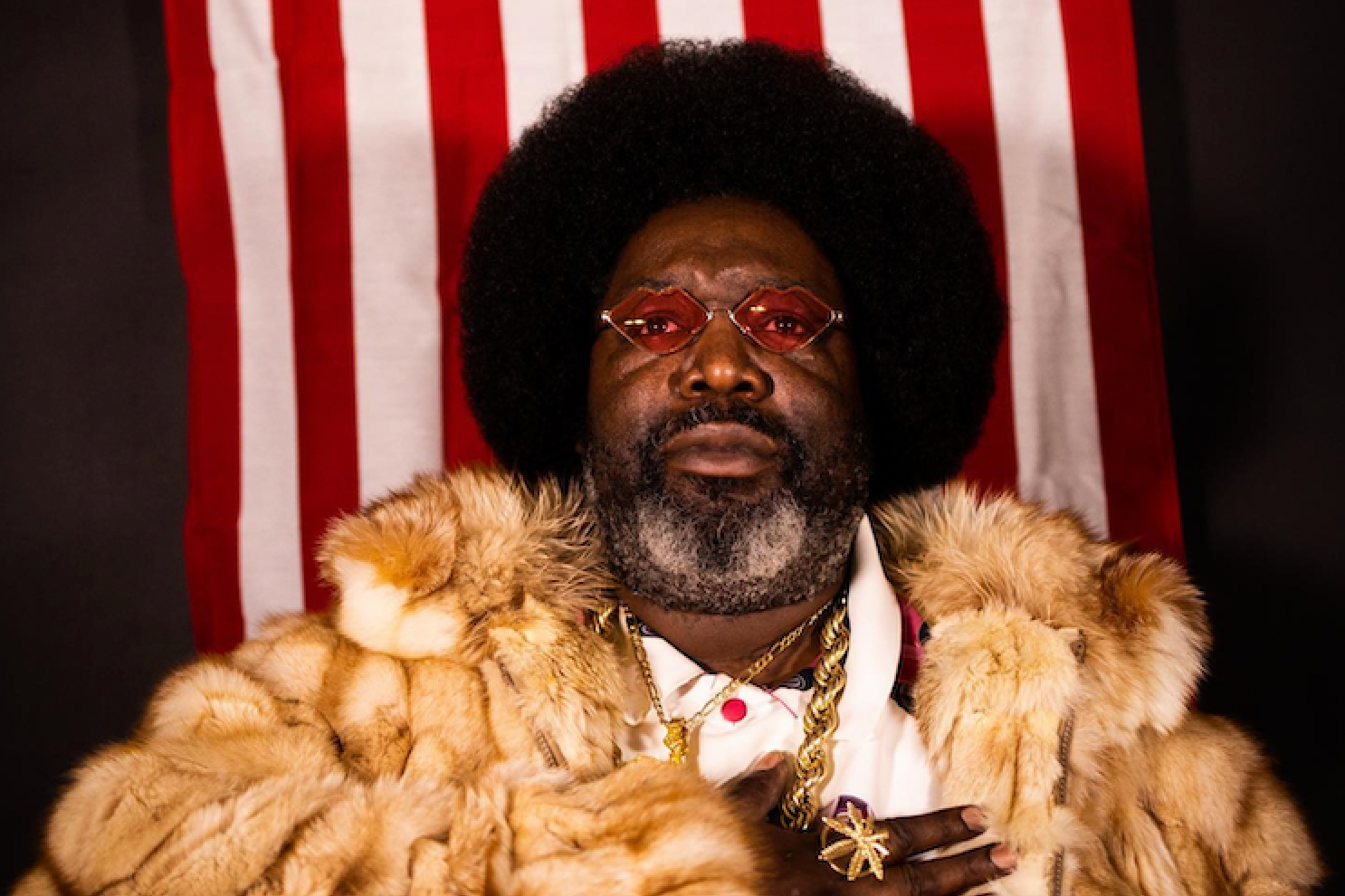
Afroman: I put on my green and white outfit that matches my house and I quickly took a picture of the most damaged part of my house so I could infinitely reflect on the positivity of my mentality. I wanted to show humanity how I was gonna turn a bad situation into a financial good one. So as soon as I got home, I dressed up and I took the picture for the album LEMON POUND CAKE.
BMAG: You’ve said that if they hadn’t raided your house, there would be no songs, no lawsuit, and you wouldn’t even know their names. They sued you for defamation over the music you made from their own raid. What do you think they expected you to do instead?
Afroman: They expected me to get bullied like the rest of the small American civilians they bully every day. They weren’t expecting me to stand up to them using my FREEDOM OF SPEECH.
BMAG: “They stormed my home with assault rifles and they want to sue me for cracking jokes?” Why does humor disarm or scare power so much? The songs went viral — you can’t un-laugh or unsee it.
Afroman: They know that if a joke shows how wrong and pathetic they are, it can spread like wildfire through the population. It’s hard for five cowboys to control hundreds of cows that KNOW THEIR RIGHTS. The thought of the hundreds of cows — the American people — unifying and trampling a few cowboys is the worst-case scenario for a crooked government official. So if a joke points out how crooked or wrong a government or law official is, they want to silence you before they lose control over the population, and their jobs.
BMAG: To step back for a moment — what’s going on in Ohio? “Four Dead in Ohio” was fifty years ago and the state is still making headlines for the wrong reasons. Or is that just America?
Afroman:I’m from Los Angeles and Mississippi. You have two types of people in this world — good and bad — and they’re gonna be all over America. They’re gonna be all over the world. Just to put everything in a nutshell: I am a new Ohio immigrant. I don’t know too much of Ohio’s dirty past. All I know is this — BAD PEOPLE ARE NEVER GOING AWAY. Therefore, good people must put things in place that check the bad people. There’s always gonna be a common cold, but humanity is no longer scared of the common cold because when we get the common cold, we have the remedies to treat it. So good people need to have remedies for bad people, no matter what, where, why, or when.
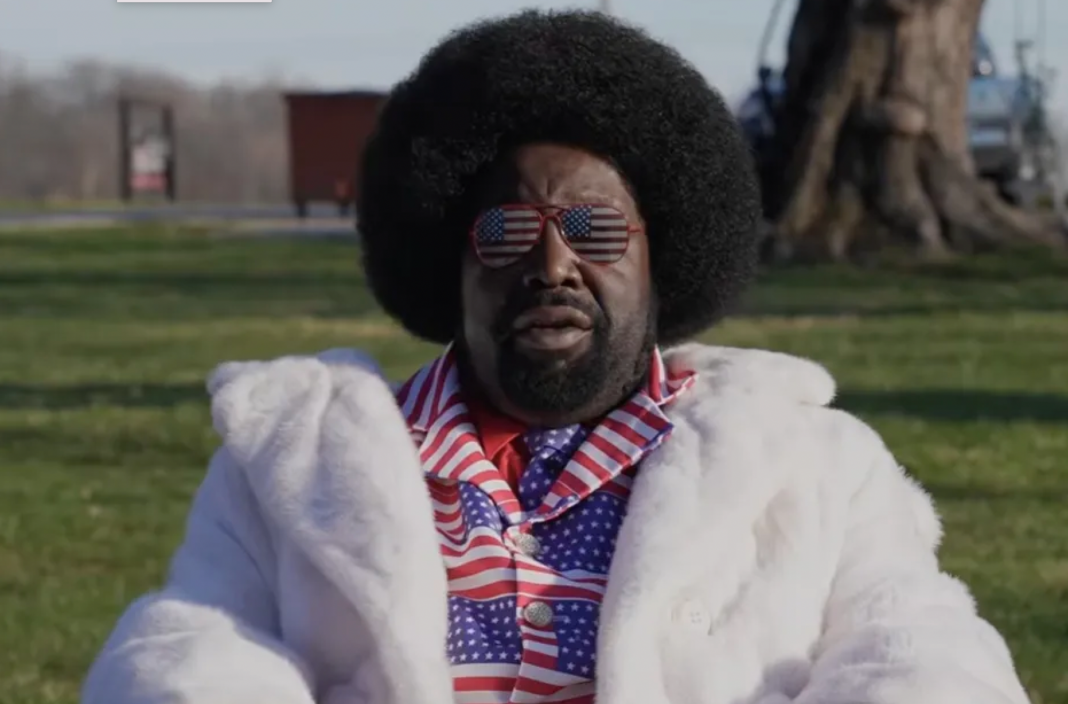
BMAG: After the verdict, you walked out of the courthouse shouting “We did it, America” and “Power to the people.” You said “we” — not “I.” In a country that keeps dividing people into sides, who were you talking to?
Afroman: I WAS TALKING TO THE ENTIRE UNITED STATES OF AMERICA. I was talking to all sides. We all almost lost our freedom of speech — and I’m gonna say “we” because people’s hearts and spirits were fighting with me on the internet. People were riding by the courthouse blowing their horns. I didn’t do it by myself. I fought with America. America fought with me. Thanks to that unification, America still has freedom of speech.
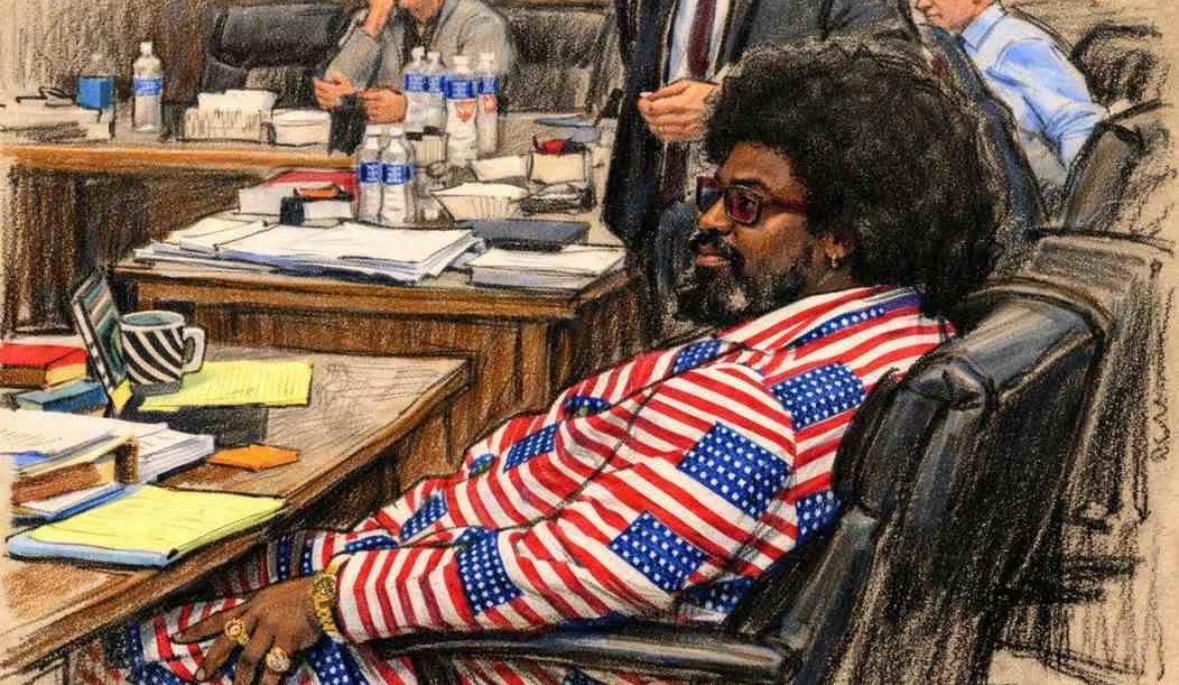
BMAG: The suit will be on display at Bitcoin Conference 2026 inside Relics of a Revolution. Claire Salvo painted your portrait on a dollar bill. Songs get pulled. Platforms disappear. Footage gets buried by algorithms. Even the dollar loses its value over time. The suit is the one thing from this story that can’t be deleted or devalued. Now you’ve got a Constitution suit and a Statue of Liberty suit in the works. When did the suits become part of the art?
Afroman: One time I went to a party — and all of my friends are cool, all my friends dress really cool — and me and my friend almost wore the same suit to the same party. It was that night I decided to go custom. All cool guys shop at the same store, so me and another cool guy, we’re gonna like the same outfit. TO STOP THESE CLOTHING CATASTROPHES, I began ordering, designing, and making custom-made suits.
This is Part III of a three-part interview series accompanying the Relics of a Revolution exhibition. Part I features Kolin Burges, and Part II Mear One.
Fix the money. Fix the world.
Afroman will appear as a main stage speaker and performer at Bitcoin Conference 2026 at The Venetian in Las Vegas, April 27–29. The auction for his American flag suit can be previewed on Scarce.city at scarce.city/auctions/americanflagsuit.
The Bitcoin Museum & Art Gallery (BMAG) is the curatorial and cultural programming division of $BTC Inc and the Bitcoin Conference. Since 2019, the BMAG conference art gallery has facilitated more than 120 $BTC in art and collectible sales. Learn more about BMAG at museum.b.tc.
Bundle your Bitcoin 2026 pass with a stay at The Venetian and get your fourth night free. Use code AFTERS for a free After Hours Pass, or get your pass alone here.
This post Relics of a Revolution, Part III: The Suit, The Songs, The System first appeared on Bitcoin Magazine and is written by Dennis Koch.

 crypto.news


 cryptonews.net + 1 more
 coindesk.com + 12 more