


 8
8
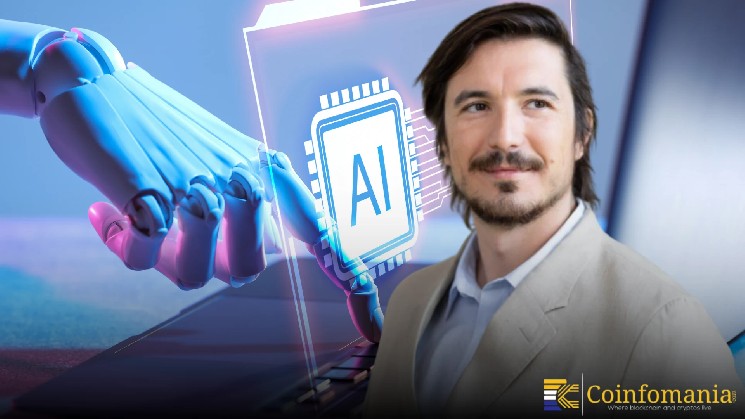
The future of artificial intelligence is shaping up to be a defining debate in the tech world. According to Vlad Tenev, there are two very different paths ahead for AI, and only one of them truly empowers users.
⚡️ TODAY: Robinhood CEO Vlad Tenev outlines two AI futures, companies hoarding discoveries or empowering users to drive innovation, backing the latter approach. pic.twitter.com/hLi812iZ5Q
— Cointelegraph (@Cointelegraph) March 23, 2026
In a statement shared on March 23, Tenev outlined a growing divide in how AI could evolve. His comments quickly gained traction across both the tech and crypto communities, sparking conversations about innovation, control, and accessibility.
Two Competing Visions for AI
Tenev described a stark contrast between two possible futures for artificial intelligence. On one side are large corporations building powerful AI systems within centralized data centers, effectively controlling access to discoveries and limiting who can benefit from them.
On the other side is a more open model, one where AI tools are made widely accessible, allowing individuals, developers, and smaller teams to innovate freely.
Tenev made his stance clear. He supports the latter approach, arguing that empowering users leads to faster innovation and broader societal benefits. In contrast, he labeled the corporate-controlled model as “dystopian,” warning that it could concentrate too much power in the hands of a few.
A Philosophy Rooted in Robinhood’s Model
Tenev’s position is not entirely new. As the CEO of Robinhood, he has long advocated for lowering barriers to entry in financial markets.
The company built its reputation by offering commission-free trading and easy access to stocks and cryptocurrencies. Which were once tools that were limited to more experienced or well-funded investors. This same philosophy, Tenev suggests, should apply to artificial intelligence.
Moreover, by making AI tools accessible, innovation becomes decentralized. Instead of a few corporations dictating progress, a broader community can contribute to breakthroughs.
Crypto Community Finds Common Ground
Tenev’s comments have resonated strongly within the crypto space, where decentralization is a core principle. Many community members drew parallels between open AI systems and blockchain technology, which removes intermediaries and gives users more control.
Supporters argue that open or user-driven AI could promote “sovereignty,” allowing individuals to build, experiment, and create without relying on centralized authorities. This perspective aligns closely with ongoing efforts to decentralize finance, digital identity, and even data ownership.
The Bigger Debate: Innovation vs Control
The discussion also touches on broader questions about the role of AI in emerging technologies. As AI becomes more integrated into areas like prediction markets, trading algorithms, and tokenized assets, the stakes continue to rise.
A centralized AI model could lead to faster development in the short term, but critics worry it may limit competition and restrict access. Meanwhile, an open approach may foster creativity and inclusivity, though it comes with challenges around safety, regulation, and coordination.
A Turning Point for AI’s Future
Tenev’s remarks highlight a critical moment in the evolution of artificial intelligence. As companies race to build more advanced systems, the question is no longer just about capability, but about control.
Whether the future of AI is shaped by a handful of corporations or a global network of empowered users remains to be seen. However, voices like Tenev’s are pushing the conversation toward a more open and accessible direction. One that could redefine how innovation unfolds in the years ahead.

 cryptonews.net
 1
1


 coingape.com
 cryptobriefing.com
