

 5
5
Amazon is working on a new phone, internally called “Transformer,” to accelerate user engagement with its AI assistant Amazon Alexa, Reuters reported Friday.
The device is conceived not as a conventional competitor to Apple or Samsung handsets but as a personalization interface designed to keep consumers tied to Amazon’s ecosystem of services. It may rely on AI to reduce or even replace traditional apps.
The project is still in development and could take different forms, including a standard smartphone or a “dumbphone,” possibly used as a secondary device. It is being led by a dedicated innovation team focused on breakthrough hardware, but key details like price, timeline, and launch remain unclear.
Alexa+ adoption and recent hardware moves
Amazon’s Alexa+, the upgraded version of the assistant launched in March 2025, attracted tens of millions of sign-ups within its first nine months and generated engagement rates two to three times higher than the original version.
Amazon has claimed that roughly 76% of the tasks users perform with Alexa+ cannot be replicated by any competing AI assistant.
At CES 2026, Amazon showed a suite of AI-enhanced products meant to push Alexa+ into more contexts.
The company unveiled the Echo Dot Max and a refreshed Echo Studio, both engineered for deeper Alexa+ integration. It also expanded the assistant’s reach into BMW vehicles and launched a web-based version accessible outside Amazon’s own hardware.
The Fire Phone’s shadow
The “Transformer” project is seen as Amazon’s renewed push into the mobile market after the failure of its Fire Phone.
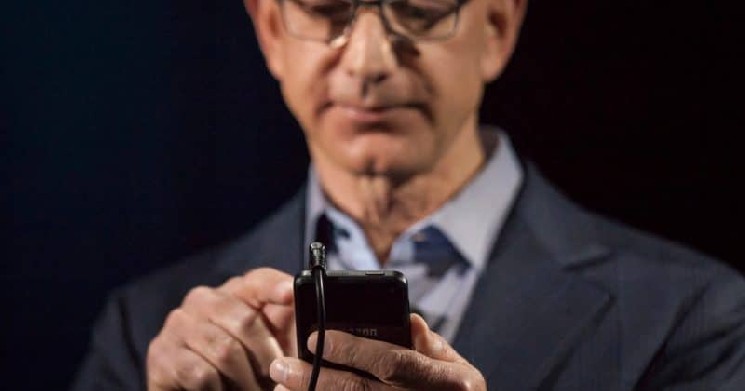
The Fire Phone, introduced by then-CEO Jeff Bezos in July 2014, was a commercial catastrophe.
Fewer than 35,000 units were sold in the first two months after launch. Within weeks, the price dropped from $650 to 99 cents as Amazon scrambled to clear shelves.
The market hasn’t grown any friendlier since then. As of February 2026, Apple commanded 31.5% of global smartphone shipments, and Samsung held 21.4%, meaning the two leaders together accounted for 53% of the market, according to StatCounter.

 1
1
 neonewstoday.com
