


 3
3
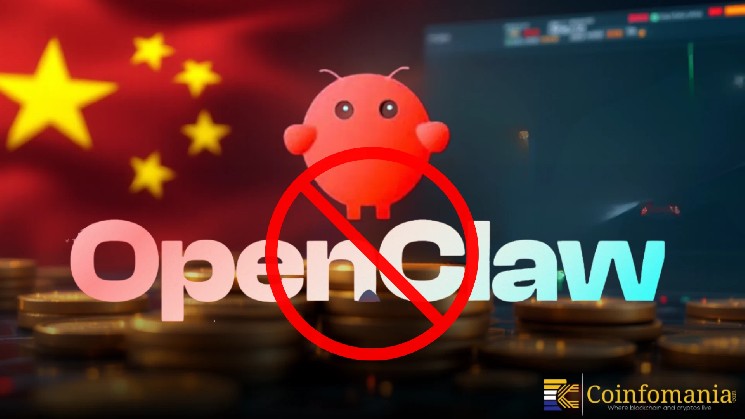
The intended limitations are concerned with the increased utilization of the OpenClaw AI in China government systems. OpenClaw AI is an autonomous artificial intelligence agent that is open-source and can be used to perform complex digital tasks. These are file management, data processing, and automated workflow activities in several systems, among others. Nonetheless, regulators are also concerned with the same features that ensure that the tool is powerful.
JUST IN: Chinese authorities will begin to restrict use of OpenClaw AI in government agencies due to security risks.
— Polymarket (@Polymarket) March 11, 2026
The access permissions of the software may enable these Chinese officials to have deep access to the system and even root-level access. Root access may permit executable programs to alter important files, run commands, and interface directly with operating systems. Such access may pose a serious security risk to government networks when used or configured inappropriately.
Security Risks and Regulatory Warnings
The Chinese regulators reportedly gave a second official warning with regard to the software within a period of 24 hours, which intensifies the issue regarding the fast rate of its adoption. The action is an indication that there is some trepidation towards the use of AI in government systems.
Rapid Growth of AI Innovation in China
Artificial Intelligence Development in China Raises the Regulation Issue. Nevertheless, alternatives such as OpenClaw AI have been on the rise within the Chinese technology landscape despite the limitations. Cities like Shenzhen have emerged as a big experimental and development centre of AI. This has also led to the rapid use of independent AI agents that perform tasks on their own by developers and companies. Nevertheless, the speed of innovation will usually provoke new regulatory issues.
Balancing Innovation, Security, and Policy Challenges
The world governments are now discussing how to deal with AI systems that are capable of working with minimal human control. Therefore, this is what has happened to China is indicative of a wider trend in the world. Other commentators emphasize the need to also strict permissions and security measures of the AI agents. Others conjecture that there is a chance that major Chinese technology companies will retaliate. Plus it will exaggerate by coming up with more tightly controlled competition.
Indicatively, there were jesting talks on online forums that there was a chance of an owner rival of such firms as Baidu. Whatever the result, the discussion highlights an increased policy difficulty for policymakers. Artificial intelligence tools are increasingly becoming stronger and more independent. Thus, the governments now have to decide on the manner in which to balance national security, innovation, and productivity in an ever-increasing AI-driven digital realm.

 thenewscrypto.com
 decrypt.co
 cryptonews.net

 finbold.com