



 15
15
Tether has released an open-source development framework for Bitcoin mining, aimed at giving operators and developers unified control over hardware and software across mining operations.
According to Monday’s announcement, the framework combines a backend SDK and user interface tools to replace fragmented, vendor-specific systems, allowing miners to monitor devices, manage operations and build custom applications across sites from a single control layer.
It uses a modular architecture in which hardware exposes standardized functions and independent modules can be added without altering the core system, enabling integration across different machines, services and locations.
The toolkit supports deployment across Windows, macOS and Linux, and is designed to scale from individual setups to large industrial operations, with features for automation, monitoring and coordinated hardware management, Tether said.
The framework is designed to reduce reliance on proprietary tools and simplify operations across fragmented mining setups, where vendor lock-in and interoperability challenges can increase costs and limit flexibility.
Tether said the release builds on the company's earlier open-sourcing of its Mining OS, extending its mining software stack with a development layer for building dashboards, workflows and analytics tools on top of existing infrastructure.
The move comes about a week after the company disclosed an 8.2% stake in Antalpha, a Bitcoin-focused lender and equipment financing provider with close ties to mining hardware supplier Bitmain.
Tether is the issuers of $USDT ($USDT), the largest stablecoin by market capitalization, accounting for about $190 billion of the roughly $320.7 billion global stablecoin market cap, according to DefiLlama data.
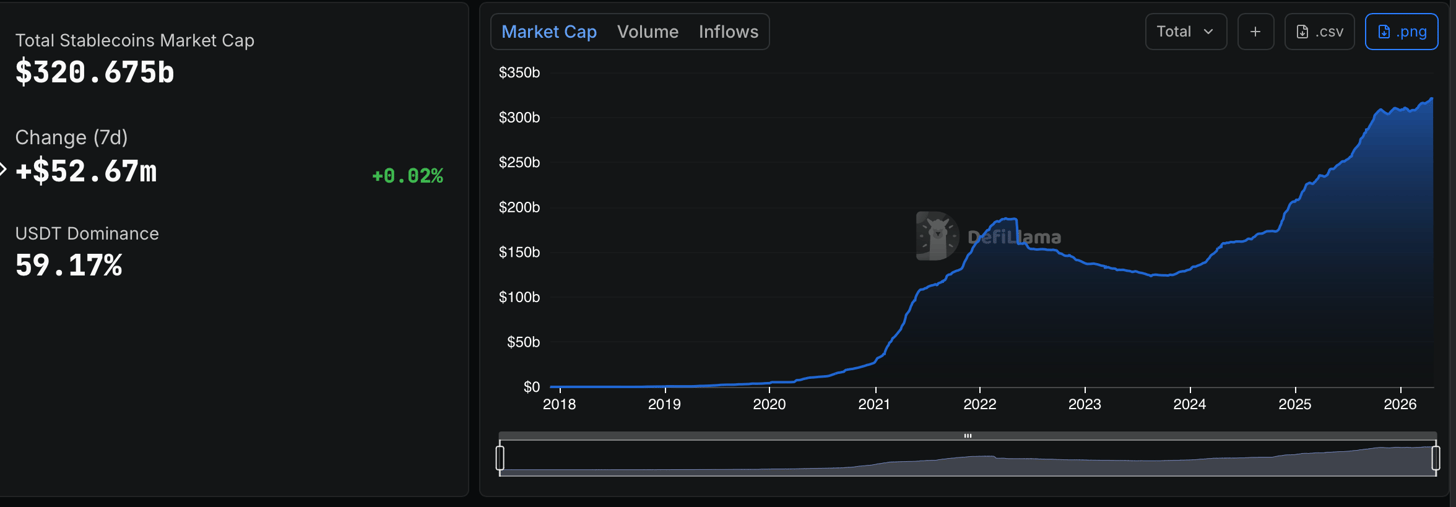
Total stablecoin market cap. Source: DefiLlama
Miners continue to push into AI infrastructure
As Tether moves deeper into Bitcoin mining infrastructure, traditionally pure-play mining operators across the industry are increasingly turning to artificial intelligence and high-performance computing workloads to diversify revenue.
One of the earliest companies to pivot was CoreWeave, originally a crypto mining operation that began shifting toward cloud and high-performance computing in 2019 as demand for AI compute increased.
Since then, a growing number of publicly traded miners, including Riot Platforms, HIVE Digital, MARA Holdings, TeraWulf and Cipher Mining, have pursued similar strategies, redirecting power capacity and infrastructure toward AI and high-performance computing.
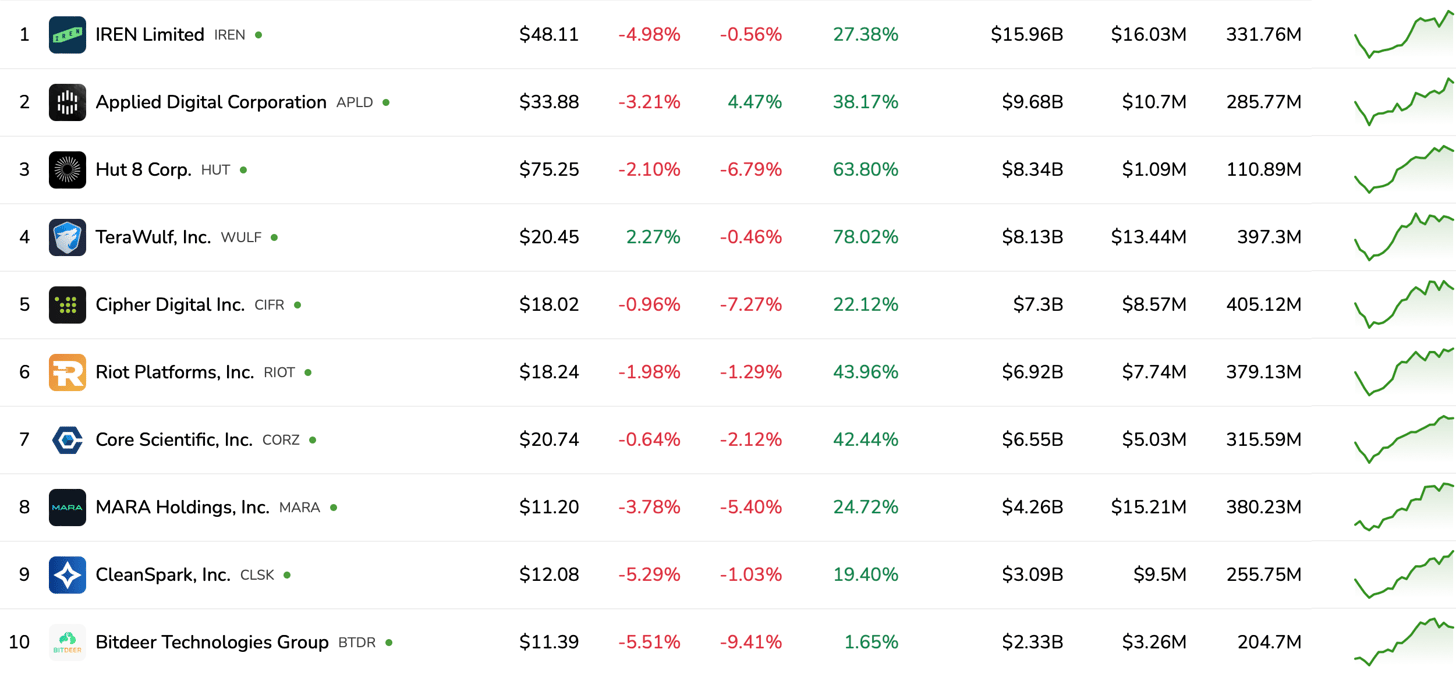
Top 10 publicly traded Bitcoin miners by market cap. Source: Bitcoinminingstock.io
Last week, Core Scientific said it plans to raise $3.3 billion through senior secured notes due in 2031 to fund data center expansion and refinance short-term debt.
On Monday, Hut 8 said in a filing that it is seeking to raise $3.25 billion in senior secured notes to fund a 245-megawatt AI data center in Louisiana, tied to a 15-year, $7 billion lease agreement with Fluidstack, according to The Miner Mag.
Some miners are moving further. Also on Monday, analysts from Bernstein said IREN, the largest publicly traded Bitcoin miner by market capitalization, will likely phase out its mining operations over time as it scales its AI cloud business.

 bitcoinworld.co.in

 crypto.news


 crypto-economy.com
 theblock.co