



 3
3
Hyperliquid has faced a wave of criticism over its handling of UK sanctions against crypto exchange $HTX. According to a user known as “as required,” the platform has adopted the harshest possible interpretation of the sanctions and is blocking wallets that only indirectly interacted with $HTX. Addresses associated with Bybit may also be affected.
The controversy stems from UK sanctions imposed on Huobi Global SA, a company associated with $HTX, on May 26, 2026. Authorities suspect the exchange of helping Russia evade sanctions by transferring more than $1.5 billion through the so-called A7 network. Under UK regulations, the restrictions apply to local digital asset service providers, or VASPs.
What are the claims against Hyperliquid?
As required emphasized that Hyperliquid is not a British company and has no ties to the UK. The platform is registered in Singapore. Nevertheless, he claims it began blocking any wallet that had contact with addresses previously associated with $HTX after May 26, regardless of the number of intermediate transfers.
According to the author, the sanctions apply only to British companies working with $HTX, while Hyperliquid went “beyond the law” by blocking users over any connection to one of the world’s ten largest centralized exchanges. He also said the platform did not provide users with a clear way to appeal the decision.
As an example, he cited the case of a Duldul Capital investor who was allegedly blocked simply because he lent funds to a friend whose wallet was linked to $HTX.
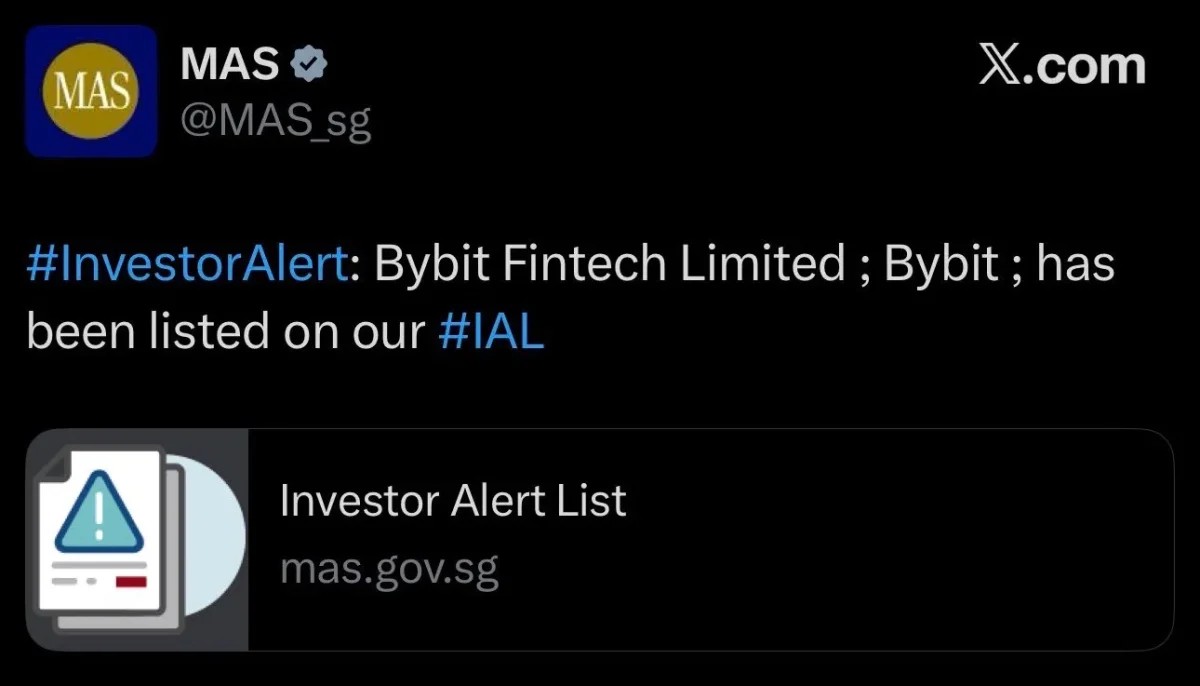
In a sarcastic post, the author suggested taking Hyperliquid’s logic to the extreme. If even distant links to sanctioned or flagged entities are enough to block users, then everyone who deposited or withdrew funds through Bybit should also be restricted after June 17, since Singapore’s regulator added Bybit Fintech Limited to its Investor Alert List.
Why is the blocking being called excessive?
In a separate post, as required rejected the common argument that “Hyperliquid’s hands are tied” by analytics companies such as Chainalysis, TRM Labs, or Elliptic. He said he spoke with several compliance organizations, and all of them confirmed that they do not provide clients with mandatory block lists. Instead, they provide factual labels, such as whether a wallet interacted with $HTX. The final decision on which addresses to block is made by Hyperliquid itself.
The author also noted that other platforms have mechanisms for reviewing such decisions. According to him, OpenSea unblocked his wallets within a few hours, while Lighter, Extended, and several other exchanges did not block the same wallets at all. In his view, this shows that a transparent appeals process does not necessarily create legal risks for a platform.
The criticism has also been echoed by prominent on-chain researchers. According to ZachXBT, the sanctions against $HTX have effectively weakened the usefulness of blockchain risk assessment, as compliance systems now label many ordinary wallets as “high risk” simply because they once interacted with the exchange.
The author concluded that such a strict interpretation contradicts Hyperliquid’s stated vision of finance as a tool for empowering people, rather than depriving them of access without protection or recourse.

 theblock.co
 crypto-economy.com
 cointelegraph.com