


 13
13
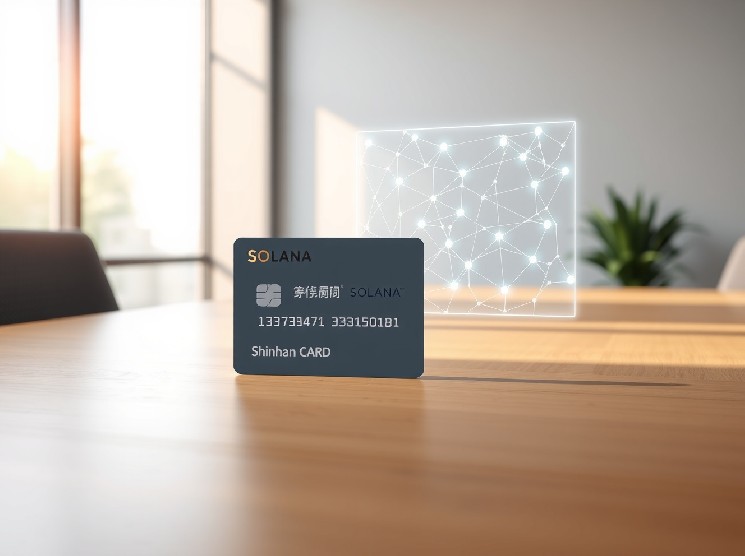
Shinhan Card has signed a strategic memorandum of understanding (MOU) with the Solana Foundation to collaborate on stablecoin payment technology and expand the Web3 payment ecosystem, JoongAng Economy News reported on April 30. This partnership marks a significant step toward integrating blockchain-based financial services into mainstream commerce.
Shinhan Card and Solana Foundation MOU: A Strategic Alliance
Building on a proof of concept (PoC) completed last year, the two parties will conduct a more advanced PoC this year. They will jointly research commercialization possibilities in various fields. The partnership uses the Solana testnet to implement payment scenarios between customers and merchants. This process reviews the technical stability of the blockchain network.
Shinhan Card, a leading South Korean financial services provider, brings extensive experience in traditional payment infrastructure. The Solana Foundation offers a high-performance blockchain platform known for its speed and low transaction costs. Together, they aim to bridge the gap between conventional finance and decentralized technology.
Stablecoin Payment Technology: The Core Focus
The MOU centers on developing stablecoin payment technology. Stablecoins offer price stability compared to volatile cryptocurrencies like Bitcoin. This makes them suitable for everyday transactions. The partnership will explore how stablecoins can facilitate faster, cheaper, and more transparent payments.
Key areas of investigation include:
- Real-time settlement using blockchain rails
- Reduced transaction fees compared to traditional card networks
- Cross-border payment efficiency without intermediaries
- Programmable money features for automated payments
Web3 Payments Ecosystem Expansion
This collaboration directly supports the growth of the Web3 payments ecosystem. Web3 represents a decentralized internet where users control their data and assets. Payments are a critical infrastructure layer for this new digital economy.
The partnership will involve further stability verification for non-custodial wallets. These wallets are considered essential infrastructure for the Web3 ecosystem. Users maintain full control over their private keys and funds. This approach aligns with the core principles of decentralization.
Non-Custodial Wallet Verification
Non-custodial wallets eliminate the need for third-party custody. However, they introduce new security and usability challenges. Shinhan Card and Solana Foundation will test these wallets under various conditions. They aim to ensure they meet the security standards expected by mainstream consumers.
DeFi and TradFi Hybrid Model Development
The partnership will pursue the development of a new hybrid financial model. This model combines the efficiency of traditional finance (TradFi) and decentralized finance (DeFi). Shinhan Card aims to establish its own DeFi service environment.
They will utilize oracle technology to securely link real-world transaction data to the blockchain network. Oracles act as bridges between on-chain and off-chain data. This enables smart contracts to execute based on verifiable real-world events. The hybrid model could offer users the best of both worlds: regulatory compliance and decentralized innovation.
Timeline and Background
The initial PoC completed in 2024 laid the groundwork for this expanded partnership. The new PoC will run on the Solana testnet throughout 2025. Commercial deployment could follow successful testing and regulatory approvals.
South Korea has emerged as a global hub for blockchain innovation. The government supports regulated experimentation with digital assets. Shinhan Card’s move aligns with this national strategy. It also positions the company to capture early-mover advantages in the Web3 payments space.
Industry Impact and Expert Perspectives
Industry analysts view this partnership as a bellwether for institutional adoption of blockchain payments. “This MOU signals that traditional financial institutions see real value in blockchain technology,” said Dr. Kim Hyun-woo, a fintech researcher at Seoul National University. “Stablecoins on high-performance blockchains like Solana could transform how we think about payments.”
The partnership also addresses key pain points in current payment systems. Cross-border transactions often take days to settle. They involve multiple intermediaries and high fees. Blockchain-based stablecoin payments can settle in seconds at a fraction of the cost.
Challenges and Considerations
Despite the promise, several challenges remain. Regulatory frameworks for stablecoins are still evolving. South Korea’s Financial Services Commission is developing guidelines. Shinhan Card must navigate these regulations carefully.
Technical challenges include scalability and user experience. While Solana offers high throughput, network congestion has occurred in the past. Non-custodial wallets also require users to manage private keys. This can be a barrier for mainstream adoption.
Conclusion
The Shinhan Card and Solana Foundation MOU represents a landmark collaboration in the evolution of stablecoin payment technology and Web3 payments. By combining traditional financial expertise with blockchain innovation, the partnership aims to create a more efficient, transparent, and inclusive payment ecosystem. As the PoC progresses and commercialization research advances, this initiative could set a precedent for how financial institutions worldwide integrate decentralized technologies.
FAQs
Q1: What is the main goal of the Shinhan Card and Solana Foundation MOU?
A1: The MOU aims to develop stablecoin payment technology and expand the Web3 payments ecosystem through joint research and proof-of-concept testing.
Q2: How will this partnership affect everyday consumers?
A2: If successful, consumers could benefit from faster, cheaper, and more transparent payment options, especially for cross-border transactions.
Q3: What role does the Solana blockchain play in this partnership?
A3: Solana provides the high-performance blockchain infrastructure for testing payment scenarios, leveraging its speed and low transaction costs.
Q4: What is a non-custodial wallet and why is it important?
A4: A non-custodial wallet gives users full control over their private keys and funds, aligning with Web3 principles of decentralization and user sovereignty.
Q5: When can we expect commercial deployment of these technologies?
A5: Commercial deployment will depend on successful PoC results and regulatory approvals, with testing ongoing throughout 2025.

 en.bitcoinsistemi.com


 cryptopolitan.com
 coinfomania.com
