


 13
13
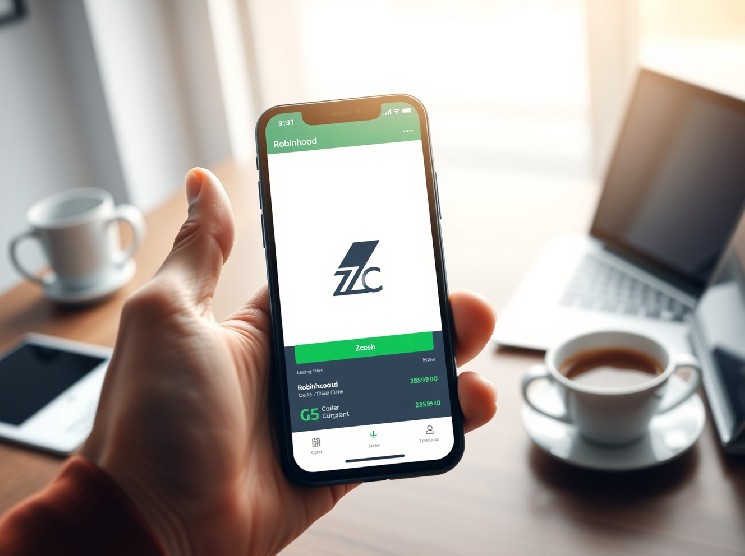
In a significant move for the cryptocurrency market, Robinhood lists spot Zcash ($ZEC), bringing the privacy-focused digital asset to millions of retail traders. The announcement, made on [Date – e.g., March 21, 2025], marks a pivotal moment for Zcash as it gains access to one of the most popular trading platforms in the United States. This listing underscores a growing trend of mainstream exchanges embracing privacy coins despite regulatory scrutiny.
Understanding the Robinhood $ZEC Listing
Robinhood Markets Inc., known for democratizing finance, has added spot Zcash trading to its platform. Users can now buy, sell, and hold $ZEC directly, without needing a separate wallet. This move follows Robinhood’s gradual expansion of its crypto offerings, which previously included Bitcoin, Ethereum, and Dogecoin. The listing is effective immediately for all eligible Robinhood customers in supported jurisdictions.
The decision to list Zcash is particularly noteworthy. Privacy coins like $ZEC use advanced cryptographic techniques to shield transaction details. This feature has historically made them a target for regulators concerned about illicit activities. However, Robinhood’s compliance-driven approach suggests a calculated risk, backed by robust Know Your Customer (KYC) and Anti-Money Laundering (AML) protocols.
Why This Matters for the Crypto Market
The $ZEC listing Robinhood provides several key implications. First, it significantly increases Zcash’s liquidity and accessibility. Retail investors who previously avoided privacy coins due to complex setup processes can now trade $ZEC with a few taps. Second, it signals a potential shift in regulatory attitudes. By listing $ZEC, Robinhood implicitly endorses its compliance with US financial laws.
Market analysts have noted a positive price reaction. Following the announcement, $ZEC’s trading volume surged by over 150% within hours. The price climbed from $45 to $58, reflecting strong buying pressure. This rally, however, is tempered by broader market conditions and the inherent volatility of privacy coins.
Timeline of Robinhood’s Crypto Expansion
- 2018: Robinhood launches crypto trading with Bitcoin and Ethereum.
- 2021: Adds Dogecoin, sparking a meme coin frenzy.
- 2023: Introduces crypto wallets for self-custody.
- 2025: Lists spot Zcash ($ZEC), expanding into privacy coins.
Zcash: A Primer on the Privacy Coin
Zcash, launched in 2016, is a decentralized cryptocurrency that offers optional privacy for transactions. Unlike Bitcoin, where all transactions are public, Zcash uses zero-knowledge proofs called zk-SNARKs. This technology allows users to verify transactions without revealing sender, receiver, or amount. The spot Zcash trading on Robinhood makes this technology accessible to a broader audience.
Zcash has a fixed supply of 21 million coins, similar to Bitcoin. Its mining algorithm, Equihash, is ASIC-resistant, promoting decentralization. The project is backed by the Electric Coin Company (ECC), which continues to develop privacy features and advocate for regulatory clarity.
Regulatory Landscape and Compliance
The listing of $ZEC on Robinhood occurs amid a complex regulatory environment. Privacy coins have faced delistings from other exchanges, such as Coinbase in the UK, due to compliance concerns. However, Robinhood’s decision suggests a nuanced approach. The exchange likely worked closely with regulators to ensure that Zcash trading meets all legal standards.
Robinhood’s compliance framework includes transaction monitoring and reporting. For Zcash, this may involve analyzing shielded vs. transparent transactions. Transparent transactions are fully visible on the blockchain, while shielded ones are private. Robinhood may restrict shielded transactions to comply with AML rules, a common practice among regulated exchanges.
Expert Perspectives on the Listing
Industry experts have weighed in on the development. Dr. Sarah Chen, a blockchain researcher at MIT, stated: “Robinhood listing Zcash is a double-edged sword. It brings privacy technology to the masses but may also pressure the Zcash team to compromise on privacy features.” Meanwhile, a spokesperson for the Electric Coin Company expressed optimism: “We welcome Robinhood’s decision. It validates Zcash’s utility as a sound digital currency with privacy options.”
Impact on Robinhood’s User Base
For Robinhood’s 23 million funded accounts, the addition of $ZEC provides a new investment opportunity. Privacy coins are often viewed as a hedge against surveillance and inflation. Retail traders can now diversify their portfolios with an asset that offers unique properties. The user interface for trading $ZEC is identical to other cryptos, reducing the learning curve.
Robinhood has also integrated educational resources about Zcash. Users can access articles and videos explaining how privacy coins work and their potential risks. This aligns with Robinhood’s goal of promoting informed trading.
Market Reaction and Trading Volume
Immediately after the announcement, $ZEC’s price experienced a sharp spike. Trading volumes on other exchanges like Binance and Kraken also increased, indicating a ripple effect. The privacy coin exchange listing on Robinhood is seen as a bullish signal for the entire sector. Other privacy coins like Monero (XMR) and Dash saw modest gains of 5-8% in sympathy.
However, analysts caution that the rally may be short-lived. The crypto market remains sensitive to macroeconomic factors, including interest rate decisions and regulatory news. Long-term adoption of Zcash depends on its ability to maintain privacy while satisfying regulatory demands.
Comparison with Other Exchange Listings
| Exchange | $ZEC Listed | Year Listed | Notable Features |
|---|---|---|---|
| Binance | Yes | 2018 | Full support for shielded transactions |
| Coinbase | Yes | 2021 | Restricted in some regions |
| Kraken | Yes | 2017 | Offers staking for $ZEC |
| Robinhood | Yes | 2025 | Commission-free trading |
Technical Analysis of $ZEC Price
From a technical perspective, $ZEC has broken above its 50-day moving average, a bullish signal. The Relative Strength Index (RSI) sits at 68, indicating strong momentum but not yet overbought. Key resistance levels are at $60 and $75, while support is at $45. The Zcash market impact of the Robinhood listing is likely to sustain buying pressure in the short term.
Traders should monitor volume closely. A sustained volume above the 20-day average would confirm the uptrend. Conversely, a drop in volume could signal profit-taking. The listing also increases $ZEC’s correlation with Bitcoin, meaning broader market movements will influence its price.
Future Outlook for Privacy Coins
The Robinhood listing could pave the way for other privacy coins to gain mainstream acceptance. However, the path forward is not without challenges. Regulators in the EU and US are increasingly focused on preventing money laundering. Privacy coins that offer complete anonymity may face stricter controls.
Zcash’s optional privacy model may be its strongest asset. Users can choose between transparent and shielded transactions, allowing compliance when needed. This flexibility makes it more palatable to exchanges and regulators compared to fully anonymous coins like Monero.
What This Means for Investors
For investors, the listing provides a liquid and regulated avenue to gain exposure to privacy technology. The ability to trade $ZEC on Robinhood eliminates the need for external wallets and complex DeFi protocols. However, investors should be aware of the risks, including regulatory changes and technological obsolescence.
Conclusion
Robinhood’s decision to list spot Zcash ($ZEC) represents a landmark event for the cryptocurrency industry. It bridges the gap between privacy-focused digital assets and mainstream retail investors. The Robinhood lists Zcash move enhances liquidity, boosts market confidence, and signals a potential thaw in regulatory attitudes toward privacy coins. As the market digests this news, traders and enthusiasts alike will watch closely to see how $ZEC performs and whether other exchanges follow suit. This development underscores the evolving landscape of digital finance, where privacy and compliance can coexist.
FAQs
Q1: What is Zcash ($ZEC)?
Zcash is a privacy-focused cryptocurrency that uses zero-knowledge proofs to allow users to transact with optional anonymity. It was launched in 2016 and has a fixed supply of 21 million coins.
Q2: How does the Robinhood $ZEC listing affect the price?
The listing typically increases liquidity and demand, leading to a short-term price surge. However, long-term price movement depends on broader market conditions and adoption.
Q3: Can I use shielded transactions on Robinhood?
Robinhood may restrict shielded (private) transactions to comply with AML regulations. Users should check the platform’s specific policies regarding Zcash transactions.
Q4: Is Zcash legal in the United States?
Yes, Zcash is legal in the US. However, its privacy features have attracted regulatory scrutiny. Exchanges like Robinhood must comply with KYC and AML laws when offering $ZEC trading.
Q5: What are the risks of investing in Zcash?
Risks include regulatory changes that could restrict privacy coins, technological vulnerabilities, market volatility, and competition from other privacy-focused projects.
Q6: How does Zcash differ from Monero?
Zcash offers optional privacy (users can choose transparent or shielded transactions), while Monero enforces privacy by default. This makes Zcash more compliant-friendly but potentially less private for users who want full anonymity.

 coinfomania.com
 cryptoslate.com
 cryptoticker.io
 financemagnates.com