



 6
6
An analysis by Coinglass comparing perpetual decentralized exchange (perp DEX) data has sparked fierce debate and, in the process, highlighted rifts within the crypto derivatives sector.
The study exposed marked discrepancies in trading volumes, open interest, and liquidations across Hyperliquid, Aster, and Lighter. Users are left asking what qualifies as genuine trading activity on these platforms.
Coinglass Data Sparks Debate Over Authentic Trading on Perpetual DEXs
Coinglass is facing backlash after publishing a comparison of perp DEXs, questioning whether reported trading volumes across parts of the sector reflect genuine market activity.
A 24-hour snapshot comparing Hyperliquid, Aster, and Lighter shows that:
- Hyperliquid recorded approximately $3.76 billion in trading volume, $4.05 billion in open interest, and $122.96 million in liquidations.
- Aster posted $2.76 billion in volume, $927 million in open interest, and $7.2 million in liquidations
- Lighter reported $1.81 billion in volume, $731 million in open interest, and $3.34 million in liquidations.
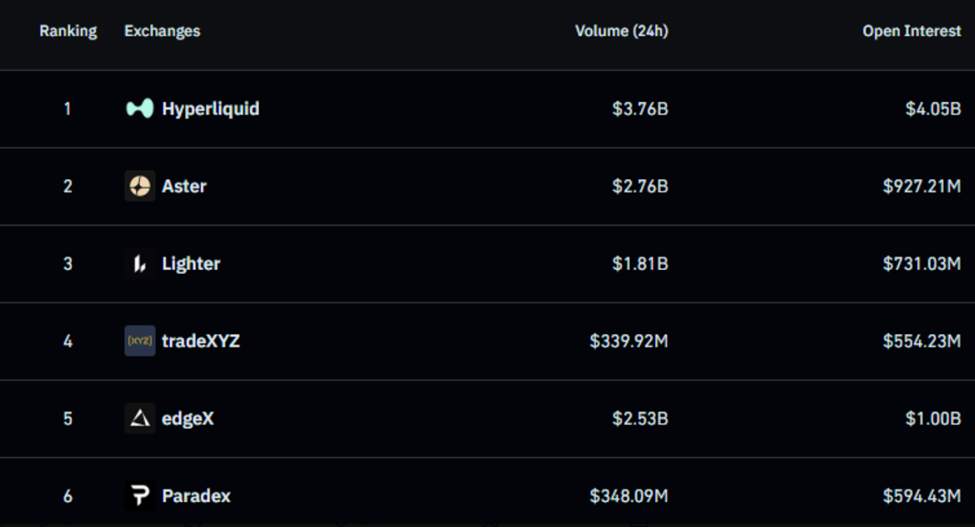
According to Coinglass, such discrepancies can matter. In perpetual futures markets, high trading volume driven by leveraged positions typically correlates with open-interest dynamics and liquidation activity during price moves.
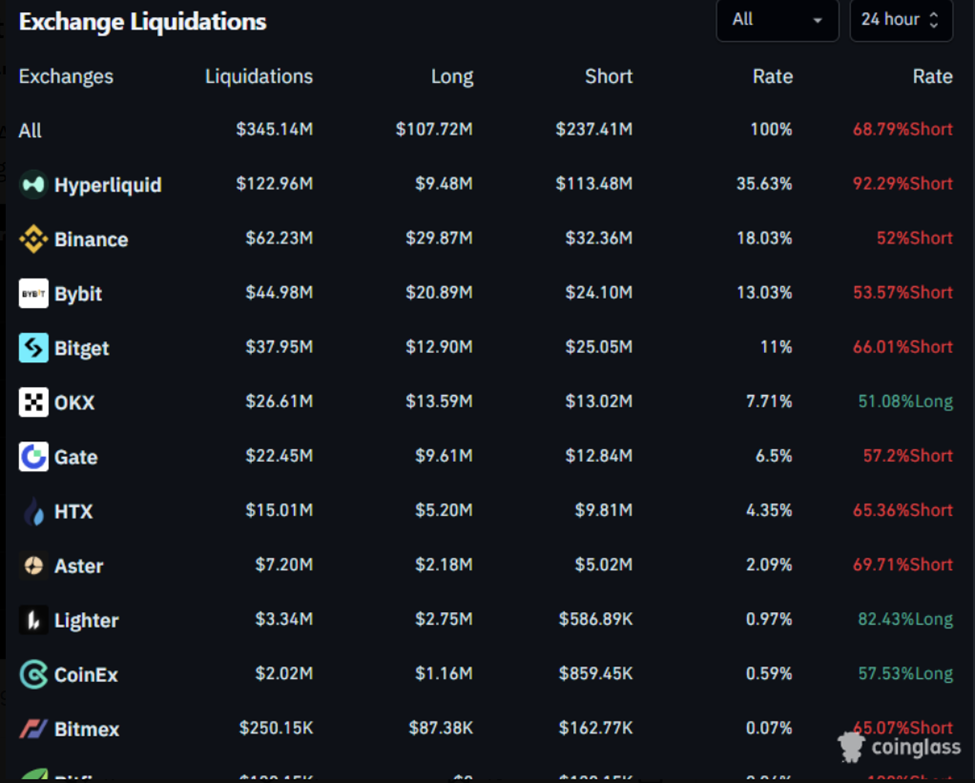
The firm suggested that, rather than organic hedging demand, the combination of high reported volume and relatively low liquidations may indicate:
- Incentive-driven trading
- Market-maker looping, or
- Points farming.
Based on this, Coinglass concludes that Hyperliquid showed stronger internal consistency across key metrics.
Meanwhile, the volume quality of some competitors warrants further validation using indicators such as funding rates, fees, order-book depth, and active trader counts.
“Conclusion…Hyperliquid shows much stronger consistency between volume, OI, and liquidations — a better signal of real activity. Meanwhile, Aster/Lighter’s volume quality needs further validation (vs fees, funding, orderbook depth, and active traders),” the analytics platform indicated.
Critics Push Back, but Coinglass Defends Its Position
However, critics argue that conclusions drawn from a single-day snapshot could be misleading. Specifically, they suggest alternative explanations for the data, including whale positioning, algorithmic differences between platforms, and variations in market structure that could influence liquidation patterns without implying inflated volume.
"More likely explanation?"
— D C CRYPT (@DC__CRYPT) February 9, 2026
So, you're just speculating? You write an article criticizing Aster and Lighter based solely on speculation, without any certainty?
Wow, I thought Coinglass was a reputable company. If we're going to speculate, maybe Hype has more liquidations…
Others questioned whether liquidation totals alone are a reliable indicator of market health, noting that higher liquidations can also reflect aggressive leverage or volatile trading conditions.
Meanwhile, Coinglass rejects accusations that its analysis amounted to speculation or fear, uncertainty, and doubt (FUD), emphasizing that its conclusions were based on publicly available data.
“Coinglass simply highlighted a few discrepancies based on publicly available data. We didn’t expect that a neutral, target="_blank" rel="noreferrer noopener nofollow">wrote, adding that open discussion and tolerance for criticism are essential for the industry to improve.
In another response, Coinglass stressed that disagreements should be addressed with stronger evidence rather than accusations.
The firm also argued that higher leverage ceilings on some platforms could make them structurally more prone to forced liquidations. This outlook shifts the debate away from raw numbers toward exchange design and risk management.
A Pattern of Backlash in the Perp DEX Sector: What Counts as “Real” Activity?
The controversy comes amid a broader wave of disputes surrounding Hyperliquid and the perpetual DEX market.
Earlier, Kyle Samani, co-founder of Multicoin Capital, publicly criticized Hyperliquid, raising concerns about transparency, governance, and its closed-source elements.
Hyper liquid is in most respects everything wrong with crypto
— Kyle Samani (@KyleSamani) February 8, 2026
Founder literally fled his home country to build
Openly facilitates crime and terror
Closed source
Permissioned
His remarks triggered strong reactions from traders and supporters of the platform, many of whom dismissed the criticism and questioned his motives.
BitMEX co-founder Arthur Hayes further escalated the feud by proposing a $100,000 charity bet, challenging Samani to select any major altcoin with a market cap above $1 billion to compete against Hyperliquid’s $HYPE token in performance over several months.
Since $HYPE is bad @KyleSamani let's make a bet.
— Arthur Hayes (@CryptoHayes) February 8, 2026
I bet that from 00:00 UTC 10 Feb 2026 to 00:00 UTC 31 July 2026 $HYPE will out perform any shitcoin >$1bn mcap on coingecko in USD terms. You choose your champion.
Loser donates $100k to a charity of the winner's choice. https://t.co/9n3TjxiRPk
The dispute highlights a deeper issue facing crypto derivatives markets: the lack of standardized metrics for evaluating activity across DEXes.
Trading volume has long served as a headline indicator of success. However, the rise of incentive programs, airdrop campaigns, and liquidity-mining strategies has complicated the interpretation of those figures.
As new perp DEX platforms launch and competition intensifies, metrics such as open interest, liquidation patterns, leverage levels, and order-book depth are becoming central to assessing market integrity.
This Coinglass incident mirrors how data itself has become a battleground amid a sector driven by both numbers and narratives. Therefore, the debate over what those numbers truly mean is likely to intensify as the perpetual futures market continues to grow.
The post Coinglass Ignites Perp DEX Data War Amid Hyperliquid Volume Debate appeared first on BeInCrypto.

 cryptobriefing.com
 coinfomania.com

 en.bitcoinsistemi.com

