

 4
4
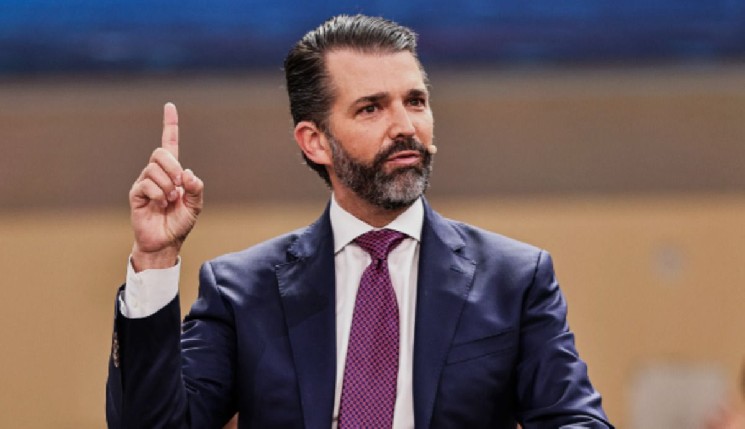
Donald Trump Jr. reportedly urged Republican state attorneys general earlier this year not to pursue prediction markets. Various legal battles already threaten to determine whether platforms like Kalshi and Polymarket are regulated as federally overseen financial exchanges or state-controlled gambling operations.
At a Republican Attorneys General Association event in New Orleans in March, Trump Jr. argued that states were being influenced by gambling companies trying to protect their “monopolies,” according to The New York Times. He reportedly said prediction markets should instead fall under federal oversight.
The remarks attracted attention because Trump Jr. has ties to both major prediction market operators. He serves as an adviser to Kalshi, while his venture capital firm, 1789 Capital, has invested in Polymarket and he sits on the platform’s advisory board. Kalshi says his role focuses on marketing rather than regulatory matters.
States Escalate Fight Against Prediction Markets
The dispute has moved far beyond political rhetoric. Arizona Attorney General Kris Mayes filed 20 criminal counts against Kalshi in March, accusing it of operating an unlicensed gambling business and illegally offering wagers on elections, including the 2026 Arizona gubernatorial race and the 2028 presidential election.
Massachusetts has also taken action. In January, a state court granted a preliminary injunction preventing Kalshi from offering sports event contracts to Massachusetts customers unless it complies with state sports-betting laws and licensing requirements.
New York joined the battle in July after suing Kalshi and alleging that its prediction markets constitute an illegal, unlicensed gambling operation. State officials have also raised concerns that Kalshi allows users aged 18 to 20 to participate despite New York requiring sports bettors to be at least 21.
Kentucky targeted several companies, including Kalshi and Polymarket, arguing their sports event contracts amount to unlicensed sports wagering.
CFTC Fights Back
The Commodity Futures Trading Commission argues that federally registered prediction exchanges fall under its exclusive jurisdiction. The agency launched its own legal actions involving Arizona, Connecticut, Illinois, Wisconsin, New York, Minnesota, Rhode Island, New Mexico and Kentucky to try and block states from applying gambling laws to federally regulated event contracts.
States, however, are still unconvinced. A coalition of 44 attorneys general told the CFTC in July that it lacks authority to effectively take control of sports wagering through prediction-market regulation.
That disagreement could ultimately completely change the US prediction market industry: if federal authority prevails, platforms could operate under one nationwide framework; if states win, operators may face a patchwork of gambling laws, licensing requirements and restrictions across the country.

 coingape.com

 news.bitcoin.com
 cryptopolitan.com

