
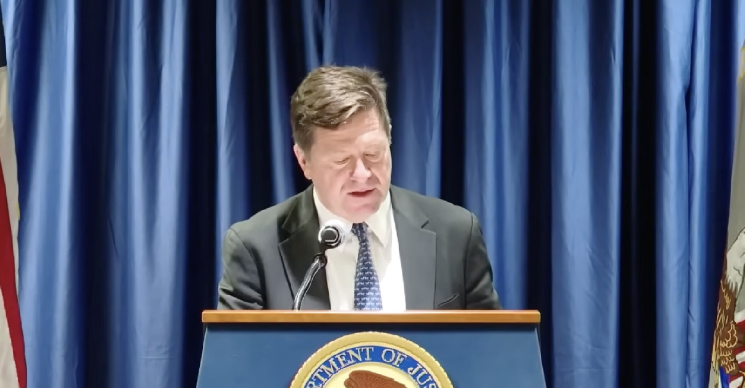

Jay Clayton, the former U.S. Securities and Exchange Commission (SEC) chairman who authorized the agency's landmark lawsuit against Ripple, has officially been sworn in as the new U.S. Director of National Intelligence (DNI).
The swearing-in ceremony was announced Tuesday by White House Special Assistant Margo Martin after Clayton secured Senate confirmation in a narrow 51-47 vote.
He now becomes the nation's top intelligence official. Clayton will be responsible for overseeing the U.S. intelligence community after succeeding Tulsi Gabbard.
Clayton's Ripple legacy
For the cryptocurrency industry, however, Clayton's name remains closely associated with the notorious lawsuit against Ripple,
On Dec. 22, 2020, the regulator filed its high-profile lawsuit against Ripple Labs, CEO Brad Garlinghouse, and Executive Chairman Chris Larsen. This was Clayton's last day as the head of the agency.
Clayton left the SEC immediately afterward, but the case continued under his successor, Gary Gensler, before Ripple ultimately secured a series of major courtroom victories that reshaped the SEC's approach to crypto enforcement.
Clayton's pro-crypto stance
Ironically, Clayton's relationship with the digital asset industry changed significantly after leaving the SEC.
In March 2021, he joined the advisory council of One River Asset Management, whose digital asset division was focused on Bitcoin and Ethereum investments.
Just months later, he also joined the advisory board of crypto infrastructure company Fireblocks. At the time, Clayton described Fireblocks as "a leader in the evolving digital asset space" and argued that digital asset custody should strive for stronger regulatory certainty while maintaining institutional-grade security.
Since leaving office, Clayton has also expressed optimism about blockchain. He has also voiced support for developing clear rules for stablecoins, decentralized finance and Bitcoin exchange-traded products.
More recently, Clayton predicted that comprehensive U.S. cryptocurrency legislation would likely emerge under the current administration.

 crypto.news
 coingape.com
 1
1

 bitcoinmagazine.com
