

 1
1
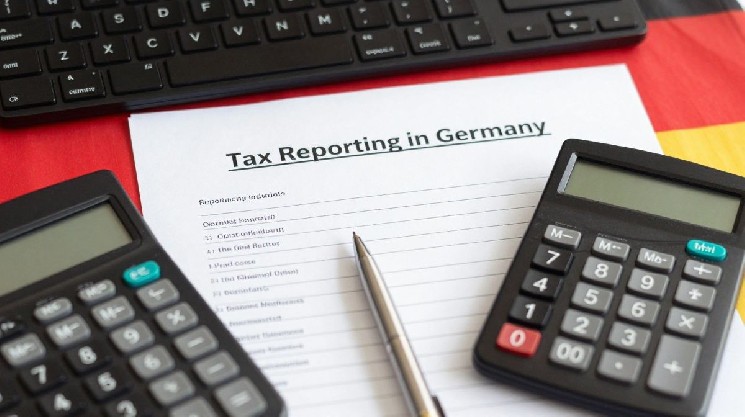
If you are required to file a German income tax return for 2025 and you are doing it yourself, the clock runs out tonight. Not tomorrow morning, not the first working day of August. The statutory deadline is 31 July 2026 at 24:00, and for crypto investors this particular return carries a few things the previous ones did not.
Here is what still needs to happen in the next few hours.
Why is 31 July the hard deadline this year?
The COVID-era extensions are gone. For the 2025 tax year, the normal rule under § 149 Abs. 2 AO applies again: mandatory filers (Pflichtveranlagung) submit by 31 July of the following year. What counts is the moment your return reaches the Finanzamt, so with ELSTER or tax software it is the successful transmission that matters, not when you started filling it in.
Two exceptions buy you real time:
- Filing through a Steuerberater or a Lohnsteuerhilfeverein. Your deadline moves automatically to 1 March 2027, because 28 February 2027 falls on a weekend.
- Voluntary filing (Antragsveranlagung). If you are not obliged to file and are only submitting because you expect a refund, you have until 31 December 2029 for the 2025 year, with no penalty risk.
Everyone else is on the clock tonight.
Who actually has to report crypto in Germany?
Crypto is not treated like shares here. Coins count as "other assets" under § 23 EStG, which produces the rule that keeps Germany attractive for long-term holders: sell after a holding period of more than twelve months and the gain is tax free, no matter how large it is. The BMF confirmed in its March 2025 letter that staking or lending in the meantime does not extend that period.
Inside the twelve months, it looks different:
- Disposals under one year are taxed at your personal income tax rate, up to 45%.
- The €1,000 Freigrenze covers all private disposals in a calendar year, not just crypto. Note the word: Freigrenze, not Freibetrag. Stay below it and the gain is tax free. Reach it and the whole gain becomes taxable, not just the excess.
- Staking, lending and mining rewards are other income under § 22 Nr. 3 EStG, taxable on receipt at the market rate, with a separate €256 Freigrenze.
- Crypto-to-crypto swaps count as disposals. So do trades on decentralised exchanges. The 2025 BMF letter put DEX activity on the same footing as trades on Binance or Kraken, which means Uniswap and Curve history has to be documented the same way.
- FIFO is the method the German tax office works with, applied per wallet or per exchange.
Most private crypto activity lands in Anlage SO.
What is different about the 2025 return specifically?
Three things, and they all point the same direction.
- Anlage SO now has dedicated crypto lines. From the 2025 tax year onwards, the form has its own section for Kryptowerte rather than a generic "other assets" field. Less room to be vague.
- The grace period on documentation has expired. The BMF letter of 6 March 2025 introduced explicit record-keeping and cooperation duties for crypto, and it came with a Nichtbeanstandungsregelung covering assessment periods up to and including 2024. 2025 is the first year the stricter standard applies without that cushion. Handing over a wallet address is explicitly not enough evidence. The tax office expects transaction overviews or a proper tax report showing type, quantity, acquisition and disposal dates, costs and rates.
- This is the last return you file before the Finanzamt gets the data anyway. DAC8, implemented in Germany as the Kryptowerte-Steuertransparenzgesetz, applies from 1 January 2026. Every crypto service provider registered in the EU now reports user transaction data to the tax authorities automatically. From next year, what you declare gets compared against what your exchange already sent in.
How do you get a filing-ready crypto report in the time you have left?
If your 2025 history is spread across four exchanges, two hardware wallets and a handful of DeFi protocols, reconstructing it manually tonight is not realistic. This is what dedicated tax tooling exists for.
CoinTracking is the option most German filers end up with, for a practical reason: it was built in Germany, in Munich, and has been running since 2012, so the German output is not an afterthought. It generates the Anlage SO as a ready-to-file PDF, and also exports in WISO and SteuerGo formats if you are working inside tax software. FIFO is applied per depot with its Depot Separation setting, which matches how the BMF expects wallet-level calculation to work. Imports cover 400+ exchanges, wallets and blockchains via API, CSV or blockchain address, and the engine tags DeFi swaps, staking rewards and NFT trades automatically rather than making you classify each line by hand.
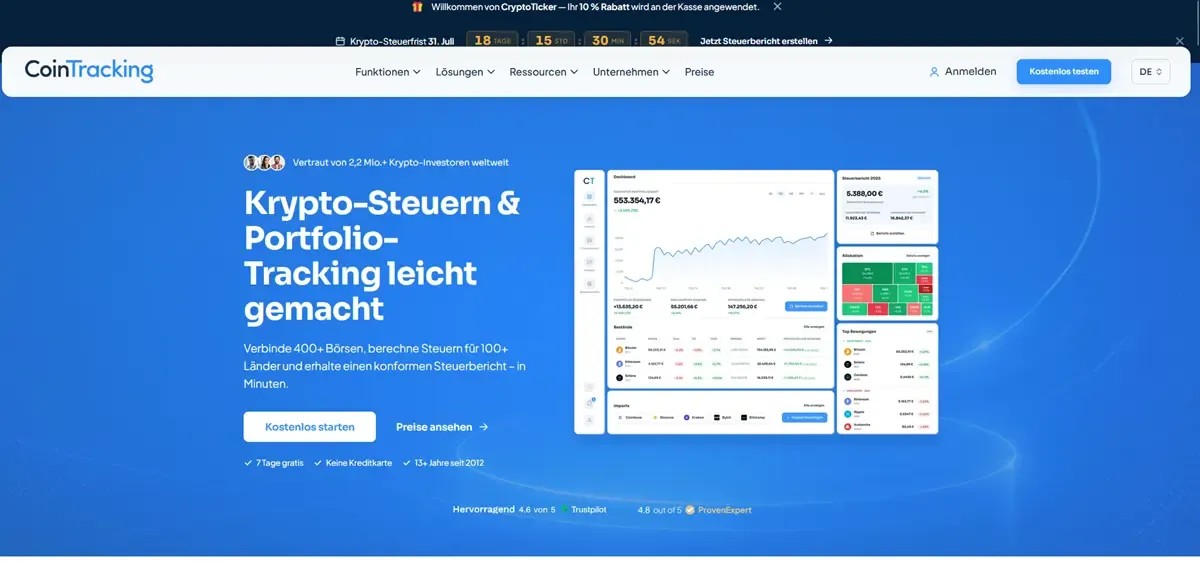
Two practical notes so you are not caught out tonight. New accounts start with a 7-day trial that includes unlimited imports, but the tax report itself sits behind a paid plan, so if you need the Anlage SO today you will be upgrading today. And the import is the fast part: getting your API keys and CSVs in usually takes far less time than reviewing the flagged transactions afterwards.
👉 Import your 2025 history and generate your Anlage SO with CoinTracking
If your history is genuinely messy, the more sensible move may be to accept the second option in the next section instead of rushing a return you cannot substantiate.
What happens if you miss midnight?
From 1 August the Finanzamt is entitled to impose a Verspätungszuschlag where filing was mandatory. It runs at 0.25% of the assessed tax per month, with a minimum of €25 for every month started, and it becomes mandatory rather than discretionary once you are 14 months late. Keep ignoring it and Zwangsgeld and an estimated assessment follow, and an estimate rarely lands in your favour.
You still have two legitimate exits:
- Request an extension. An informal application to your Finanzamt with a real reason (illness, missing documents from an exchange) can be granted. The catch is timing: the request has to arrive before the deadline expires, so that is also a today job.
- Engage a Steuerberater or Lohnsteuerhilfeverein. Doing so moves your 2025 deadline to 1 March 2027 automatically. For anyone with a complicated DeFi or high-frequency year, this is usually the better answer than a rushed self-filing.

 coinfomania.com
 crypto.news

 u.today