

 2
2
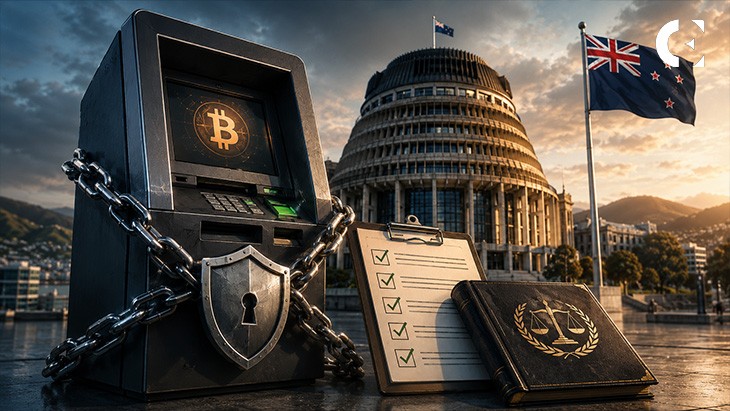
New Zealand plans targeted controls for crypto ATMs instead of a nationwide ban. The proposal could allow cash transaction limits and restrictions on high-risk virtual assets. Officials say the approach aims to reduce criminal misuse while preserving lawful access.
Associate Justice Minister Nicole McKee announced the decision on July 9. The cabinet had agreed in principle to ban the machines in June 2025. However, that decision remained subject to further policy analysis.
The analysis found that less restrictive controls could address the risks. The government plans to include new regulation-making powers in the AML/CFT Omnibus Amendment Bill.
“Banning something is a serious decision that should not be taken lightly. Cabinet has now considered the evidence and agreed that a blanket ban is not the right response at this time,” McKee said.
How New Zealand Plans to Regulate Crypto ATMs
The proposed regulation-making power could allow the government to set maximum thresholds for cash transactions involving virtual assets. It could also allow cash payments for high-risk virtual assets to be prohibited if clear evidence of harm emerges in New Zealand.
No proposed transaction amount has been announced. Officials have also not defined which virtual assets could be classified as high risk.
McKee said officials would consult crypto providers and users on options for implementing the safeguards. The government expected to introduce the AML/CFT Omnibus Amendment Bill later in July, while the Ministry of Justice listed the broader timing as mid-2026.
Crypto businesses already fall within New Zealand’s anti-money laundering system. The Department of Internal Affairs says virtual asset service providers have AML/CFT responsibilities.
Why Crypto ATMs Face Closer Oversight
Crypto ATMs look similar to ordinary cash machines. Instead of dispensing banknotes, they let users buy Bitcoin or another digital asset with cash.
Most New Zealand machines are described as one-way kiosks. They accept cash for crypto purchases but do not exchange digital assets for banknotes.
However, industry estimates place New Zealand’s crypto ATM network at around 200 machines. Many are installed in dairies, petrol stations and vape shops. Locations extend from Auckland to Invercargill.
The use of cash creates a money laundering concern. It could obscure the original source of funds before the value enters the digital-asset system.
The crypto could then move quickly between wallets or across borders. This speed could make intervention and recovery difficult after a suspicious transfer has been completed.
McKee said crypto ATMs pose risks when criminals use cash to move funds into virtual assets quickly and anonymously. The government is seeking powers to address that risk without imposing a blanket ban.
Crypto ATM Scams Raise User Risks
Scammers may impersonate police, Inland Revenue, banks, or technical-support workers. Others use fake job offers or investment opportunities to pressure victims into withdrawing cash and visiting crypto ATMs.
The scammer may provide a QR code linked to a wallet under their control. Victims are then instructed to scan the code and deposit cash.
These transactions happen quickly and could be difficult to stop or reverse. Scammers may stay on the phone or provide detailed instructions. This pressure leaves victims with less time to verify the request.
New Zealand’s Banking Ombudsman reported two serious cases in March 2026. One person lost NZ$31,500 after responding to a fake job offer.
Another person deposited nearly NZ$65,000 over six months. He believed he was placing the money into legitimate investments.
Data from the United States shows the wider scale of the problem. The FBI received 13,460 complaints involving cryptocurrency kiosks in 2025. The complaints reported adjusted losses of almost $388 million, although the FBI said some cases involved other payment methods.
More than half of those complaints involved people older than 50. The FBI reported a 23% increase in complaints and a 58% rise in losses from 2024.
Australia has identified similar criminal activity. AUSTRAC said most high-value crypto ATM transactions were directly associated with scams or money mules. Large amounts also reached
wallets in high-risk jurisdictions.
Lawful Access Carries High Costs
The government decided not to proceed with a blanket ban partly because its analysis identified legitimate uses. McKee said these included cash-reliant New Zealanders seeking to access or invest in virtual assets.
Crypto ATMs could be far more expensive than online exchanges. Published estimates place transaction fees between 6% and 19%.
Some operators may also apply fixed charges, network fees, and exchange-rate markups. Buyers may therefore receive considerably less crypto than expected from the amount deposited.
For now, no blanket ban or new nationwide government cash limit is in force. The Banking Ombudsman has warned people to be highly suspicious of anyone directing them to withdraw cash and deposit it into a crypto ATM.
Related: EU Strikes Russia’s War Economy with New Crypto Bans and Banking Sanctions

 crypto.news
 bitcoinworld.co.in

 bitcoinmagazine.com