


 3
3
The newest draft of the crypto market structure bill "falls short" of where it needs to be on ethics and other provisions, a group of U.S. Senate Democrats said Wednesday.
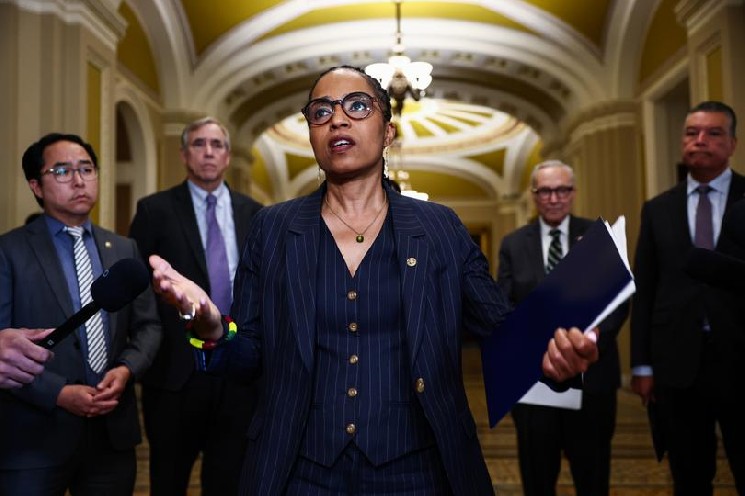
Senators Angela Alsobrooks, Cory Booker, Catherine Cortez Masto, Ruben Gallego, John Hickenlooper, Mark Warner and Raphael Warnock — a core group of negotiators that would likely be needed to advance the bill — said in a joint statement shared with CoinDesk that they would keep working with their Republican counterparts on the Digital Asset Market Clarity Act (Clarity Act) but that it needed more work on various outstanding issues, including how the bill addresses illicit finance and consumer protections.
Alsobrooks and Gallego were the only lawmakers to vote for the Clarity Act in committee, while several others on the statement have expressed support for the bill in the past.
"The Republican-proposed text of the CLARITY Act as it currently stands falls short," the statement said. "Key provisions including those addressing ethics for elected officials, consumer protection, illicit finance, conflicts of interest and market integrity must be strengthened."
Senate Republicans published a new draft of the Clarity Act earlier Wednesday, including an ethics provision that the White House and President Donald Trump agreed to. The ethics provision has been an outstanding issue for over a year, stretching back to the Senate's work on the stablecoin-focused Guiding and Establishing National Innovation for U.S. Stablecoins (GENIUS) Act last year, but the issue took on a renewed focus in recent weeks after Trump shared his latest financial disclosure showing he made over $1.4 billion from his crypto ventures in 2025.
It's unclear when the bill may hit the Senate floor, though Republican Majority Leader John Thune's office told CoinDesk that he's still planning on moving forward in the coming days. The Senate leaves town after August 7 for the summer recess, and the Senate has other issues to take up as well. It will need 60 votes to advance, meaning as many as 10 Democrats may need to vote for the bill. "We have been working in good faith with our Republican colleagues for the past year and will continue doing so to get this over the finish line," the Democratic lawmakers said.

 theblock.co
 news.bitcoin.com
 coinfomania.com
 techgaged.com