


 2
2
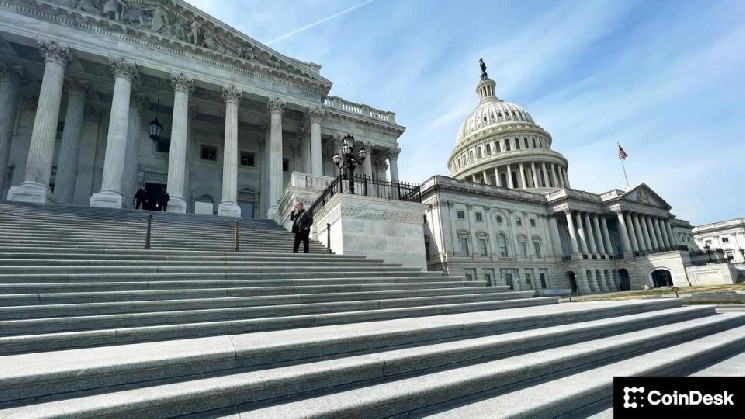
Welcome to another update on the Clarity Act. Will it pass? Jury (and by that I mean Congress) is still out. It's certainly possible. But we are running into some timeline issues, like the fact that it is now July.
You’re reading State of Crypto, a CoinDesk newsletter looking at the intersection of cryptocurrency and government. Click here to sign up for future editions.
Countdown clock
The narrative
So obviously, the Clarity Act was not signed into law on July 4 as White House adviser Patrick Witt said in May he hoped would happen. Moreover, the clock is really starting to run out on getting it passed entirely.
Why it matters
If the Clarity Act doesn't pass through Congress before the midterm election, it's anyone's guess as to what'll happen after the election. If the House or Senate does flip, there's less of a chance that the bill will work through as-is, as Democrats will want to put their own stamp on the bill. So we're in, essentially, crunch time if a 2026 signing is still on the books.
Breaking it down
No one is willing to say the bill is dead yet. Three different people following the process said late last week that they were still optimistic about the bill's chances of passage this year. There are a few different reasons for this.
While Congress isn't in session much this summer, most of the work that needs to happen is happening behind the scenes anyway. One person noted that staffers were still meeting to hash out the various issues, including reconciling the Senate Agriculture Committee and Senate Banking Committee versions of the bill. The Senate only needs to be in session for a few days to publicly debate the bill and vote on it.
That process, another person said, shouldn't take that long — perhaps a few days to invoke cloture and get 60 votes to pass the bill. The House then shouldn't take much time to pass it as well, though there are some questions around that that we'll get to below.
Recent events — including a Supreme Court case essentially striking down independent agencies' independence and President Donald Trump's financial disclosures — aren't likely to affect the ongoing negotiations that much either.
Last week, U.S. President Donald Trump filed his annual disclosure for 2025, revealing that he made $2 billion last year. Some $1.4 billion or so of that came from the crypto industry, spread across royalty payments from his memecoin company, token sales from World Liberty Financial and sales to an Abu Dhabi sheikh's firm, among other income streams. For comparison, his 2024 disclosure reported "tens of millions of dollars" in income overall.

-
1Americans traded $571 million on Polymarket politic bets despite U.S. ban3 hours ago
-
2Banks have stopped asking if stablecoins belong in finance, now they're considering how4 hours ago
-
3Collateral, not yield, will decide which stablecoins win5 hours ago
-
4Kalshi and prediction market sector embroiled in mixed bag of legal fights across U.S.5 hours ago
-
5Barstool's Portnoy plans to hold bitcoin down to zero after timing it wrong every time12 hours ago
-
6Tokenization's next use case is personalized portfolios, NYLIM executive says22 hours ago
-
7Bitcoin jumps above $63,000, reversing end-June lossesJul 4, 2026
-
8Bitcoin experts split over plan to freeze Satoshi's 1.1 million bitcoin as quantum threat growsJul 4, 2026
-
9How ethical hackers with just a $3,000 server found a flaw that could've put $70 billion in crypto at riskJul 4, 2026
-
10Why bitcoin's disconnect from record-high stocks won't lastJul 4, 2026

Building the Zcash Machine: Tachyon and Quantum Readiness

Building the Zcash Machine: Tachyon and Quantum Readiness
Zcash’s Tachyon upgrade aims to scale shielded payments, improve quantum readiness, and test whether its funding, security, and governance can hold.
Zcash’s Tachyon upgrade aims to scale shielded payments, improve quantum readiness, and test whether its funding, security, and governance can hold.
Why it matters:
Zcash’s Tachyon upgrade aims to scale shielded payments, improve quantum readiness, and test whether its funding, security, and governance can hold.

EU moves to block retail investors from explosive boom of multibillion-dollar prediction markets

UK's bold new crypto rules promise to unlock global trading, but huge compliance hurdles still threaten the rollout

 coingape.com


 news.bitcoin.com
 ambcrypto.com
