


 17
17
Africa has never been friendly to crypto. Despite incredible adoption numbers on the continent, African governments have met almost every crypto discussion with bans or warnings.
However, some of its largest economies have abandoned that approach and are working to introduce licensing regimes, stablecoin oversight, and compliance rules designed to integrate digital assets into the financial system.
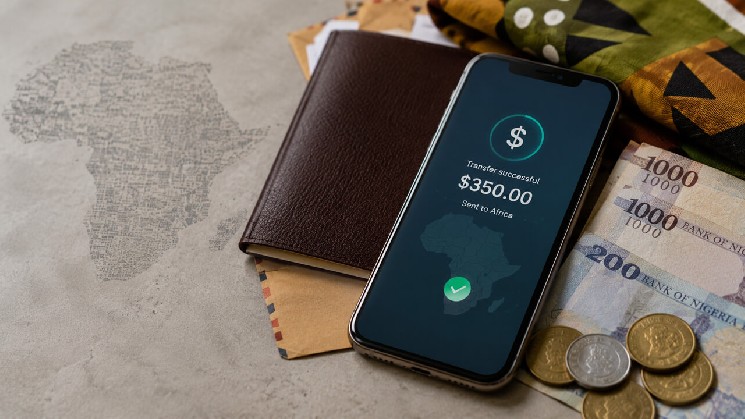
The shift in sentiment and action taken by governments is the answer to a change in what crypto has become on the ground, where it's become less of an investment and more of a payment system that millions of people already use for remittances, savings, and cross-border trade.
Over the past two years, the government's stance has flipped, and it seems to have flipped hardest where adoption is the deepest. After years of treating every kind of digital asset as a threat to monetary stability, ordering banks to close accounts tied to them, and warning citizens away from the sector, Nigeria, South Africa, and Kenya have each written digital assets into national law, building licensing regimes meant to supervise the market rather than shut it down.
In much of the continent, crypto has organically turned into working payment infrastructure, the rails that households and small businesses rely on to receive money from relatives abroad, protect savings from inflation, and settle cross-border trade.
Governments discovered that banning the activity did nothing to reduce demand; it just pushed that demand into peer-to-peer channels they couldn't see, which is a worse outcome for any regulator trying to keep track of a financial system.
The bans collapsed because the demand was structural
The scale of crypto usage in Africa's largest economies forced governments to rethink.
Between July 2024 and June 2025, Sub-Saharan Africa received more than $205 billion in on-chain value, a 52% jump from the year before that, making it the third-fastest-growing crypto region in the world, according to Chainalysis. Nigeria alone accounted for $92.1 billion of that total, nearly three times South Africa's figure, and it's now one of the largest grassroots crypto markets anywhere.
What's telling about the composition of those flows is how small most of them are. Transfers under $10,000 accounted for more than 8% of regional value, compared with 6% globally, which is a sign that people are using these assets for bills, payroll, and family support rather than trading.
Most of that activity is in dollar-pegged stablecoins, which now account for roughly 43% of the region's crypto transaction volume. When the naira lost a large share of its value in early 2025, monthly on-chain volume across the region spiked toward $25 billion as households and companies moved into dollar-linked tokens to preserve their holdings. A stablecoin gives people access to dollars without a US bank account, and it does so on a settlement layer that runs at all hours.
We've also seen this shift in remittances, as Sub-Saharan Africa remains the most expensive region in the world to send money to, with the average cost of a transfer at nearly 8.8% of the amount sent, almost triple the 3% target set by the United Nations. Of the 13 corridors worldwide where costs exceeded 20% in 2025, nine originated in the region.
Against fees like that, a stablecoin transfer that settles in minutes for a fraction of a percent changes everything for the family receiving it, turning the chunk that would have gone to intermediaries into money they can actually use.
Faced with demand that strong, governments shifted from prohibition to oversight. Nigeria's Investments and Securities Act of 2025, signed in March of that year, classified digital assets as securities and granted the Securities and Exchange Commission authority to license exchanges, which it has since begun to exercise. That same commission has publicly welcomed stablecoin businesses on the condition that they meet local compliance standards.
South Africa's Financial Sector Conduct Authority has taken an even more granular approach, approving 310 crypto service provider licenses from 533 applications by the end of March 2026.
Kenya's Virtual Asset Service Providers Act took effect in November 2025, splitting supervision between the central bank and the capital markets regulator.
Regulated dollarization is the trade-off that governments in Africa accepted
Bringing this market inside the formal system has consequences that policymakers across the continent still haven't solved.
The assets people are adopting most heavily are pegged to the US dollar, so the more a regulator legitimizes stablecoin use, the more it encourages households and businesses to hold and transact in a foreign currency.
Financial inclusion improves because people who were previously locked out of access to dollars suddenly have it, but the central bank's control over its monetary base weakens. As savings and payments shift toward dollar-linked tokens, demand for the local currency declines, and the revenue a government earns from issuing its own money erodes with it.
This problem doesn't have a solution yet, and the laws and regulations emerging now are essentially early attempts to manage it. Licensing brings real benefits that governments want, including tax visibility, anti-money-laundering enforcement, consumer protection, and a banking sector willing to work with registered providers instead of treating them as a liability.
Nigeria has already moved to raise capital requirements for licensed firms, indicating it intends to supervise the sector in the same way it supervises other financial businesses.
The biggest problem is preserving the cost and speed advantages that made stablecoins attractive while layering on the compliance that formal oversight demands, because onboarding requirements and reporting obligations add friction that the informal market never had.
What gives the situation in Africa significance is that the rest of the developing world faces the same pressures. Expensive remittances, thin banking penetration, persistent inflation, and steady demand for dollars describe much of Latin America and South and Southeast Asia, just as they do Lagos or Accra.
The frameworks being tested in Nigeria, South Africa, and Kenya are, in effect, the first real-world evidence of whether a regulated stablecoin economy can coexist with a traditional monetary system.
Mobile money set the stage for what's happening now, because Africa's M-Pesa and the systems that followed it had trained a large population to move value through a phone well before stablecoins arrived, lowering the barrier when digital-dollar rails became available.
Competition is the other force at work here, and it reaches well beyond the continent. Stablecoins are increasingly going up against the correspondent banking networks and wire systems that have moved money internationally for generations, and the incumbents are responding.
Western Union, watching its app usage decline sharply as stablecoin remittances spread, is now building its own dollar token to distribute to more than 100 million customers, with early corridors planned in Africa and Latin America. A new federal stablecoin law in the United States has given it the regulatory cover it lacked a year earlier.
All of this leads to a change in how crypto adoption is measured. For years, the main metric was trading volume, which showed the amount of speculation on an asset.
In Africa, the number that counts is payment volume, and the activity behind it is people moving money they can't afford to lose.
African governments spent a decade trying to ban a technology and have ended up supervising it, because the thing they were banning had already become the system through which a large part of their economies moves money.
If these experiments hold, they'll show that the future of crypto isn't to become money itself, but to become the infrastructure that carries money.

 crypto.news + 2 more
 theblock.co
 coindesk.com
 1
1

 financemagnates.com