


 12
12
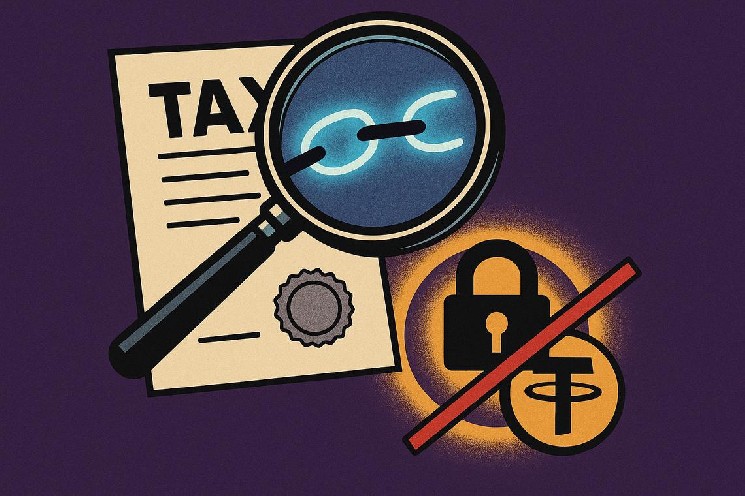
Tether’s role in a Tether Brazil tax dispute just got much more visible. The stablecoin issuer froze more than $213 million linked to Gurhan Kiziloz, along with 48 $USDT accounts associated with his company, after a Brazilian court ruling tied to gambling operations and crypto token sales.
That combination — a court order, a major stablecoin issuer, and nine-figure frozen funds — is why the case is drawing attention far beyond Brazil. At its center is a civil fight over taxes, not a criminal prosecution. However, the size of the freeze shows how digital asset enforcement is increasingly colliding with real-world tax and licensing battles.
The dispute reaches back to activity between 2021 and 2024, when Brazilian authorities allege the business served Brazilian users without a local gambling license and generated taxable revenue in Brazil through connected token sales. Kiziloz and his legal team are appealing those tax claims.
Tether freezes funds tied to the Brazil tax dispute
The immediate headline is the scale of the action. Tether froze more than $213 million linked to Gurhan Kiziloz, and the freeze also hit 48 $USDT accounts associated with his company. The move followed a Brazilian court ruling, making this a striking example of how centralized digital dollar infrastructure can be pulled into national enforcement efforts.
The case matters because it shows that even in crypto, access to funds can still hinge on court-backed legal pressure. $USDT may move across blockchain rails, but this episode underlines a simple reality: when a stablecoin issuer cooperates with authorities, digital assets can become subject to the same kind of control seen in traditional finance.
That is especially important in a Tether Brazil tax dispute, where the enforcement tool is not a bank account seizure in the usual sense, but a stablecoin freeze with broad reach.
Why Brazilian authorities say the money is taxable
Brazilian authorities have tied the dispute to gambling operations and crypto token sales conducted between 2021 and 2024.
Their allegation is that the company served Brazilian users during that period without holding a local gambling license. Authorities also say cryptocurrency token sales connected to the business generated taxable revenue inside Brazil.
That framing is central to the case. The dispute is not presented as a question of whether the business operated in a perfect regulatory environment. Instead, authorities appear to be arguing that even before Brazil finalized a more modern structure for online gambling and digital asset oversight, the activity still created tax obligations inside the country.
For regulators, that is a meaningful position. It suggests Brazil is willing to look past earlier gray zones and focus on whether revenue was effectively generated from Brazilian users. In practical terms, that could broaden how authorities pursue offshore gambling and crypto-related businesses that interacted with the local market.
Why this Brazil gambling crypto case stands out
Big freezes always attract attention, but this one has a wider signal for the market.
First, it highlights how courts, tax authorities, and stablecoin issuers can work in sequence. A Brazilian court ruling led to an action by Tether, turning a legal claim into an immediate financial restriction on blockchain-based holdings.
Second, it reinforces a growing point for crypto businesses: token activity is not automatically separate from tax enforcement. In this Brazil gambling crypto case, authorities are treating token sales as part of the revenue picture, not as something outside it.
That makes the $USDT freeze more than just a one-off legal event. It shows how stablecoins can function as a pressure point when governments want to enforce tax claims tied to online businesses.
Kiziloz challenges the tax claims
Kiziloz and his legal team are appealing the government’s tax claims tied to the 2021–2024 period.
That part is critical. The case remains contested, and no criminal charges have been filed. The matter is a civil tax dispute between Kiziloz and Brazilian authorities.
Those facts shape how the case should be understood. This is not a criminal conviction or a final determination of wrongdoing. It is a legal fight over whether the operations and related token sales created unpaid tax liabilities in Brazil.
Still, the freeze changes the stakes. Even while the dispute remains civil, the financial impact is immediate and severe because more than $213 million and 48 $USDT accounts are now locked up.
What the $USDT freeze signals for crypto enforcement
For years, crypto operated with the promise of distance from traditional gatekeepers. Cases like this show the limit of that idea when centralized issuers sit in the middle of major dollar-pegged assets.
The Tether Brazil tax dispute also points to a broader enforcement model: governments do not need to control every blockchain to exert pressure. If they can obtain court backing and reach a cooperative issuer, they can still disrupt access to funds at scale.
That is why this case is likely to be watched closely by gambling operators, token issuers, and crypto investors alike. Not because it resolves every legal question — it does not — but because it shows how quickly a tax dispute can become a high-impact crypto enforcement action when stablecoins are involved.

 crypto.news
 bitcoinmagazine.com
 financemagnates.com