

 3
3
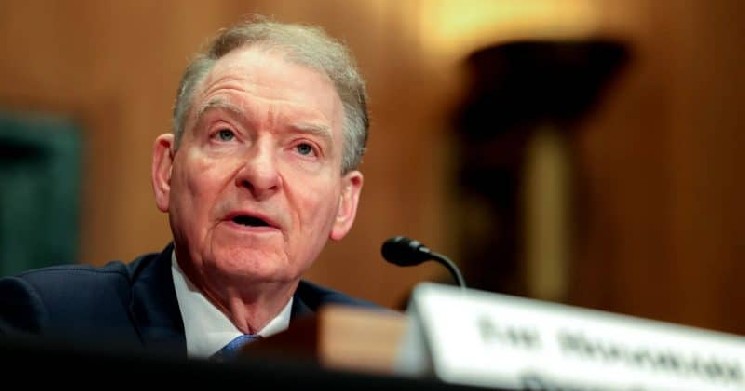
SEC Chair Paul Atkins is done waiting. On April 9, 2026, Atkins publicly urged Congress to move the CLARITY Act across the finish line and deliver it to President Trump for signature, signaling that both the SEC and CFTC stand ready to begin implementation the moment the bill becomes law.
The push comes as the legislation, formally known as H.R. 3633, enters a critical phase in the Senate. It already cleared the House back in July 2025 with a bipartisan 294-134 vote. But Senate negotiations have dragged, and Atkins apparently decided a public nudge was in order.
What the CLARITY Act actually does
The bill draws a clear line between digital asset securities and digital commodities. The SEC would retain oversight of tokens that function as securities. The CFTC would regulate most blockchain-native tokens as commodities. For the vast majority of tokens that exist today, that means shifting from SEC jurisdiction to CFTC oversight.
The Act also includes provisions for DeFi protections, an acknowledgment that decentralized protocols can’t simply be shoved into regulatory boxes designed for traditional finance.
Atkins highlighted an initiative called “Project Crypto” as part of his remarks, describing it as an effort to streamline agency readiness for the Act’s implementation.
The political landscape and stablecoin compromise
Treasury Secretary Scott Bessent and tech advisor David Sacks have both voiced support for the legislation, giving it heavyweight backing from within the administration.
A compromise reached in May 2026 addressed stablecoins: the resolution prohibits passive yield, meaning holders cannot earn interest on parked stablecoins. However, it allows for activity-based rewards, which means issuers can incentivize specific behaviors without running afoul of securities law.
Current odds for the CLARITY Act’s passage sit at roughly 55%. The 294-134 House vote reflects bipartisan support for the bill.
Why banks are watching closely
Expert analysis suggests the CLARITY Act could unlock 14 new crypto-related services that banks would be permitted to offer, including collateralized loans against crypto holdings and custody services.
The 2022 collapse of FTX exposed how badly the absence of clear rules can end for retail investors, and it gave legislators the political cover to write comprehensive crypto law rather than continuing to govern by enforcement action.
What this means for investors
On the downside, clarity comes with compliance costs. Critics have flagged concerns about increased surveillance measures that could mirror some of the monitoring mechanisms associated with Central Bank Digital Currencies. Enhanced reporting requirements could change how decentralized protocols operate in the US.
The shift of most blockchain-native tokens from SEC to CFTC jurisdiction is worth watching carefully. The CFTC has historically been viewed as a more crypto-friendly regulator, but taking on oversight of a massive new asset class will test the agency’s capacity and approach.
The 55% passage odds reflect genuine uncertainty. The stablecoin compromise, while helpful, doesn’t resolve every point of contention. Investors should be prepared for both scenarios: a world where the CLARITY Act becomes law in 2026, and one where it stalls out and the regulatory purgatory continues.

 crypto.news

 theblock.co