

 1
1

 6
6
A top U.S. central banker sounded a stark warning about the risks posed by stablecoins on Tuesday, saying that even after the passage of landmark stablecoin legislation, gaps in oversight could leave the financial system vulnerable to stress and instability.
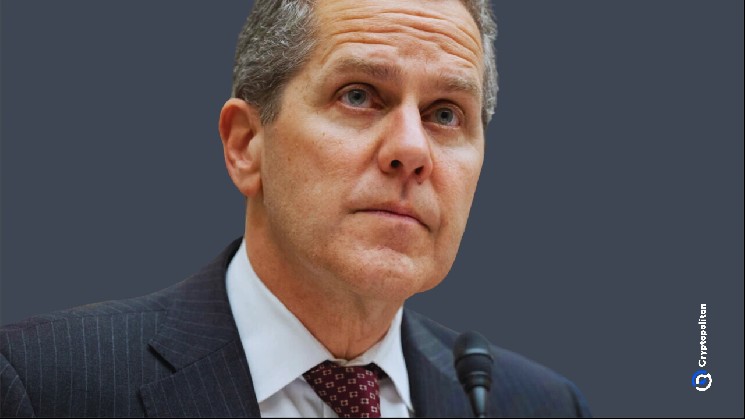
Federal Reserve Governor Michael S. Barr cautioned that although the Guiding and Establishing National Innovation for United States Stablecoins Act (GENIUS Act) established a first‑of‑its‑kind regulatory framework for dollar‑linked stablecoins, much work remains to fully mitigate systemic risks.
Although it is a step forward, the new rules have yet to eliminate a lot of the risks. When stablecoins fail to take root, they can become unstable without proper discipline and oversight, he said.
Congress introduced the GENIUS Act to put order and predictability in the rapidly growing stablecoin industry. It sets the parameters for how such digital assets must be issued and backed, thereby providing the industry with far greater protection.
Barr conceded that the law could facilitate innovation and make stablecoins more common. But he said that history has shown what can happen when private cash is created without adequate safeguards.
“Stablecoins will be stable only if they can be reliably and promptly redeemed at par in a wide range of conditions, including during stress in the market that can put pressure on the value of otherwise liquid government debt and during episodes of strain on the individual issuer or its related entities,” Barr said.
Why stablecoins could still be risky
Stablecoins are guaranteed to maintain a stable value, usually pegged to the U.S. dollar. But for that to work, the companies behind them need enough good assets—cash and government bonds, etc.—to back every coin they are issuing.
Barr stressed that stability depends on one thing: customers can redeem their stablecoins for real dollars at any time during a financial crisis. And if that trust erodes, everyone can withdraw all their money at once in what is known as a “run.” And it gets even worse, because those issuing the coin try to boost financial profits by taking on the riskiest assets.
That may result in higher stock losses and a worse system if they are unstable and are hard to sell. Barr said reserve assets should be secure and liquid. Well, stablecoins can still go bad, and their value quickly disappears in the process, harming not only our wallets but the rest of society if you lose them.
At the same time, he also admitted, in a very different way, that the value of stablecoins could be misused, be harmful to businesses and legal businesses, and that there is a need to ensure people have a clear understanding and to protect U.S. currency.
Why regulation doesn’t always match reality
Barr’s warning highlights a bigger point: passing laws is only part of the solution. For stablecoins to be truly secure, regulators, banks, and state agencies must collaborate to implement and enforce them efficiently.
The CLARITY Act is based on the existing stablecoin laws. In July 2025, the GENIUS Act, signed into law by President Trump, included a regulation for dollar-backed payment stablecoins.
The GENIUS Act requires issuers to maintain fully backed liquid pools. The required reserve assets are physical currency and short-term government bills. To maintain investors’ trust in issuers, they are required to disclose all balances with their reserves every month.
Barr said, though, that there are still gaps that need to be filled. For instance, as stablecoin issuers are evaluated, there will need to be coordination among the various financial bodies to monitor and maintain compliance with government regulations; for that matter, all of these actors must coordinate with each other, and such coordination is critical. So without that, risks could slip through the cracks and get lost.
The same concerns also apply to those trying to regulate digital assets. Lawmakers are still struggling to come together to craft new proposals, such as the Clarity Act, which more broadly guides industry regulation of cryptocurrencies. Stablecoin risks could be one of the main reasons things are cooling down.
Previously, Barr had predicted that the GENIUS Act could reduce the risk of sudden market panic to the point of strict regulation. Still, he believes strong oversight is needed to achieve that.

 cointelegraph.com
 en.bitcoinsistemi.com
