



 4
4
Anthropic has sued the US government after the Pentagon labeled the company a “supply chain risk,” a move that could reshape how artificial intelligence providers work with the military. The lawsuit challenges the decision and raises questions about how defense contractors source AI systems.
Markets are now watching whether the dispute could ripple through companies tied to military AI infrastructure, including software firms such as Palantir Technologies and defense contractors like Lockheed Martin.
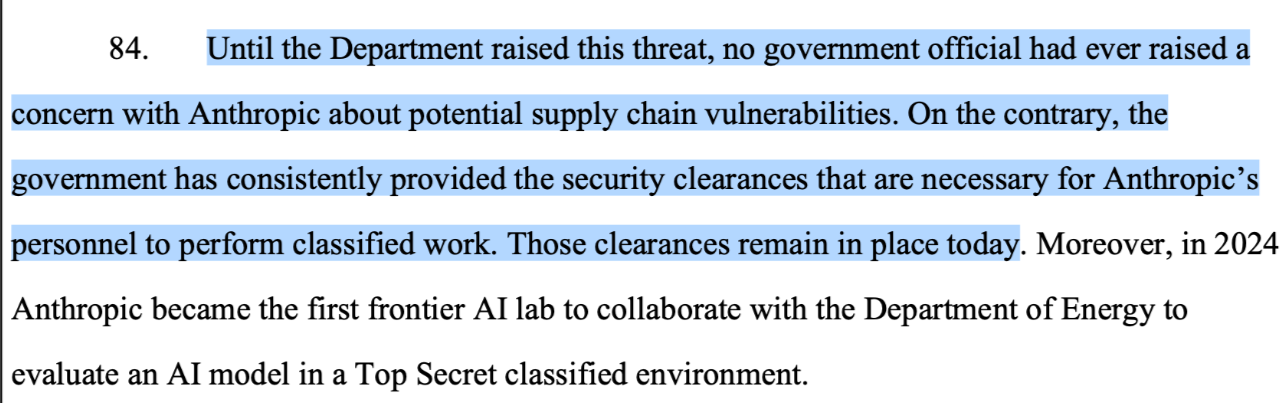
In this lawsuit, Anthropic says that despite the supply chain risk designation issued the other week, their personnel still have security clearances "that are necessary for Anthropic’s personnel to perform classified work" pic.twitter.com/6EZZ7ngiVF
— Hadas Gold (@Hadas_Gold) March 9, 2026
Pentagon Label Triggers Legal Fight
The dispute began earlier this month when the US Department of Defense formally classified Anthropic as a supply chain risk.
The designation effectively prevents defense contractors from using Anthropic’s AI systems in certain military programs.
Pentagon officials argued the measure protects national security and ensures that AI tools used in defense systems meet strict supply-chain standards.
The decision immediately affected contractors that integrate commercial AI models into military software and analytics systems.

Anthropic strongly rejected the classification. The company said the designation lacks transparency and could unfairly exclude a major AI provider from government work.
On Monday, Anthropic filed a lawsuit challenging the government’s decision.
According to court filings, the company argues the Pentagon acted without clear justification and that the label damages its ability to compete for federal contracts.
The lawsuit asks the court to block the designation and require the government to explain the national security rationale behind the move.
Risks for US Defense Technology Partners
The legal fight could create uncertainty for companies that rely on external AI models in defense software systems.
One of the most closely watched names is Palantir Technologies, which builds analytics platforms used by the US military and intelligence agencies.
If Anthropic’s models become restricted in defense programs, Palantir and similar contractors may need to switch to alternative AI providers.
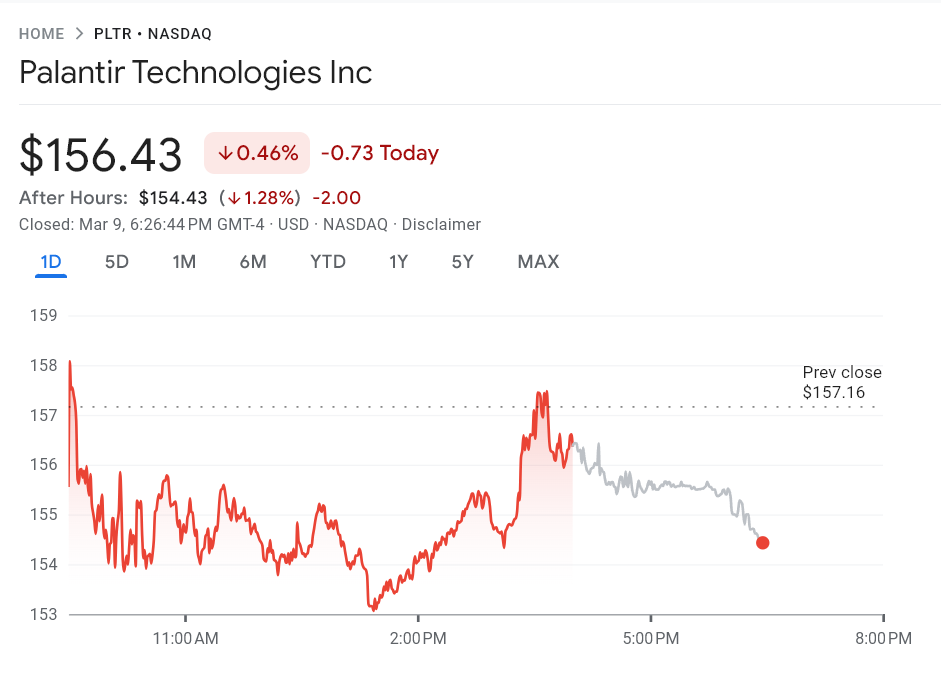
Such transitions can slow deployment timelines and require technical adjustments. However, most analysts expect software contractors to replace models rather than lose government contracts.
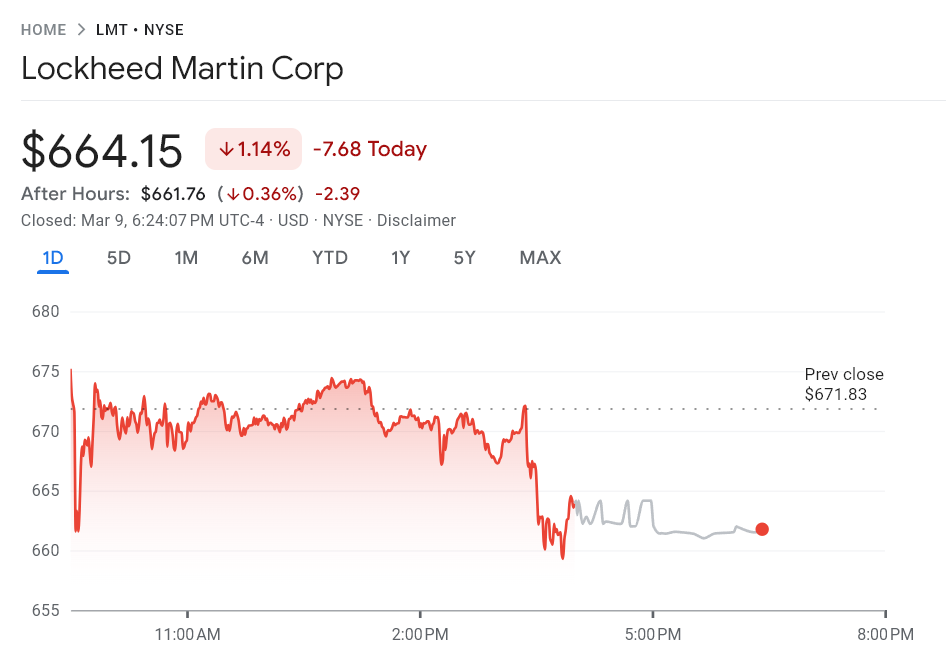
Large defense manufacturers face a smaller risk.
Lockheed Martin, the largest US defense contractor, said it does not rely on a single AI provider. The company indicated the Pentagon’s decision would likely have minimal impact on its programs.
That reflects a broader trend in defense technology: major contractors typically integrate multiple vendors to avoid dependence on one software supplier.
Opportunity for Rival AI Providers
While the lawsuit creates uncertainty for Anthropic, it could benefit competing AI companies.
If the Pentagon maintains restrictions, defense contractors may shift toward other model providers such as OpenAI or cloud platforms tied to Microsoft and Amazon.
Those firms already provide infrastructure and AI services used by government agencies. A shift in procurement could expand their role in military AI systems.
Yesterday we reached an agreement with the Department of War for deploying advanced AI systems in classified environments, which we requested they make available to all AI companies.
— OpenAI (@OpenAI) February 28, 2026
We think our deployment has more guardrails than any previous agreement for classified AI…
However, the outcome now depends on the courts. If Anthropic wins the case, the Pentagon may need to revise or narrow the supply-chain designation.
For investors and defense contractors, the dispute highlights a larger issue.
As artificial intelligence becomes central to military systems, the government’s ability to approve or restrict AI vendors could influence both the technology sector and defense industry supply chains.

 coindesk.com
 cryptopolitan.com

 u.today
