


 22
22
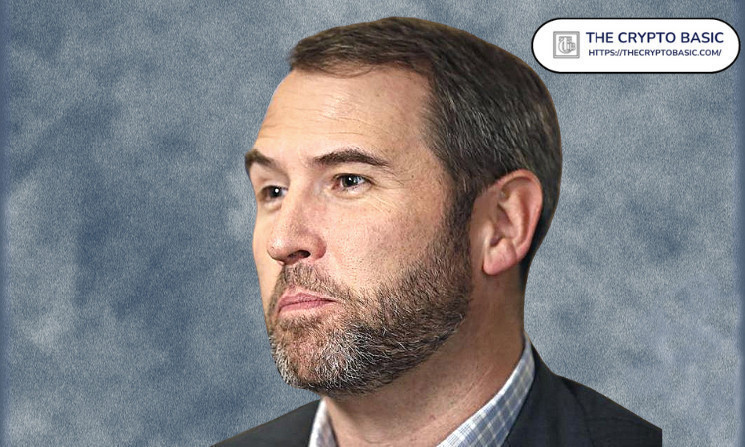
Ripple CEO Brad Garlinghouse publicly rejected claims that individuals and companies cannot win legal battles against the U.S. federal government.
Garlinghouse’s response underscores that, while federal cases are difficult to win, there is still a chance that people and companies can emerge victorious in cases initiated by the federal government. His commentary has once again stirred discussion around Ripple’s legal win against the United States Securities and Exchange Commission.
Key points
- Ripple CEO Brad Garlinghouse has publicly dismissed claims that individuals and companies cannot win legal battles against the U.S. federal government.
- The company had secured a partial victory in court against the SEC in 2023.
- Ripple’s case indicates that determined defendants can still secure meaningful victories.
- Critics pushed back, noting that Ripple’s success stemmed from its case being civil, not criminal.
Ripple CEO Refutes Claims That You Can’t Win Against US Government
In a short X post, Ripple CEO Brad Garlinghouse has strongly disputed claims that fighting the U.S. federal government in court is futile.
His remarks came in response to statements from Theranos founder Elizabeth Holmes, who argued that federal prosecutions are nearly impossible to defeat. Holmes claimed that the government wins over 98% of cases and suggested that once federal authorities target someone, victory is virtually unattainable.
Reacting, Garlinghouse rejected that premise outright in a post, saying ‘Not True.” His reaction stems from Ripple’s experience with the U.S. government through the SEC in December 2020.
At the time, the SEC sued Ripple, accusing the company of selling $XRP as an unregistered security. Instead of pursuing an early settlement, Ripple mounted a full legal defense, investing more than $150 million in the process.
The court ultimately ruled that $XRP itself is not a security and that Ripple’s programmatic sales and certain distributions were lawful. Only the company’s institutional sales were found to violate securities laws.
Cases Against the US Government Are Winnable
Despite that mixed outcome, Garlinghouse views the case as proof that the federal government does not always win outright. His rebuttal to Holmes underscores a broader message that legal battles against regulators are difficult and expensive, but not unwinnable.
For the crypto industry, Ripple’s case remains a defining moment. It introduced judicial clarity into digital asset classification and demonstrated that federal enforcement actions can be successfully challenged in court.
Holmes Pushes Back
Meanwhile, Holmes pushed back against Garlinghouse’s assertion, arguing that the SEC’s case against Ripple was purely civil, not criminal. She noted that Ripple and its executives faced civil allegations from the SEC, resulting in financial penalties, including a $125 million payment.
Holmes stressed that no criminal charges, indictment, or Department of Justice action accompanied the case, underscoring the distinction between regulatory enforcement and criminal prosecution. Despite her assertion, several commenters still agreed with Garlinghouse’s opinion that people can still emerge victorious in cases against the U.S. government.

 coinfomania.com
 news.bitcoin.com
 coingape.com
 coinpedia.org