


 1
1
 3
3
Vitalik Buterin has warned that the European Union’s regulatory approach under the Digital Services Act risks undermining pluralism by trying to leave “no space” for controversial speech or products online.
In a detailed post on X, the Ethereum co-founder argued that a free society should not aim to eliminate ideas it considers harmful. Instead, he said regulators should focus on stopping such content from being algorithmically amplified and dominating public discourse.
What the EU’s “No-Space” Approach Means
The Digital Services Act applies to the entire online ecosystem. Any service reaching EU users falls under the law, regardless of size or location. Obligations scale with reach and risk, but no platform sits outside the regulatory framework.
This design aims to close legal and technical loopholes that previously allowed platforms to avoid responsibility.
Critics describe this as a “no-space” approach, meaning there should be no unregulated digital gaps where harmful content can escape accountability.
This is what I worry Europe will get negatively polarized into: an ideology taking pride in a neat, sanitized online environment free of evil corporate and fascist pathogens.
— vitalik.eth (@VitalikButerin) December 26, 2025
I hope European govs do not go this way, and instead take a Pirate Party approach of user empowerment.… https://t.co/oH7Yfdg9pa
The goal is not blanket censorship. Instead, the DSA focuses on risk assessments, transparency, and platform design choices that influence how content spreads.
Buterin said the real failure of modern social platforms is not that fringe views exist, but that algorithms often push them at scale.
He warned that zero-tolerance thinking can lead to overreach, conflict, and growing reliance on technocratic enforcement.
should be solved at as local a level as possible, ideally the operator of whatever institution is using the room and organizing toddlers to come there, otherwise the municipality
— vitalik.eth (@VitalikButerin) December 26, 2025
Buterin warned that treating disliked ideas as pathogens to be erased reflects an anti-pluralistic instinct. He argued that disagreement is inevitable in open societies and that trying to fully remove controversial views often expands surveillance and enforcement powers.
He advocated for user empowerment, transparency, and competition. In his view, platforms should reduce incentives that reward harmful content, rather than attempting to eliminate it entirely.
Bullish for Privacy Coins?
The debate has also drawn attention to privacy coins such as Monero and Zcash.
As regulators push platforms to monitor behavior and retain more data, users may grow more aware that increased oversight often leads to greater data exposure.
That strengthens the narrative appeal of financial tools designed to minimize traceability.
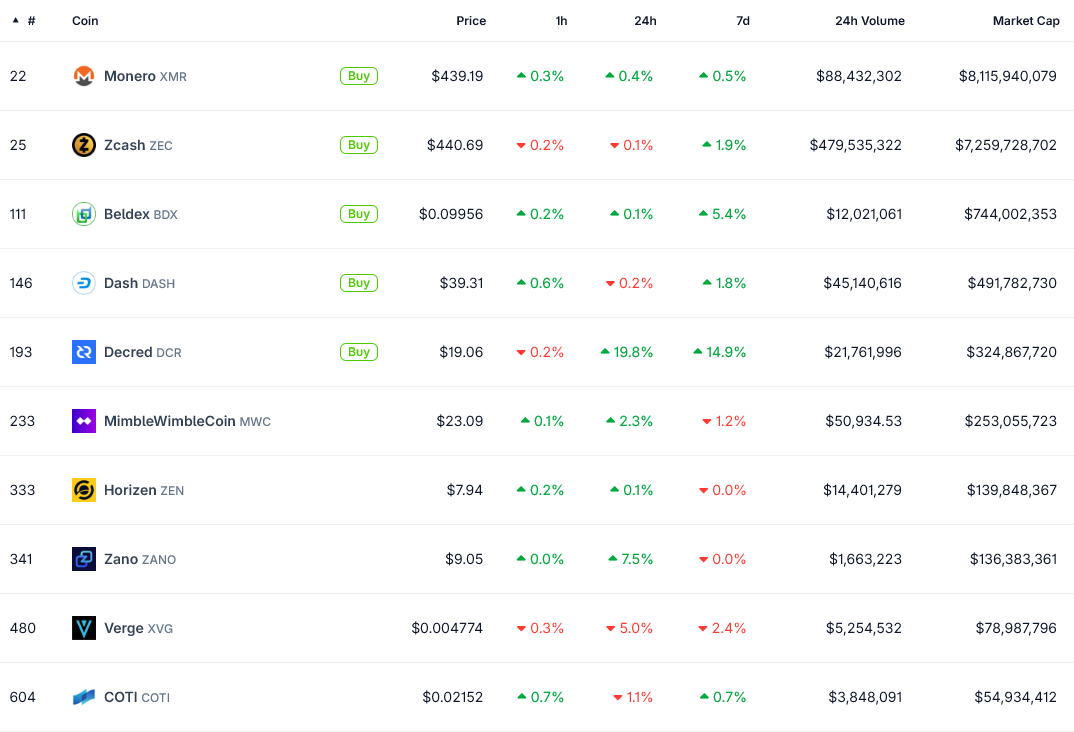
However, the impact is uneven. While philosophical support for privacy coins may grow, access in regulated EU markets remains constrained. Exchanges continue to limit or delist them due to compliance risk.
In short, Europe’s approach reinforces why privacy matters, even as it complicates where privacy-focused tools can operate.
The post Vitalik Buterin Slams EU’s ‘No-Space’ Digital Rules appeared first on BeInCrypto.

 coingape.com

 cryptopolitan.com
 theblock.co

 en.bitcoinsistemi.com
