


On August 31, Andreessen Horowitz (a16z) raised additional $1.75 billion with the help of its fifth growth fund after it had closed its own AI hardware fund at $1.1 billion just a few days prior to that.
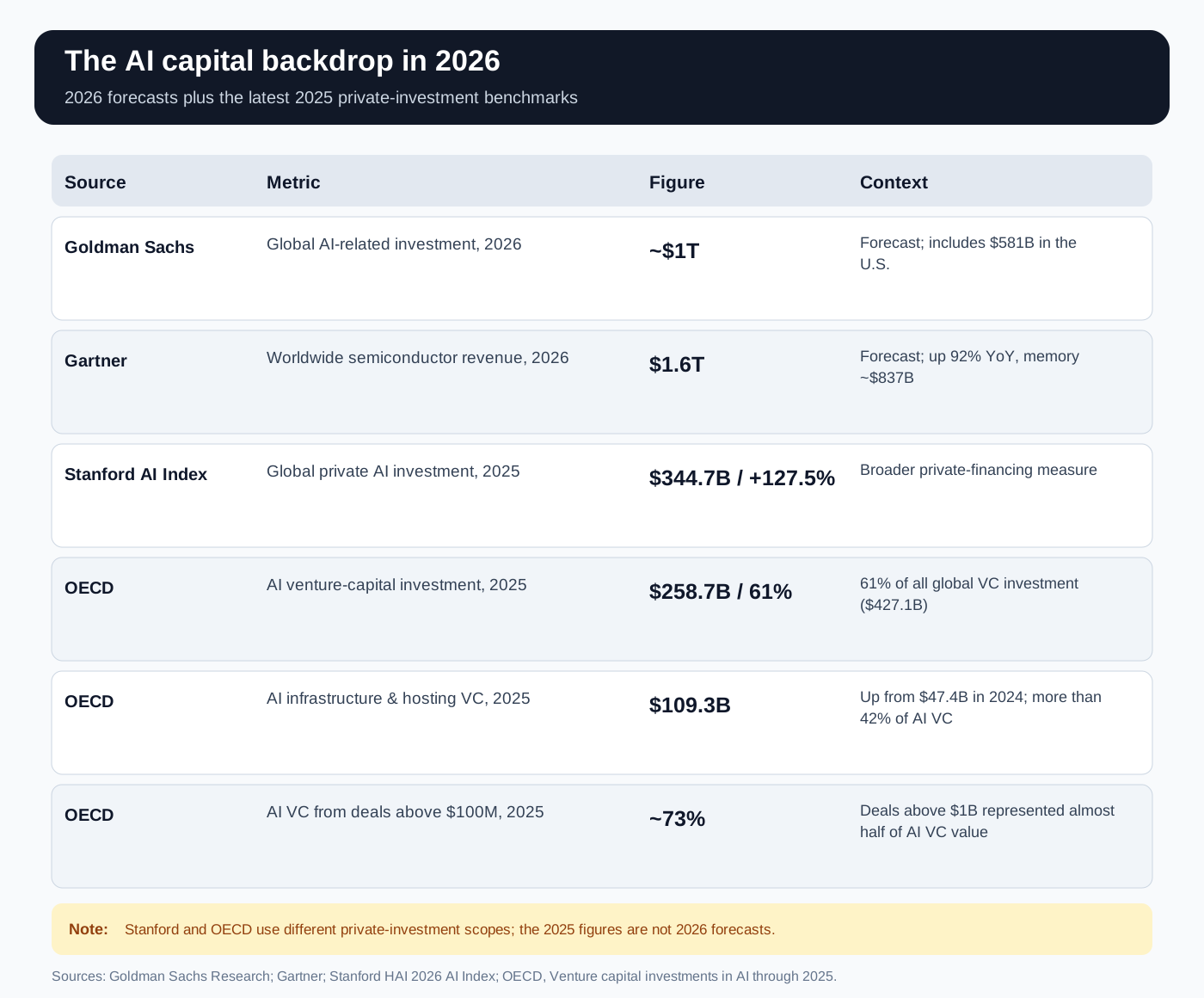
These two consecutive raises of funds coincide with the recent research made by Goldman Sachs that the investment into AI around the world will reach $1 trillion in 2026, which indicates that money is flowing through the whole spectrum of the industry at a remarkable rate.
Growth fund: a venture fund allocated to last stage startups in need of money to grow their products, teams, sales, and geographical reach.
Two funds in one week
The growth fund debuted in January at $6.75 billion, thus the latest $1.75 billion is an extension rather than creation of new financial vehicle, according to TechCrunch. David George, the leader of a16z Growth, shared that the team has supported more than 100 companies on their growth-stage journey over the past seven-plus years, mentioning Databricks and SpaceX in the company announcement.
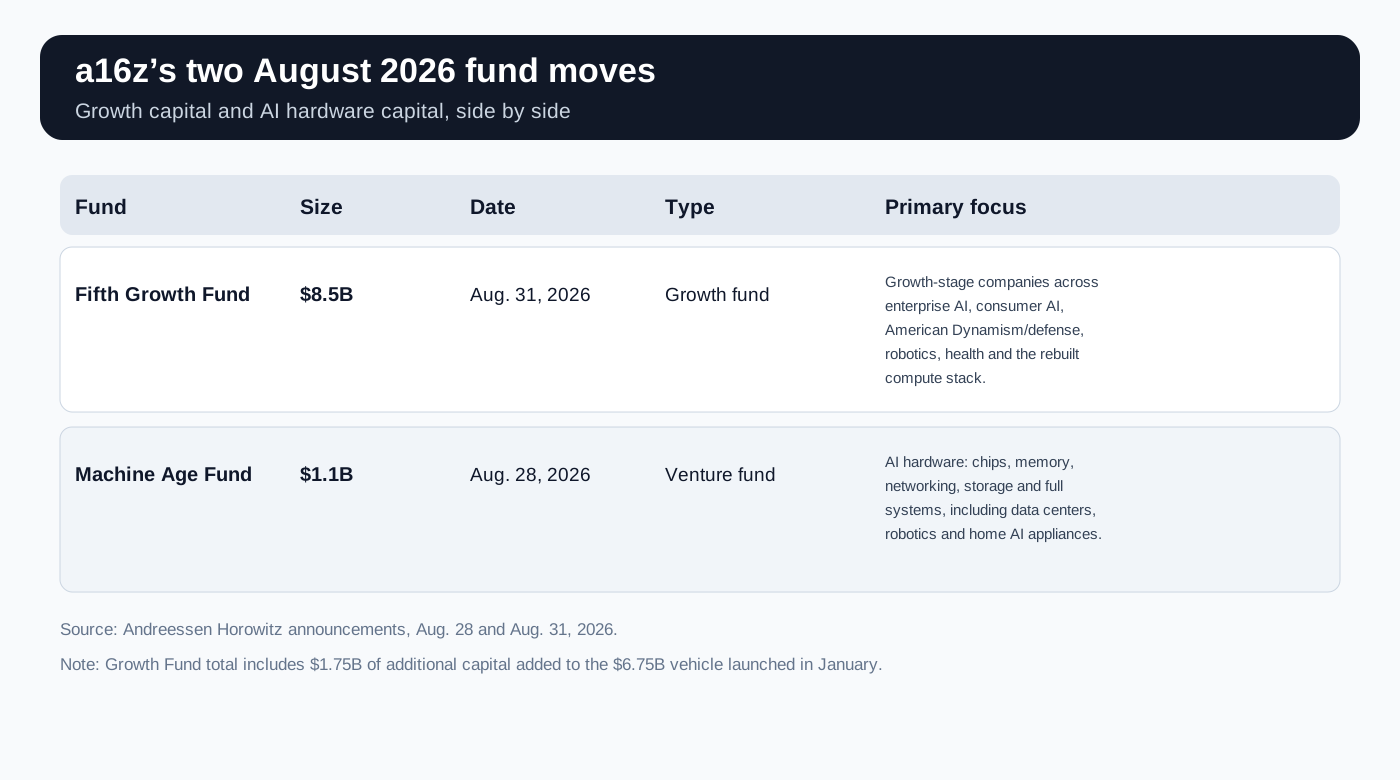
Both funds are part of a wider initiative. a16z revealed more than $15 billion in new funds in January. It was also reported by TechCrunch that it manages around $90 billion. The strategy for growth includes enterprise and customer artificial intelligence, defense and industrial technology, robotics, health, and infrastructure.
Betting on the machine age
The $1.1 billion Machine Age Fund takes a16z deeper into the physical layer of AI.
Machine Age Fund: a16z’s $1.1 billion fund for the physical AI stack, from semiconductors and memory to networking, storage, data centers and robotics.
a16z believes that artificial intelligence is leading to changes in hardware. From the first H100 systems to Rubin, compute density in each rack has been multiplied by 28, rack power consumption has grown from 5 to 10 KW to 100-250 KW, and it is expected to reach 1 MW in three years, while hardware supply growth is traditionally around 20-30% annually.
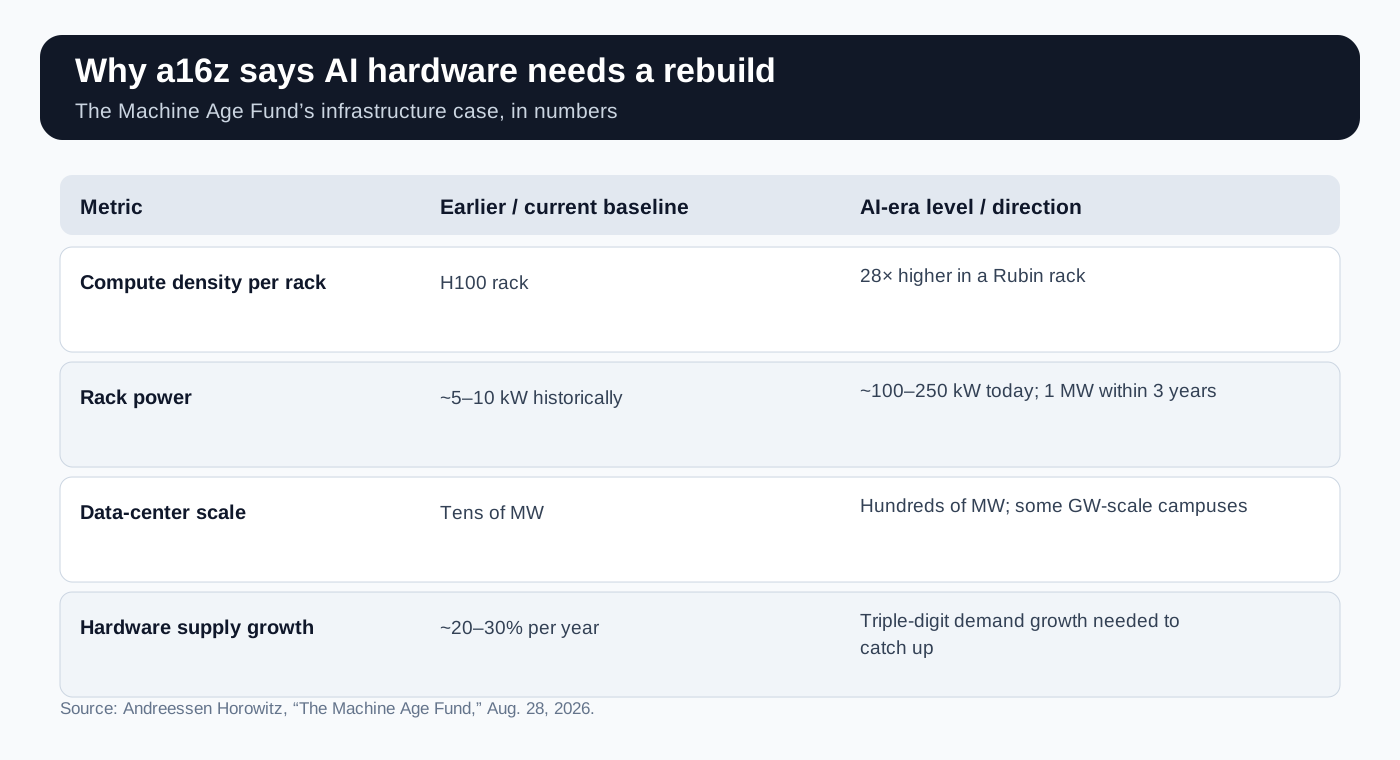
Independent investment data points in the same direction. The OECD found that AI infrastructure and hosting companies attracted $109.3 billion in venture capital in 2025, up from $47.4 billion in 2024 and accounting for more than 42% of all AI VC investment that year.
A $1 trillion backdrop
Goldman Sachs Research estimates about $1 trillion in worldwide AI-related investment in 2026, including $581 billion in the US, with cumulative global AI investment since 2022 reaching roughly $1.8 trillion by year end.
Gartner forecasts semiconductor revenue of about $1.6 trillion this year, up 92%, with memory alone at roughly $837 billion. It expects AI data centers’ share of chip revenue to rise from 36.5% in 2026 to more than 53% by 2030.
Stanford’s 2026 AI Index found global private AI investment reached $344.7 billion in 2025, up 127.5%, while US private AI investment hit $285.9 billion, more than 23 times China’s $12.4 billion.
The OECD uses a narrower venture-capital measure. It found AI companies attracted $258.7 billion, or 61% of the $427.1 billion invested across the global VC market in 2025, up from 30% in 2022. That shows just how sharply venture funding has tilted toward AI, even before the latest a16z raises.
Money reaching companies faster
The OECD also found deals above $100 million accounted for about 73% of AI VC investment value in 2025, while deals over $1 billion represented almost half. That concentration helps explain why a relatively small group of AI companies is reaching enormous private valuations so quickly.
Anthropic, OpenAI and xAI reached $100 billion valuations in roughly five years, according to Forge Global, versus about 16 years on average for older companies such as SpaceX, Stripe and Waymo.
That appetite is now reaching deeper into hardware. British chip startup Fractile recently entered talks over a $6.5 billion pre-money valuation after securing a preliminary agreement to supply about $250 million of chips to Anthropic, as Cryptopolitan reported. Its chips are not expected until 2027, making the valuation a clear example of investors pricing future AI infrastructure demand well before the hardware reaches the market.

 ambcrypto.com

 cointelegraph.com
 crypto-economy.com
