
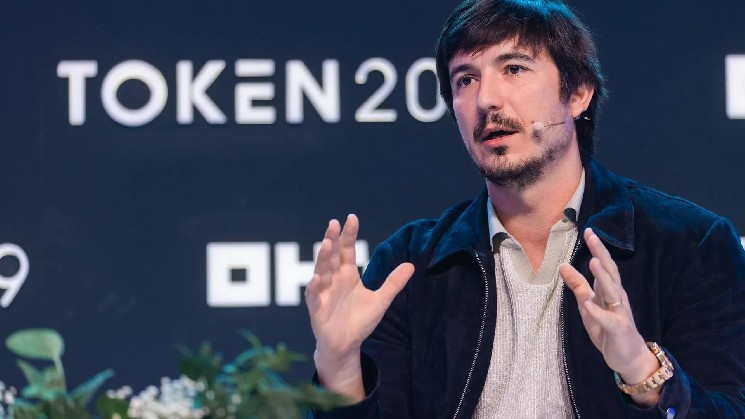

Robinhood (HOOD) CEO Vlad Tenev is pressing U.S. regulators to clear a path for tokenized stocks, arguing that America risks ceding the next generation of financial-market infrastructure to overseas markets.
In a post on X, Tenev said the financial system is in the early stages of what he called a global “tokenization supercycle,” building on his prediction last year that the technology would become a “freight train” capable of reshaping traditional finance.
Robinhood has already made tokenized U.S. stocks available outside the country, giving users in more than 120 countries economic exposure to more than 190 U.S. stocks, including dividends.
“Tokenization isn’t about putting stocks on a blockchain for the sake of it,” Tenev said. “Rather, we are rebuilding the infrastructure underneath ownership so that assets can move as freely as information does on the internet. For American investors, that infrastructure unlocks three immediate advantages.”
The tokenized shares in Robinhood are backed 1:1 by underlying stocks, but holders do not directly own those shares — a distinction that has become central to the debate over what tokenized equities actually represent.
Read more: Wall Street transfer agents lobby SEC, warning that third-party tokens pose risks to market integrity
Tenev argued that focusing only on ownership structure misses the broader market-structure shift. Tokenized assets can potentially trade around the clock, settle in real time and move between compatible wallets and platforms without relying on the transfer systems used by traditional brokers.
For Tenev, the strongest case is settlement.
He pointed to the 2021 GameStop (GME) trading frenzy, when Robinhood restricted purchases of some stocks after clearinghouse collateral demands surged. The episode has remained central to Tenev's argument that legacy settlement infrastructure can create acute pressure during periods of market stress.
“On the blockchain, Stock Tokens can trade, settle, and move in real time. Real-time settlement means much less risk and pressure on the system, particularly in times of severe market stress,” Tenev said.
U.S. stock settlement has since moved from two business days to one, known as T+1. Tenev argued that tokenization could further reduce that delay, thereby lowering the risk and collateral requirements that arise between a trade and its settlement.
He also said tokenization could address two other longstanding frictions in traditional markets: limited trading hours and cumbersome asset transfers.
Robinhood currently offers 24/5 stock trading in the U.S., but Tenev said blockchain infrastructure could make 24/7 trading native rather than requiring brokers to connect multiple exchanges and alternative trading systems.

 beincrypto.com

 thedefiant.io

