


 2
2
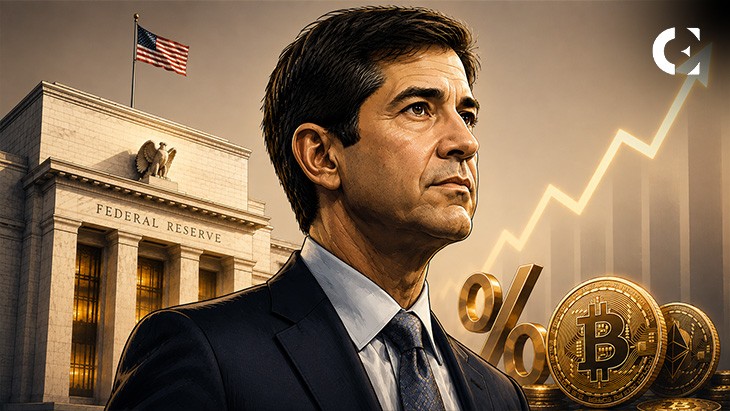
Wells Fargo Investment Institute has changed its Federal Reserve outlook as the debate over another tightening cycle returns. The institute now expects one 25-basis-point increase during 2026 and another increase during 2027. That path would eventually place the federal funds target range at 4.00% to 4.25%.
For crypto investors, the change matters through interest rates, market liquidity, and demand for risk assets. Bitcoin does not respond mechanically to every Fed move, and Wells Fargo’s call is only a forecast. Still, research has found that tighter U.S. monetary policy can weaken the common price cycle across crypto assets.
The new forecast also arrives while markets remain divided about the Fed’s next move. Most economists currently expect no September increase, while futures still reflect another hike before year-end. That split leaves Bitcoin and altcoins exposed to further repricing as new inflation and employment data arrive.
Wells Fargo Reverses Its Fed Rate Forecast
The new Wells Fargo forecast marks a clear change from its public outlook earlier this summer. In June, the institute expected the federal funds rate to end both 2026 and 2027 at 3.50%-3.75%. It also expected year-end CPI inflation of 3.4% for 2026 and 2.8% for 2027.
WELLS FARGO NOW SEES FED HIKES
— *Walter Bloomberg (@DeItaone) August 17, 2026
Wells Fargo Investment Institute now expects the Fed to raise rates by 25 bps in 2026, reversing its previous forecast for no change.
It also expects another 25-bp hike in 2027, taking the federal funds rate to 4.00%–4.25%.
The shift marks a more…
Its revised view now includes a quarter-point increase this year and another during 2027. The change follows a reassessment of inflation, energy costs, tariffs, and supply conditions. Wells Fargo still expects some inflation pressure to ease later in 2026 and into 2027.
The Federal Reserve currently holds its target range at 3.50%-3.75%. The central bank has kept that range unchanged through several meetings during 2026. Its July decision also produced disagreement among policymakers over the appropriate next move.
Inflation data offer a mixed backdrop for that debate. Headline CPI rose 0.1% in July and increased 3.4% from one year earlier. Core CPI increased 0.2% monthly and 2.5% annually, according to the Bureau of Labor Statistics.
Energy prices declined 1.5% during July, although they stood 14.7% above their year-earlier level. Meanwhile, shelter increased 0.1% during the month and contributed heavily to headline inflation. Those figures arrive before the Fed’s September 15-16 policy meeting.
Why Higher Fed Rates Matter for Bitcoin
Interest rates influence crypto through the broader financial system rather than through Bitcoin’s protocol. Higher policy rates can lift returns available from cash, Treasury bills, and other lower-risk assets. That changes the relative cost of holding assets without contractual income.
IMF researchers found a measurable relationship between U.S. monetary policy and the wider crypto market. Their study identified a common crypto factor explaining about 80% of price movements within its dataset. Fed tightening reduced that factor through the same risk-taking channel that influences equities.
The research also found growing connections between crypto and global equity markets as institutional participation increased. That relationship matters when tighter policy reduces demand for higher-risk assets. Bitcoin can therefore trade more like a financial risk asset during periods of broad market stress.
Earlier market data provide another example of that relationship. The ECB recorded Bitcoin falling by more than half after November 2021. That period coincided with changing expectations for U.S. monetary tightening and rising geopolitical risks.
Higher rates can also affect crypto liquidity through stablecoins and traditional financial channels. A Federal Reserve research note says elevated rates raise the opportunity cost of holding non-interest-bearing stablecoins. Investors can instead access interest through conventional short-term instruments when yields rise.
That mechanism does not mean a Fed hike automatically removes capital from cryptocurrency markets. Stablecoin reserves themselves can include Treasury securities and other interest-bearing assets. Still, higher market yields change the relative returns available outside Bitcoin and other non-yielding tokens.
Altcoins Could Face a Different Rate Shock
Bitcoin and altcoins have not always reacted equally during periods of tighter financial conditions. The ECB found that several major crypto assets suffered steeper declines than Bitcoin during the 2021-2022 market downturn. That period also included rising U.S. rate expectations.
Liquidity helps explain part of that difference. Bitcoin has deeper trading markets than many smaller cryptocurrencies, while lower-liquidity assets can experience wider price moves. Leveraged positions can increase that sensitivity when prices begin falling.
The ECB found that leverage had increased across crypto markets during its study period. It also documented cases where long liquidations followed initial Bitcoin declines and then added further selling pressure. The same mechanism can operate across leveraged altcoin markets.
A renewed rate-hike cycle could therefore affect highly leveraged crypto positions through several channels. Higher borrowing costs can reduce demand for leverage, while weaker prices can move positions toward liquidation levels. Falling risk appetite can also reduce trading depth in smaller markets.
Bitcoin can still decline sharply under those conditions. The distinction is that smaller tokens often combine lower liquidity with higher historical volatility. The ECB has also recorded crypto volatility far above diversified equity and bond markets.
That does not establish that Bitcoin must outperform every altcoin during another Fed tightening period. Token-specific news, network activity, and market positioning can produce different outcomes. Monetary policy represents one market driver rather than the only price input.
Has Crypto Already Priced in Another Fed Hike
Current interest-rate markets do not treat another 2026 increase as an unexpected scenario. A Reuters poll published August 17 found that markets favored a September hold by almost 70%. At the same time, futures still priced one rate increase by the end of December.
Most economists remain less hawkish than Wells Fargo. Reuters found that 94 of 104 economists expected no September change. Eighty respondents expected the Fed to keep rates unchanged through the end of 2026.
Only 22 economists expected at least one increase this year, while two expected a cut. The poll median also showed no rate change through the end of 2027. Wells Fargo therefore sits on the more hawkish side of current private-sector forecasts.
The market has already adjusted after softer U.S. economic reports. July payrolls unexpectedly declined, while retail sales also weakened. July CPI eased to 3.4% annually from 3.5% in June, reducing expectations for an immediate September increase.
That means part of the possibility of another Fed hike already exists within market pricing. It does not mean markets have fully priced Wells Fargo’s exact 2026 and 2027 path. Further repricing can occur when future probabilities change after economic releases.
The Fed will receive more inflation and employment information before its September meeting. August CPI is scheduled for September 11, while other labor data will arrive earlier. The Federal Reserve also follows PCE inflation when assessing progress toward its 2% objective.
For crypto markets, the measurable signals include Fed futures pricing, Treasury yields, the dollar, and leverage levels. Stablecoin flows and Bitcoin’s relationship with equities can also show changes in risk appetite. Those indicators can move before the Federal Reserve actually changes its policy rate.
Related: Trump Crypto Meeting Could Shape Policy Signals for Bitcoin and US Stocks

 coindesk.com
 beincrypto.com

 crypto.news

 theblock.co