

Soon you will pull out your phone, tap to pay with a credit card, a peer-to-peer app, or your bank app, and there is a good chance you will use a stablecoin without ever knowing it. Your experience will not change. But the plumbing behind it will, for the better.
That shift is already underway. Stablecoins have grown from about $250 billion in circulation last July to more than $310 billion today, a nearly 25% increase in volume. Congress saw it coming, which is why lawmakers and U.S. President Donald Trump enacted the GENIUS Act last year, putting federal regulation around the future of the dollar so it can move safely around the world through U.S. institutions with real BSA, AML, and sanctions programs. That is how you keep the dollar dominant and put it within reach of more people.
As Head of Global Operations at Anchorage Digital, I often think about this forthcoming change through two different experiences but ultimately come to the same conclusion. Anchorage Digital is home to America’s first federally chartered digital asset bank and the first federal stablecoin issuer. And as a former national bank examiner at the OCC with about a decade of experience supervising America’s traditional banks I’ve learned the same lesson: a wider federal regulatory perimeter makes America stronger.
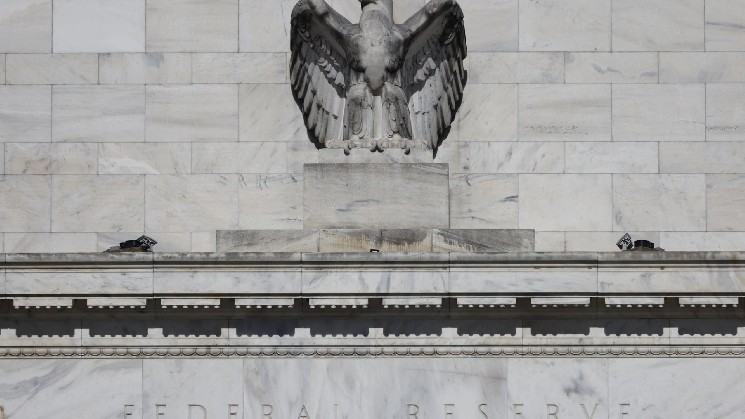
Anchorage Digital Bank, N.A. is proof of that lesson. Yet despite having helped widen that perimeter by pioneering federally-regulated crypto banking that complies with our country’s laws, nationally-chartered banks like ours are also boxed out of it, unable to access the Federal Reserve’s payment rails directly, because of the way master account access has been administered, not by real legal limitations. Therefore we rely on partner banks to touch dollars we already are authorized to move. Frameworks that require a federally regulated bank to use another bank just to move certain funds adds unnecessary risk and inefficiency to our financial system.
This broken system has burned us once before. Anchorage Digital Bank was debanked in 2023 by a bank partner of two years, on 30 days’ notice. We didn't know if we were going to make payroll. Clients couldn’t wire funds into their accounts. In short, debanking almost wrecked us.
Note: The views expressed in this column are those of the author and do not necessarily reflect those of CoinDesk, Inc. or its owners and affiliates.

-
1U.S. CPI inflation slows to 3.4% as expected, bitcoin holds near $64,000
-
2FlightAware drops Kalshi lawsuit over a market niche that data shows it never took off
-
3Russia moves to restrict retail crypto trading to bitcoin, ether and USDT
-
4XRP trading could get spicy after CPI report as futures bets hit highest since October
-
5Bitcoin holds near $64,000 as U.S. inflation data looms, Harmony exploit rattles altcoins
-
6Bank of England to test stablecoin, digital currency use in cross-border finance
-
7CoreWeave surges 16% on $2.58 billion revenue quarter as AI infrastructure demand eclipses crypto
-
8Fidelity moves to add staking, quarterly payouts to near $900 million ether ETF
-
9One overlooked group has added $1.78 billion of selling pressure to bitcoin market
-
10Live updates: Bitcoin holds $64,000 as July inflation meets forecasts

Building the Zcash Machine: Tachyon and Quantum Readiness
Building the Zcash Machine: Tachyon and Quantum Readiness
Zcash’s Tachyon upgrade aims to scale shielded payments, improve quantum readiness, and test whether its funding, security, and governance can hold.
Zcash’s Tachyon upgrade aims to scale shielded payments, improve quantum readiness, and test whether its funding, security, and governance can hold.
Why it matters:
Zcash’s Tachyon upgrade aims to scale shielded payments, improve quantum readiness, and test whether its funding, security, and governance can hold.
A part of FTX survived, and it’s the case for the CLARITY Act

Free Markets and Innovation, Sort Of


 cryptobriefing.com
 en.bitcoinsistemi.com


 beincrypto.com
