

 2
2
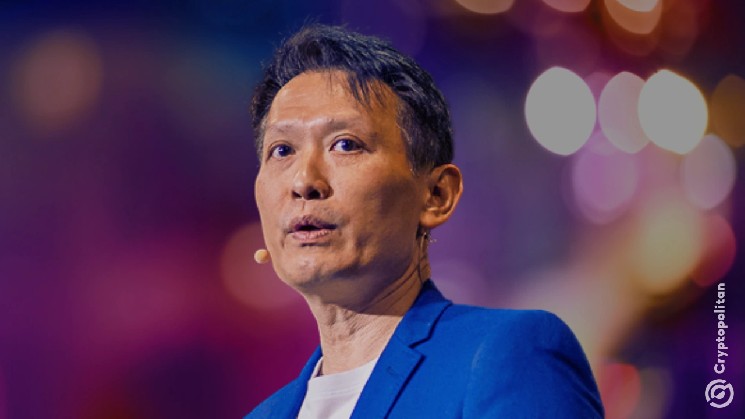
Richard Teng discovered crypto in 2017, while still working as a regulator, and it changed how he viewed the future of financial services. “The more I deep dive into it, I realized that this is going to be the future of financial services,” he said in a recent appearance on the podcast “Figuring Out With Raj Shamani.”
Now Co CEO of Binance, Teng argues that crypto is no longer only something people trade. In his view, it is increasingly becoming infrastructure that parts of the financial system can run on, because it can enable continuous markets and faster settlement.
Why is speed becoming the new currency of markets?
Teng highlighted limited trading hours and slow settlement as two frictions he sees across traditional finance.
Stocks and bonds in most markets still trade primarily during set business hours, he said. That leaves investors with fewer options to hedge or exit positions when major news breaks outside market hours and can require institutions to carry risk for longer than they would prefer.
Many securities markets also settle on a two-day cycle, known as T+2, during which capital can remain exposed to counterparty and market risk.
Crypto markets, by comparison, often operate on a 24/7 basis, and many transactions can settle more quickly. In some on-chain contexts, trades can clear close to instantly, without the same reliance on multiple intermediaries.
Teng said that speed is increasingly appealing to investors because it can reduce the duration of exposure. “In crypto, we have really moved to atomic settlement. It’s instantaneous because the technology provides for them,” he said.
Teng on Binance evolving beyond spot crypto
According to Teng, users increasingly want a single platform experience that brings together different tools for participating in digital-asset markets – from spot trading to other products and services used by different types of customers.
He said Binance serves a large global user base, and that the platform has continued to expand its offering over time. (Availability of products and features depends on jurisdiction, and not all products are available in all regions.)
In the conversation, Teng described Binance as building toward a broader suite of financial capabilities alongside crypto – a financial superapp, reflecting how he sees the market evolving: from a standalone asset class to rails that can support multiple types of financial activity.
Is tokenization becoming a new market fundamental?
Teng pointed to the growth of tokenized real-world assets – traditional instruments such as treasuries, credit, and commodities represented on a blockchain – as evidence that the shift is already underway.
On-chain real-world-asset value, excluding stablecoins, has grown by nearly threefold over the past year, reaching $32.6 billion, according to data from RWA.xyz.
Teng argued that institutions are exploring tokenization for many of the same reasons he cites for crypto more broadly: continuous markets, operational efficiency, and faster settlement.
“With stablecoin coming through and growing so rapidly, with real assets and tokenization coming through, even the SWIFTs of the world are forced to look at it and say, hey, look, we’re going to support blockchain,” he said.
That framing extends to how he thinks parts of finance may be rebuilt over time. “If you rethink from now on the future of financial services, given today’s tools, architecture and infrastructure,” Teng said, a new bank or asset manager built today “will not be the model that you see in the past.”
Teng also pointed to the changing outlook among some traditional finance leaders as a sign that the conversation is shifting. He referenced BlackRock CEO Larry Fink and JPMorgan CEO Jamie Dimon, arguing that as more market participants understand blockchain-based systems, more of them become open to use cases such as tokenization.

 theblock.co
 bitcoinworld.co.in
 cryip.co