


 9
9
Kevin Warsh told senators at his Senate confirmation hearing on Tuesday that he would keep monetary policy independent from the White House and signaled openness to lower interest rates as he seeks to succeed Jerome Powell as Federal Reserve chair.
His appearance before the committee comes as Trump has intensified his attacks on Powell for being too slow to cut rates, putting Warsh at the center of a growing political fight over the Fed. Trump formally sent Warsh’s nomination to the Senate in March for a four year term as chair and a separate 14 year term on the Board of Governors.
At his Senate Banking Committee hearing, Warsh said he would be independent of Trump, argued that Fed independence ultimately depends on the central bank itself, and said elected officials questioning the Fed does not by itself destroy that independence.
In prepared remarks and testimony, he also said the Fed’s credibility has been damaged by its failure to contain inflation and by what he sees as mission drift beyond core goals such as price stability.
Warsh also used the hearing to sketch out a different policy framework from the current Fed leadership. He said tariffs were not the reason inflation is running high, argued the economy is improving and has room to improve further, and criticized the Fed’s balance sheet as having played an unhelpful role in meeting its mandates.
He said he would prefer interest rates to be the dominant policy tool and argued that if rates were cut, the benefits would reach a broader range of Americans. Warsh has also pointed to productivity gains, including from AI, as support for lower rates, even as other Fed officials have been more cautious.
Warsh also addressed digital assets during the hearing. Asked by Sen. Cynthia Lummis whether digital assets should be incorporated into the financial industry so Americans have new investment opportunities and consumer protections, Warsh said digital assets are already part of the fabric of the US financial services industry.
The backdrop is Trump’s increasingly public clash with Powell. Trump originally elevated Powell during his first term, but has repeatedly attacked him since, pressing for faster rate cuts and criticizing the Fed’s restraint even as inflation risks remain elevated.
On Tuesday morning, the White House published remarks from Trump’s CNBC interview, underscoring that the issue remains live just as Warsh faces senators. Powell has also become entangled in a Justice Department probe after resisting Trump’s pressure, adding more political weight to the succession fight.
Warsh is not a newcomer to the institution he would lead. He served as a Fed governor from February 2006 through March 2011, spanning the global financial crisis, and later built a profile as one of the central bank’s most persistent outside critics.
In recent years he has argued that the Fed grew too large, leaned too far into areas like climate and other noncore issues, and relied too heavily on its balance sheet rather than sticking tightly to inflation control and rule bound monetary policy.
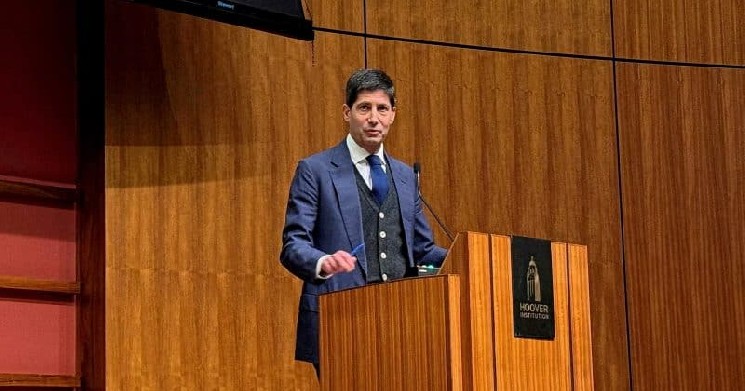
Before joining the Fed, Warsh worked at Morgan Stanley and served in the George W. Bush White House as a special assistant to the president for economic policy and executive secretary of the National Economic Council. Since leaving the Fed, he has held roles at the Hoover Institution and Stanford Graduate School of Business, while also working in private finance.

 coindesk.com
 cryptopolitan.com
 theblock.co
 en.bitcoinsistemi.com