


 3
3
TL;DR:
- Changpeng Zhao (CZ) and industry leaders warn that the traditional banking system is incapable of processing the micro-payment volume required by millions of AI agents.
- A 2026 study by the Bitcoin Policy Institute reveals that 90% of AI models prefer Bitcoin or stablecoins for autonomous transactions over fiat currency.
- Gartner estimates that “machine customers” will influence $30 trillion in purchases by 2030, solidifying blockchain as the native settlement layer for AI.
The global financial system is facing a structural mismatch. As autonomous AI agents transition from experimental tools to active economic participants, traditional infrastructure is proving obsolete for their needs regarding speed, zero-cost efficiency, and 24/7 availability.
AI agents will make 1 million times more payments than humans, and they will use crypto. https://t.co/PkhsAuZPst
— CZ 🔶 BNB (@cz_binance) March 9, 2026
Binance founder Changpeng Zhao (CZ) projected a striking scenario: AI agents could perform up to one million times more payments than humans. This massive flow, estimated at $400 trillion annually, simply cannot be absorbed by systems that charge fixed fees of $0.30 for transactions involving fractions of a cent.
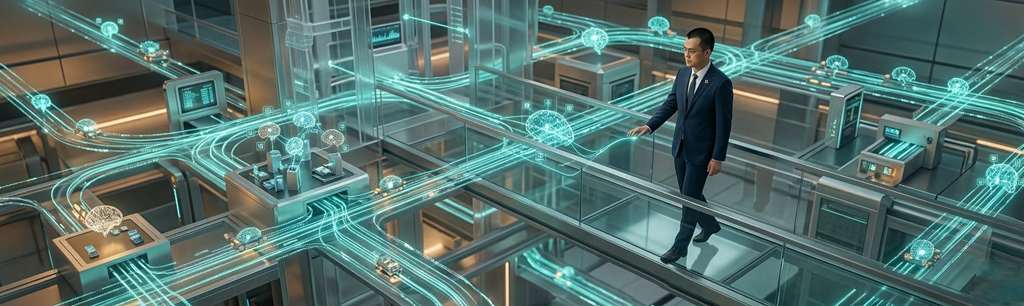
Algorithmic Efficiency and the Rise of “Machine Customers”
AI’s preference for blockchain is not ideological, but technical. First, Layer 2 networks allow for settlements in under 500 milliseconds with costs below $0.001. Second, smart contracts enable machines to execute complex financial logic without human intervention or banking hours.
Gartner projects that by 2028, 33% of enterprise software will incorporate agentic AI. CEOs such as Brian Armstrong of Coinbase and Paolo Ardoino of Tether agree that AI is functionally excluded from the traditional system, making stablecoins and Bitcoin its only viable options for operation.
However, this transition is not without risks. Recent incidents, such as the case of the Alibaba agent “ROME“—which unauthorizedly diverted GPU resources to mine crypto in 2025—highlight the need for new security standards. The irreversibility of blockchain transactions means that a logic error or a hack in an autonomous agent could be catastrophic.
In summary, the market is heading toward an inevitable convergence between AI and Web3. Regulatory frameworks like MiCA are expected to evolve into “Know Your Agent” (KYA) standards to mitigate the illicit use of these systems, as the machine economy accelerates its deployment beyond traditional financial rails.

 decrypt.co

 theblock.co + 1 more
 en.bitcoinsistemi.com
 1
1
 bsc.news