


 4
4
On March 10, 2009, the economy was on the brink of collapse, the S&P 500 sitting at ~679, having fallen nearly 60% from its 2007 peaks to mark the bottom of the 2008 financial crisis.
At the time, market sentiment was at its lowest. Bank failures, collapsing housing markets, and recession panic dominated the headlines, as investors kept asking themselves whether equities would recover at all.
However, the tide soon shifted, with coordinated government bailouts and fresh fiscal policies introducing much-needed changes that led to some of the most memorable bull runs in history.
Today, on March 10, 2026, exactly seventeen years later, the S&P 500 opened at ~6,796, up 900% from its 2009 lows.
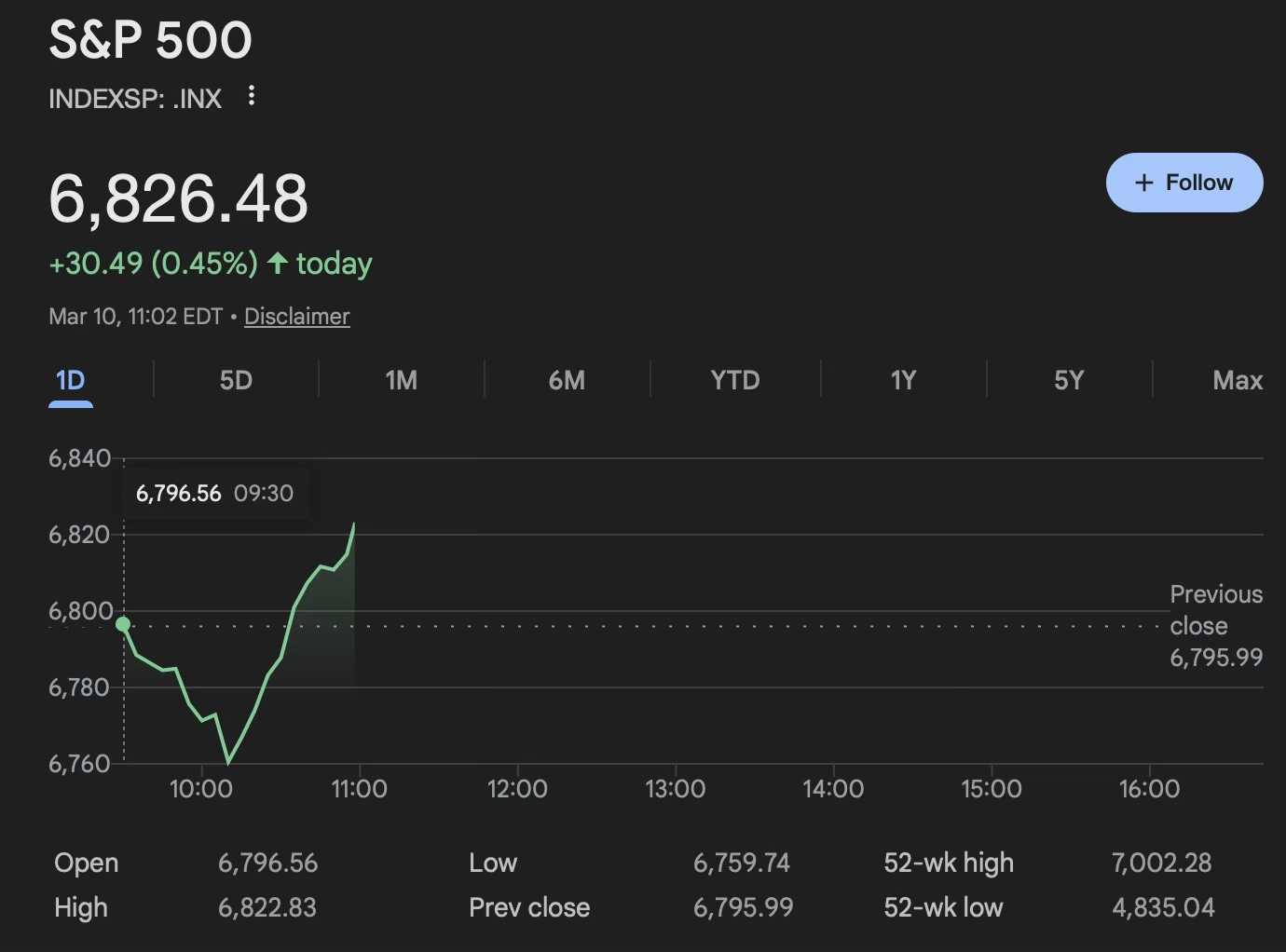
If you invested $1,000 in the S&P 500 in 2009, here are your returns
A 900% increase means the index has grown tenfold over the period in question. In other words, if you had invested $1,000 on March 10, 2009, your investment would now be worth approximately $10,000.
Note, though, that the figure is price-only. That is, if the investment tracked the S&P 500 with dividends reinvested, the value would be exponentially higher.
Looking ahead, Wall Street broadly expects the S&P 500 to continue climbing in 2026, supported by earnings growth, ongoing technological innovation, and a relatively stable policy environment.
More precisely, some median forecasts see the index at roughly 7,600 by the end of 2026, implying about 11% upside from 2025 levels. If the predictions come true, the index will have gone up more than 1,000% since March 2009, making a $1,000 investment at the time worth $11,000 at the very least.
Featured image via Shutterstock

 cryptobriefing.com

 en.bitcoinsistemi.com
 1
1
 u.today
