


 5
5
U.S. stocks have been mixed on Monday, shaking off early morning losses tied to escalating conflict in the Middle East as investors rotated into energy and defense names while trimming exposure to travel and select tech shares.
Stocks Whipsaw as Middle East Conflict Lifts Energy and Defense Shares
By noon, the Dow Jones Industrial Average slipped 0.08% to 48,936.56 after falling more than 500 points earlier in the session. The S&P 500 edged up 0.06% to 6,883.21, and the Nasdaq Composite rose 0.35% to 22,746.56, rebounding from steeper session declines logged in the morning.
Trading volume has been elevated today, with more than 3 billion shares changing hands on the Nasdaq, reflecting heightened activity as geopolitical headlines crossed wires throughout the day. Markets opened sharply lower after reports of expanded U.S.-Israel strikes on Iran, including the deaths of senior Iranian leaders and retaliatory actions against regional assets.
Oil prices jumped between 8% and 9%, and gold climbed 2.8% to $5,393 per ounce as investors sought perceived safe havens. The CBOE Volatility Index rose above 21, signaling increased demand for portfolio protection. By midday, however, buyers stepped in, limiting broader index damage despite ongoing uncertainty.
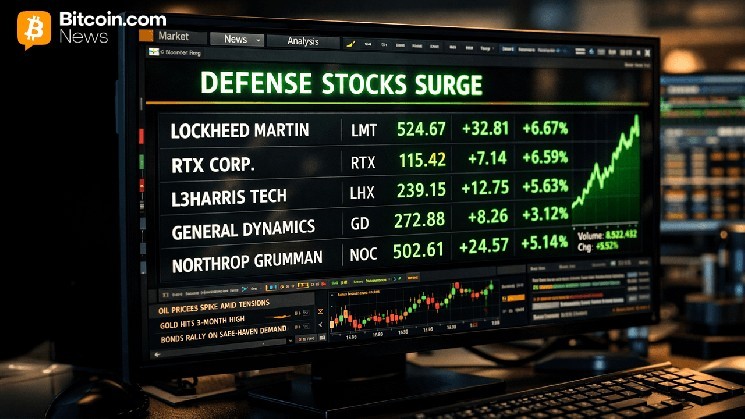
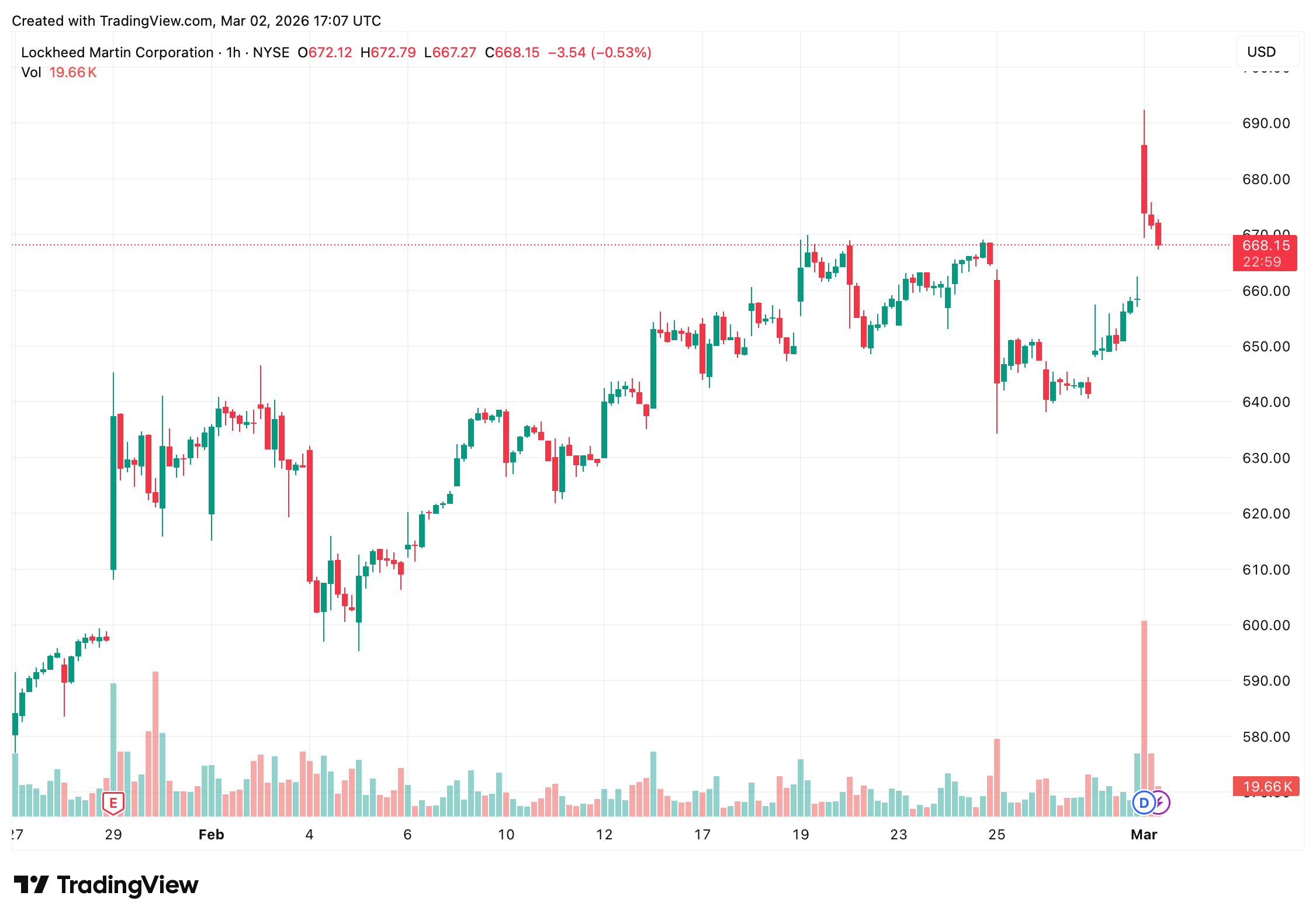
Defense contractors led gains. Lockheed Martin rose 6.7%, $RTX advanced 6.6%, and Northrop Grumman added 5.2% on expectations that sustained conflict could support higher military spending. L3Harris Technologies gained 5.6%, while General Dynamics rose 3%.
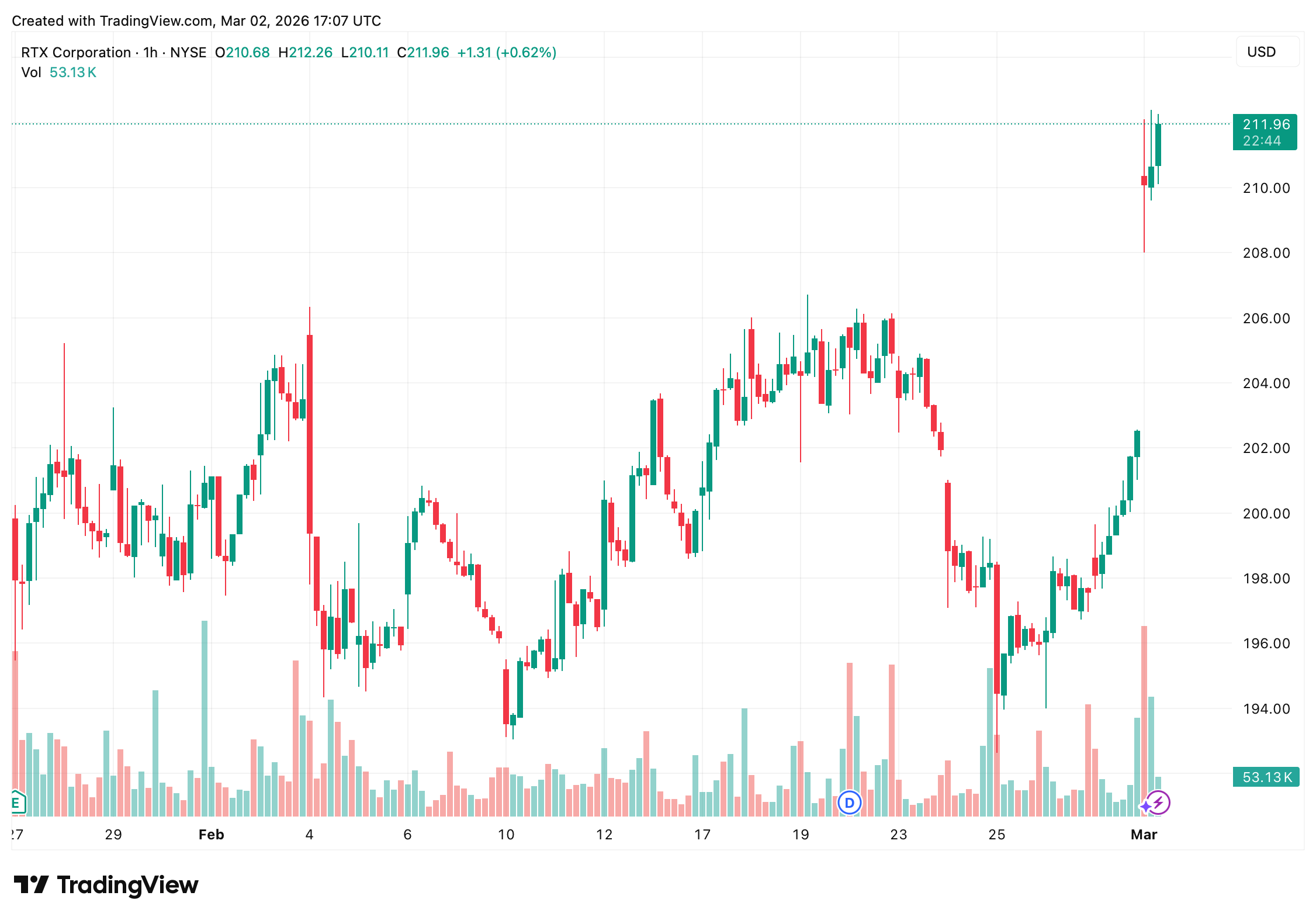
Analysts have projected U.S. defense spending at roughly $961.6 billion for fiscal 2026, up from prior years, amid administration calls for expanded budgets. Some strategists cautioned that sharp, single-session moves can reflect positioning adjustments as much as long-term earnings revisions.
Energy was the top-performing S&P sector, rising 1.4%. Exxon Mobil gained about 4%, Chevron climbed roughly 3%, and Occidental Petroleum jumped 6.7% as crude prices approached eight-month highs near $78 per barrel. In contrast, travel-related stocks fell on concerns about higher fuel costs and potential flight disruptions. United Airlines dropped 5.8%, Delta Air Lines fell 5.7%, and cruise operators Carnival and Norwegian Cruise Line each declined more than 7%. Technology shares were mixed; Nvidia dipped 1.3%, while other large-cap names recovered from early losses.
Economic data offered a steadier backdrop. The Institute for Supply Management said its February manufacturing purchasing managers index eased to 51.5 from 52.6, indicating slower but continued expansion. The employment component improved to 48.8, though it remained below the 50 threshold that separates growth from contraction.
Investors are now focused on Wednesday’s ISM services report and Friday’s nonfarm payrolls data, with economists expecting about 60,000 jobs added in February and the unemployment rate near 4.3%. Retail sales figures later in the week are projected to show modest growth of 0.1%.
Higher energy prices have also revived inflation concerns. While headline personal consumption expenditures inflation recently stood at 2.6% year over year, analysts noted that sustained oil gains could complicate the Federal Reserve’s path. The central bank is widely expected to hold rates steady at its March 18 meeting, with markets pricing in no immediate cut.
For the remainder of the week, traders will balance incoming economic reports against geopolitical developments. Historically, major U.S. indices have recovered from initial geopolitical shocks, though volatility often persists in the near term. With energy and defense stocks gaining traction and consumer-facing names under pressure, sector rotation may remain a defining feature of trading in early March.
FAQ 🔎
- Why did the stock market move on March 2, 2026? U.S.-Israel strikes on Iran pushed oil and gold higher, driving volatility and sector rotation in U.S. equities.
- Which sectors led the market today? Energy and defense stocks outperformed, while airlines and cruise operators lagged.
- How did the Dow, S&P 500 and Nasdaq close? The Dow fell 0.08%, the S&P 500 rose 0.06%, and the Nasdaq gained 0.35%.
- What economic data are investors watching this week? Traders are focused on ISM services data and Friday’s U.S. jobs report for clues on growth and Federal Reserve policy.

 bitcoinmagazine.com
 theblock.co
 decrypt.co
