


 4
4
Newly released Epstein files show that Jeffrey Epstein received an email in March 2019 highlighting what was described as a “massive controversy” surrounding Coinbase and its acquisition of blockchain analytics firm Neutrino.
The email, dated March 12, 2019, was sent by Richard Kahn, a New York–based finance consultant who appears repeatedly in the files as a source of forwarded news and analysis.
The subject line references claims attributed to the CEO of Kraken and mentions Ripple’s $XRP alongside Neutrino.
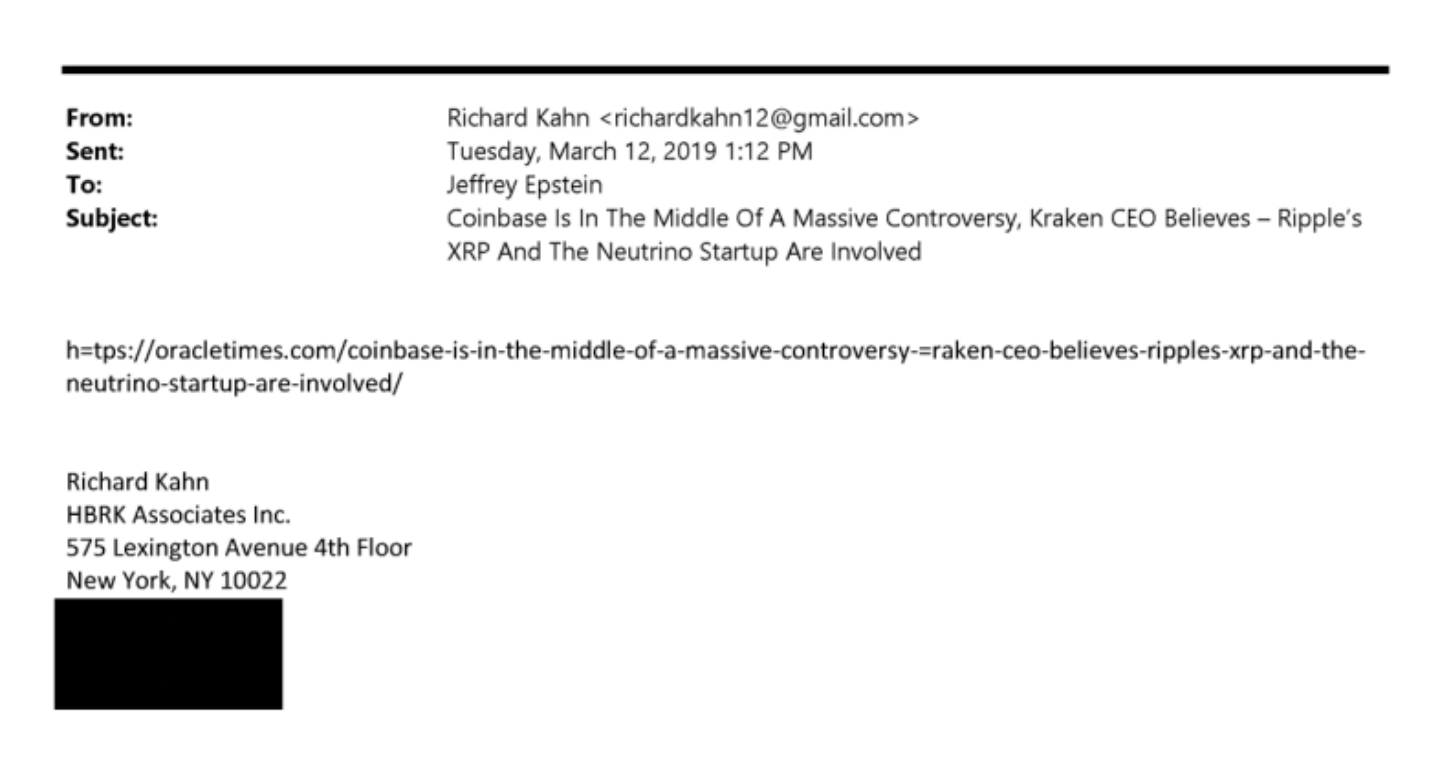
How a 2019 Crypto Crisis Landed in Epstein’s Inbox
The timing of the message aligns with the widely reported backlash against Coinbase following its acquisition of Neutrino in late February 2019.
Neutrino’s founders previously worked at Hacking Team, a controversial surveillance software company accused of enabling human rights abuses.
The acquisition triggered a strong reaction across the crypto industry. Privacy advocates and users accused Coinbase of betraying user trust, sparking the #DeleteCoinbase campaign and calls for boycotts.
So, I spent some time looking into @coinbase's latest acquisition, Neutrino. What I found, just by reading existing reporting, is insanely dark, and could/deserves to become a massive scandal for Coinbase. Thread. /1https://t.co/z8MvAaPPKQ
— David Z. Morris (@davidzmorris) February 26, 2019
Around the same time, Kraken CEO Jesse Powell publicly criticized the deal, saying Neutrino would not have passed Kraken’s internal ethics review.
Coinbase later announced that Neutrino employees associated with Hacking Team would exit the company.
Even more bizarre is the acquisition they made and reputational hit they took to be able to offer this service to the government. https://t.co/7VMpF66pYd
— Jesse Powell (@jespow) September 19, 2021
The $XRP Connection
The controversy unfolded during a sensitive moment for Coinbase.
Just weeks earlier, the exchange had listed $XRP for trading, intensifying scrutiny over its governance, listing standards, and influence within crypto markets.
Speculative coverage at the time often linked multiple threads — Coinbase’s $XRP listing, Neutrino’s background, and broader concerns about surveillance and regulation — even when direct connections were unproven.
The subject line of the email reflects this environment of heightened suspicion and rapid information spread.
The Coinbase email is one of several crypto-related references in the newly released Epstein files.
https://t.co/ZbWPcCurGd
— BeInCrypto (@beincrypto) February 2, 2026
Other documents show Epstein discussing Bitcoin’s identity with Peter Thiel, investing in early Bitcoin infrastructure firm Blockstream, and maintaining social proximity to figures such as Michael Saylor and Kevin Warsh.
Taken together, the records suggest Epstein monitored the rise of cryptocurrency closely, particularly where finance, regulation, and elite power networks intersected — even as investigators found no evidence linking crypto to his criminal activity.

 crypto.news


 cryptobriefing.com

