


 4
4
Messari dropped its State of DePIN report for 2025, and it draws attention to the sector’s maturation as it shifted from speculative experiments toward infrastructure businesses generating real revenue.
According to the report, by the end of the fiscal year 2025, the entire DePIN sector, worth $10 billion, had generated an estimated $72 million in on-chain revenue.
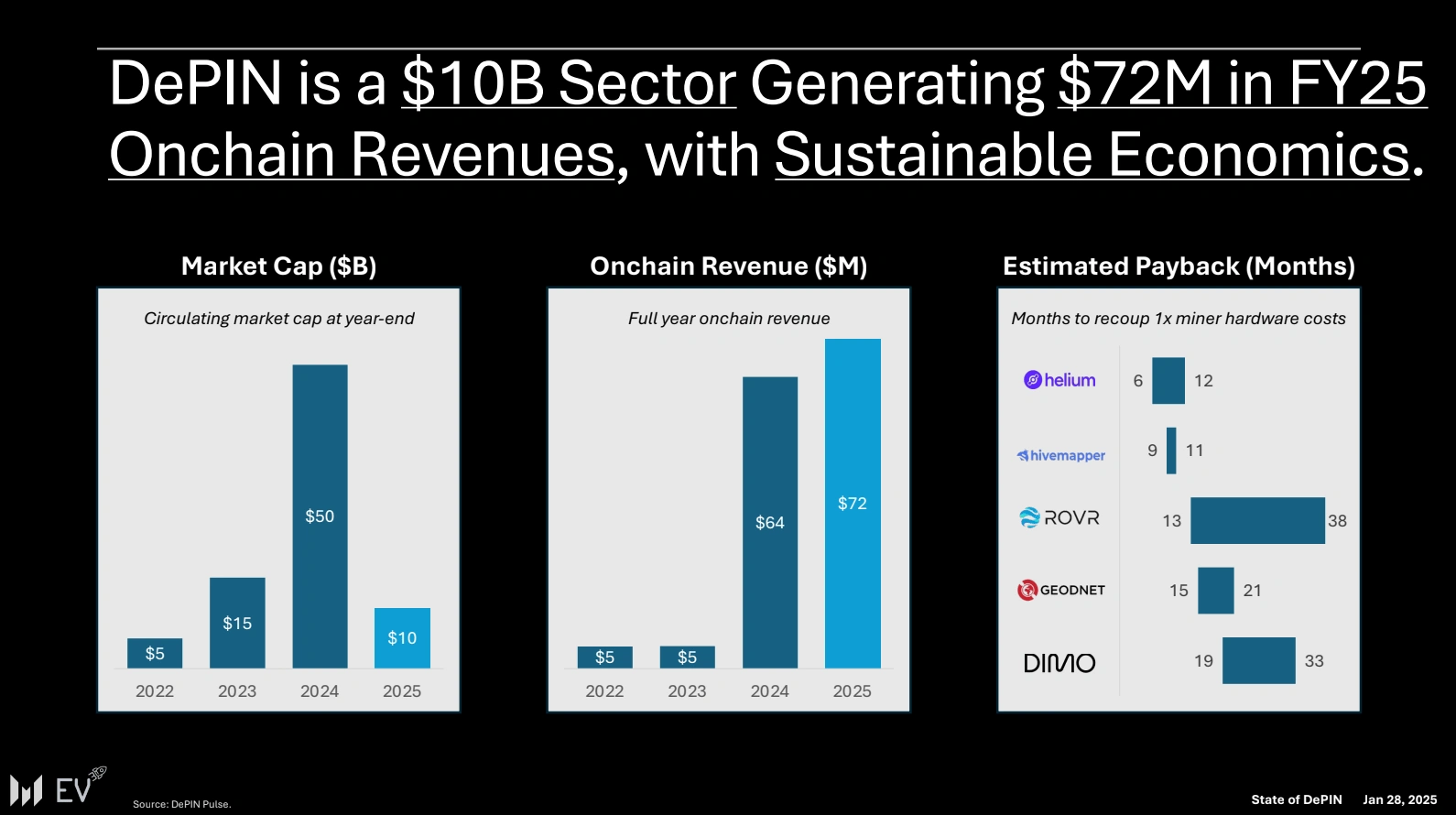
According to Messari, this protocol-level, blockchain-recorded revenue comes from real network usage, fees and incentives, all factors that indicate the sector is providing real utility and is no longer stuck at the speculation or experimental stage.
How did the DePIN sector do in 2025?
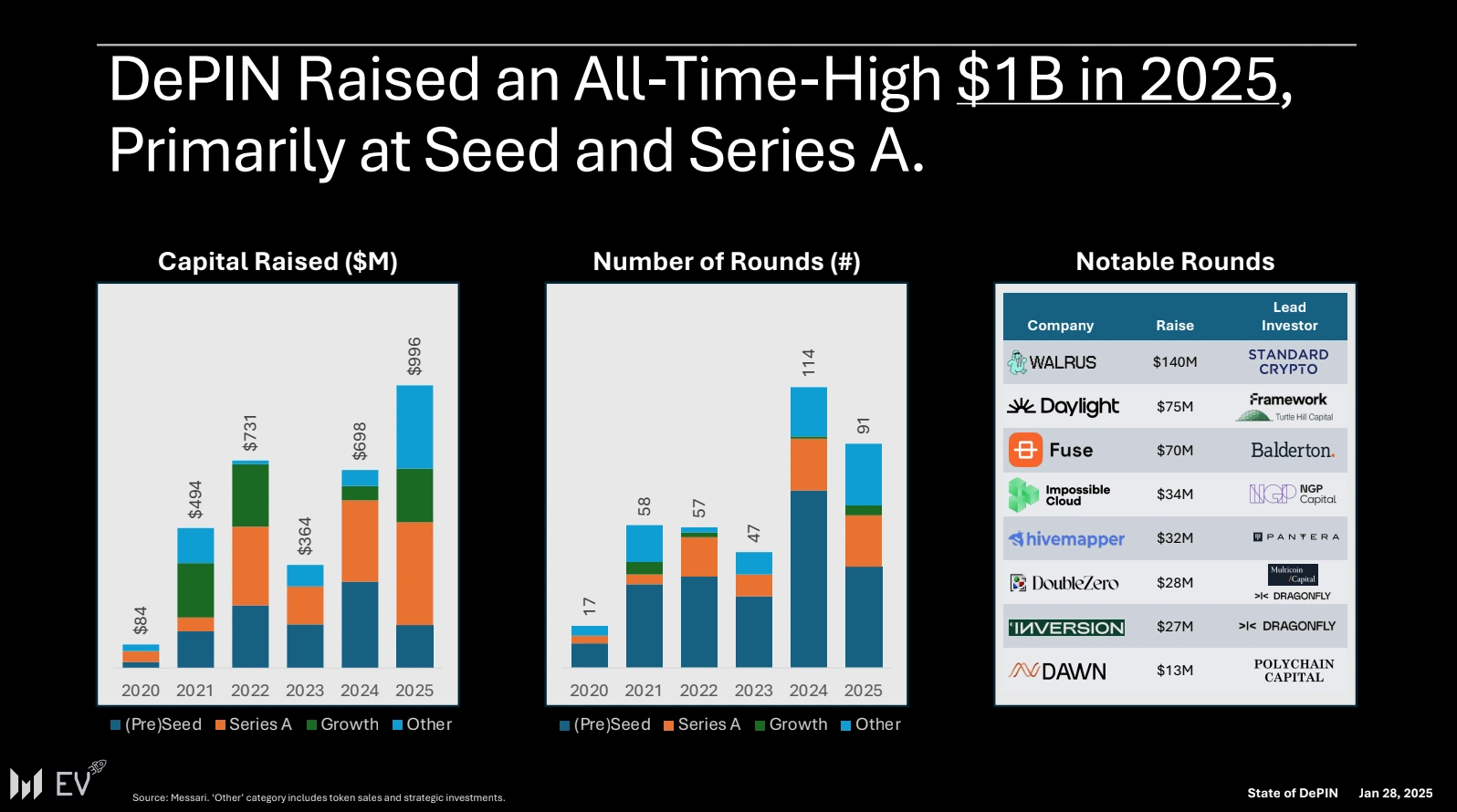
The report shows that in 2025, the DePIN sector raised nearly $1 billion in capital across a total of 91 rounds, fewer than the number it took to raise the almost $700 million it achieved in 2024. The most notable project raised $140 million in funding, almost double what the next best project attracted.
Also, the data showed that a small but growing group of DePIN networks saw persistent on-chain revenue growth even during times when the overall market was not doing so well. As far as Messari is concerned, this is proof that DePIN projects fare better in bear markets than regular alt projects and L1s.
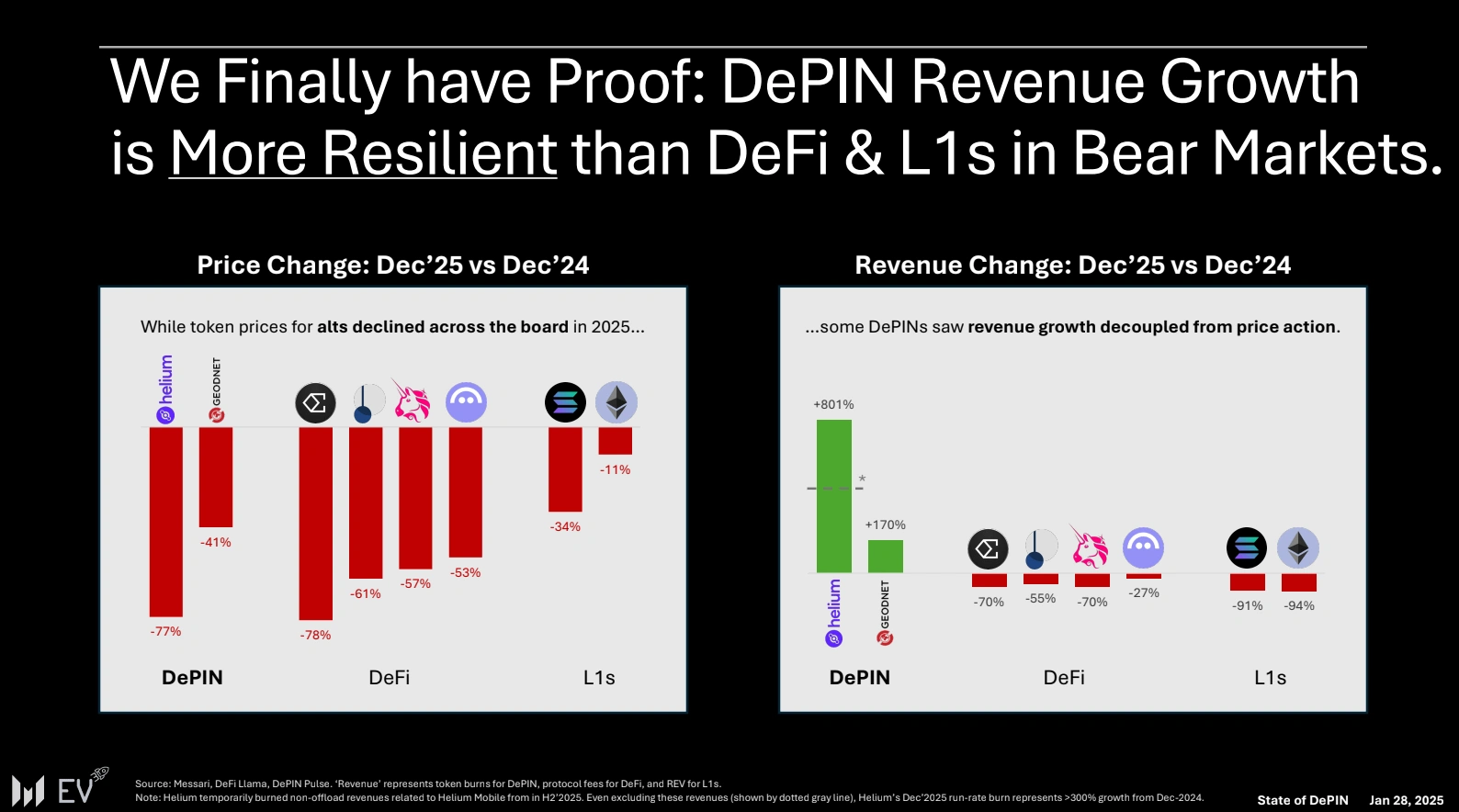
The top-ranked networks that see meaningful traffic were the biggest evidence of the sector’s resilience, as their revenues grew independently of the broader market price action.
In 2025, the report also claims that the DePIN networks currently generating revenue are being traded at 10 to 25x revenue multiples, which is a far cry from the state of things in 2021, when similar networks would exceed 1,000x revenue multiples during peak speculation.
The resilience of these leading projects has not gone unnoticed, and according to Messari, it indicates that those projects are entering a stage of maturation. However, the report also noted that only a narrow set of scaling paths remains viable for long-term global sustainability.
Some DePINs are pioneering InfraFi
According to Messari, there are only three viable paths left when it comes to scaling any DePIN project. Those paths involve adopting InfraFi models, pursuing capex-light designs with their rapid playbacks, or simply timing bull markets and capitalizing on the speculative capital and low interest rates around at the time.
On the more optimistic side, the report also mentioned that some DePIN projects are pioneering InfraFi, which is essentially a combo of DePIN and DeFi.
InfraFi gives stablecoin holders the ability to earn yield by financing physical infrastructure. All they have to do is deposit and/or stake stablecoins into a vault. Funds in the vault will be used to finance the purchase and/or deployment of infrastructure assets, and the revenues generated or debt accrued by the infrastructure are repaid/paid into the vault.
At the end of the day, depositors get back their stablecoins as well as a share of the yields. The biggest projects pioneering this include USDai, Daylight, and Dawn, with USDai being the biggest growth driver championing the initiative.
Messari claims InfraFi is already a key driver of growth for both DeFi and stablecoin players. USDai contributes 17% of Pendle’s TVL, with 3x more liquidity than #2 Ethena. It is also 77% of M0’s TVL, with 10x more distribution than #2 Usual.

 cryptobriefing.com
 en.bitcoinsistemi.com
 coindesk.com
 theblock.co