


 19
19
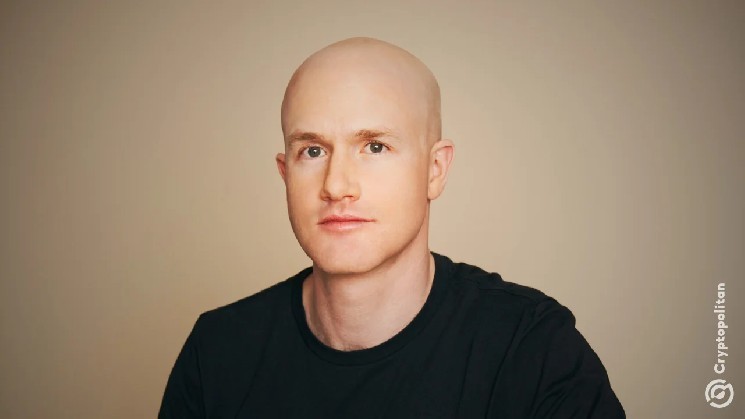
Coinbase CEO Brian Armstrong said that strict regulations have negatively forced high-demand companies to remain private for years, allowing early gains to flow mainly to private and credit investors.
Writing on X on January 26, he maintained that going fully on-chain could unlock early price discovery, lower costs, and significantly increase the accessibility of capital formation.
Armstrong suggested, “We need to make capital formation way easier for private companies.” He added that the lack of liquid markets during a company’s early lifecycle often leads to weak price performance once the firm eventually goes public.
Brian Armstrong proposes that startups go public on-chain
We need to make capital formation way easier for private companies.
There's such high demand for some of the large private companies, it's actually a good example of the unintended consequences of higher regulation. Right now, companies are incentivized to stay public for too…
— Brian Armstrong (@brian_armstrong) January 25, 2026
This is not the first time Brian Armstrong has envisioned a future where firms can go public entirely on-chain. In October of last year, Armstrong outlined his vision for bringing the entire startup lifecycle on-chain during an interview on TBPN, from incorporation to going public.
“You can go in there and open a Coinbase account for your startup,” he explained, implying that Coinbase might even assist business owners with on-chain integration through decentralized autonomous organizations.
He went on to say that, instead of waiting weeks for wire transfers and legal documentation, founders could simply “press the raise money button” to send pitch materials to potential investors. Capital would then arrive quickly using USDC smart contracts. He also pointed out that this full-stack strategy would “increase economic freedom” and enable more business owners globally to start ventures.
The CEO also emphasized the complex traditional fundraising procedure that business owners currently go through.
“Every entrepreneur whom I know finds the fundraising process to be pretty onerous; it usually takes like two to three months, where everything else that you’re focused on has to stop. You go do tons of pitch meetings. You get told no 19 out of 20 times.“
-Brian Armstrong, CEO of Coinbase.
During the interview, Armstrong revealed that Coinbase has been collaborating closely with the SEC to create structures that allow ordinary investors to participate in on-chain financing under appropriate safeguards.
The CEO also acknowledged that while accredited investor regulations offer significant consumer protections, they also hinder non-wealthy people from taking advantage of high-growth investment possibilities.
He also disclosed that he tried to carry out Coinbase’s own partial on-chain public offering in 2021 but discovered regulators were unprepared at the time.
Private equity drives growth while India IPOs rise
Recent market trends illustrate the environment that Brian Armstrong has repeatedly addressed. In the third quarter of last year, private equity activity gained momentum as firms moved past the “cautious optimism” of the first half of the year.
According to an EY survey, the third quarter of 2025 saw 156 deals totaling a record $310 billion, including five transactions exceeding $10 billion. This indicated that large private deals continue to dominate capital markets.
The report revealed that valuation mismatches have been the biggest barrier to dealmaking for much of the last 2.5 years. Investors reported the value gap as the largest barrier to mergers as recently as December of last year. That barrier has significantly decreased as of today.
According to two-thirds of participants in the recent global general partner (GP) survey, the gap has shrunk, allowing buyers and sellers to establish common ground and proceed with confidence.
However, while large private deals continue to dominate global capital markets, new public markets such as Dalal Street in India are seeing significant activity in initial public offerings (IPOs), indicating a simultaneous increase in funding available to modern IT firms.
The momentum for new-age tech companies seeking public listings appears even greater in 2026 following a record-breaking year for startup IPOs in 2025.
According to the Indian Startup IPO Tracker 2026, 21 startups have already submitted their DRHPs to SEBI, and another 25 are in various stages of preparing for initial public offerings. This demonstrates the growing emphasis on expanding founders’ access to funding in both established and emerging economies.

 coindesk.com
 1
1

 crypto.news
 coinpedia.org
 cryptobriefing.com
