
 news.bitcoin.com
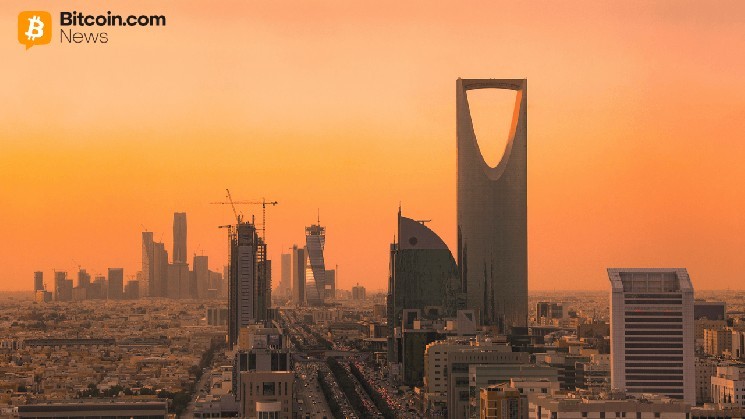
Saudi Arabia’s government is preparing to introduce stablecoins under national regulation, drawing praise from global crypto exchanges that see the Kingdom’s move as a milestone for digital finance.
Saudi Arabia Eyes Stablecoin Launch
According to a report from Alarabiya.net, the official website of the Saudi-owned international news channel Al Arabiya, the Minister of Municipal, Rural Affairs, and Housing, Majed al-Hogail, said Riyadh is working with the Capital Market Authority (CMA) and the Saudi Central Bank (SAMA) to launch regulated stablecoins soon.
The effort aligns with the country’s Vision 2030 program, which seeks to diversify the economy and modernize the financial system through innovation and fintech partnerships. The report notes that in Saudi Arabia, where more than 79% of retail transactions are already cashless, they could further cement the nation’s role as a regional financial hub.
Vivien Lin, chief product officer at global exchange BingX, told Alarabiya.net that the move is “a turning point for the region’s digital-asset sector.” Lin noted that Saudi Arabia’s plan to embed stablecoins within existing regulatory structures shows “a progressive and risk-aware” approach that balances innovation with oversight. The initiative could allow “instant settlement and greater liquidity efficiency” while maintaining compliance with SAMA and CMA policies.
Michelle Daura, Bybit’s head of regulated regions, echoed that sentiment, telling Alarabiya.net’s reporter that stablecoins “can advance the financial ecosystem when embedded in rigorous regulatory frameworks and aligned with national values.” Daura further emphasized that the Kingdom’s measured rollout reflects a commitment to modernization, consumer protection, and financial stability.
The article further explains that both BingX and Bybit see regulated stablecoins as catalysts for transforming payments and cross-border trade, Alarabiya.net’s report notes. Lin said such assets can “compress settlement from days to near-instant, cut cross-border costs, and improve traceability,” while Daura highlighted their potential to lower transaction costs and improve liquidity for remittances and trade.
The Alarabiya.net report also details that the move mirrors broader Gulf Cooperation Council (GCC) trends. The United Arab Emirates has already introduced frameworks allowing stablecoin payments, and Bahrain continues to test digital currency pilots. Analysts say Saudi Arabia’s regulatory clarity could attract pension funds and institutional investors to the region’s growing digital economy.
As Riyadh progresses toward implementation, major global exchanges are positioning themselves to collaborate on infrastructure, compliance, and education. Their unified backing signals confidence that Saudi Arabia’s model—anchored in full reserves, transparency, and national oversight—could become a blueprint for regulated digital assets across the Middle East.
FAQ ❓
- What is Saudi Arabia’s plan for stablecoins?Alarabiya.net reports that Saudi Arabia aims to introduce regulated stablecoins under SAMA and CMA supervision to modernize payments and support Vision 2030.
- Which exchanges support the initiative?Bybit and BingX have publicly endorsed the plan, calling it a major step for fintech and digital assets in the region.
- How will stablecoins impact Saudi Arabia’s economy?They are expected to enhance cross-border payments, boost fintech growth, and strengthen the Kingdom’s role as a Gulf financial hub.
- When are Saudi Arabia’s stablecoins expected to launch?Officials have not given an exact date, but development is underway with SAMA and CMA leading the process.
 en.bitcoinsistemi.com
 0
0
 cryptobriefing.com
 u.today
 coinspeaker.com
 en.cryptonomist.ch
 beincrypto.com