
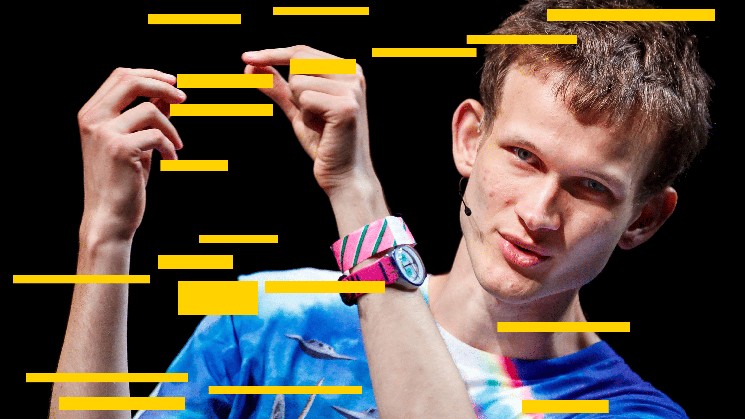

Ethereum co-founder Vitalik Buterin acknowledged the network is finally closing one of its longest-standing technical gaps: a lack of deep peer-to-peer (P2P) networking expertise inside the Ethereum Foundation.
In an X post late Monday, Buterin said he felt that Ethereum over-indexed on crypto economics, byzantine fault tolerance (BFT) consensus and block-layer research while taking the network layer for granted.
But the sentiment has changed. He pointed to early PeerDAS performance as proof that the Foundation can now ship complex networking improvements at scale, crediting Raúl Jordan and others for getting the system running.
PeerDAS is a prototype for Data Availability Sampling (DAS), which is essential for Ethereum's scaling via sharding. It allows light clients to check if all shard data has been published by sampling small portions, greatly enhancing scalability while maintaining decentralization and security.
In another X post last week, Buterin added that Ethereum still needed a functioning on-chain gas futures market, arguing that prediction markets on BASEFEE could give users clearer expectations around future gas costs and allow teams to hedge congestion risk years ahead.
The comments land amid a renewed wave of institutional accumulation. BitMine Immersion Technologies, the largest corporate holder of $ETH, bought 138,452 tokens last week — about $435 million — lifting its treasury to 3.86 million $ETH. Chairman Thomas Lee said the firm accelerated purchases after the Fusaka upgrade and on expectations that easing macro conditions will support risk assets into early 2026.
BitMine's buying pace has picked up after several months of quieter accumulation, and the firm has framed the move as a strategic bet on Ethereum’s execution layer and scaling roadmap rather than a short-term positioning play.
Whether that demand converges with Buterin’s push for a more robust networking layer will likely shape sentiment around Ethereum’s next phase of scaling — especially as questions around the future cost of blockspace continue to drive debate inside the community.

 ambcrypto.com

 newsbtc.com

 cryptopotato.com + 1 more
