



 4
4
Bitcoin held above $76,000 on Monday, rebounding from overnight lows as the broader crypto market remained steady despite Iran war risks.
The largest cryptocurrency climbed about 2.4% over the past 24 hours, recovering from a dip below $74,000 earlier in the session. Ether (ETH), XRP, Solana (SOL) and other major altcoins also mirrored bitcoin's move, as the broad-market CoinDesk 20 rose 1.7%.
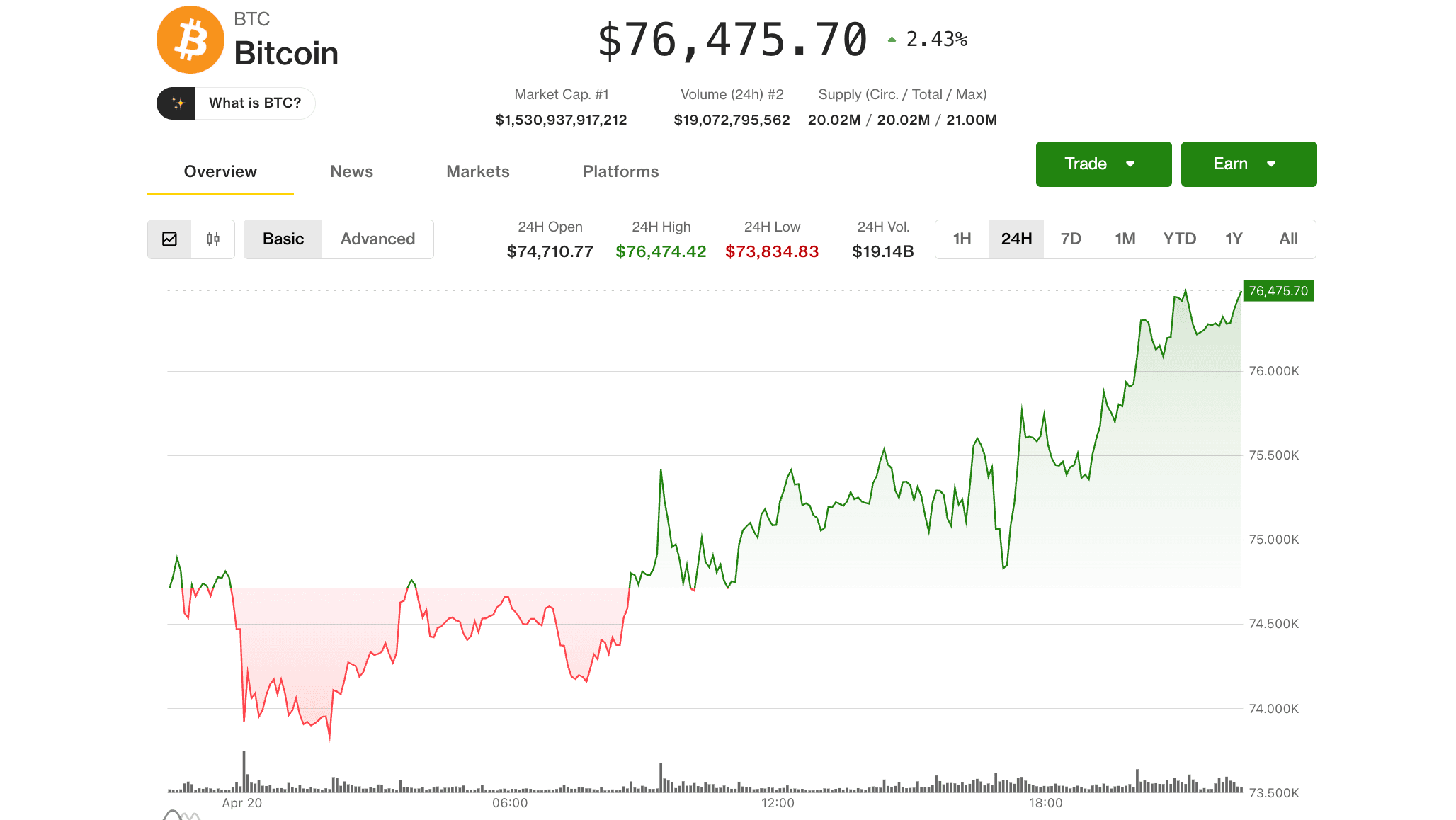
That resilience comes against a shaky macro backdrop. U.S. President Donald Trump said Sunday that American forces had fired on and seized an Iranian-flagged cargo ship, warning of further escalation while Tehran refuses to strike a deal. A fragile ceasefire is set to expire later this week.
Oil prices jumped 6% to near $90, while the S&P 500 and Nasdaq slipped modestly, down around 0.3%-0.4%.
Crypto equities were mixed. Coinbase (COIN) and bitcoin treasury firm Strategy (MSTR) gained roughly 2%, while Circle (CRCL) and ether treasury Bitmine (BMNR) edged lower by 1%-2%.
"The fact that prices have not fully retraced despite new tensions suggests some genuine demand," said Jasper De Maere, trader at Wintermute, pointing to recent spot ETF inflows as a supporting factor. Unlike earlier rallies this year, he said, the current move appears less driven by leverage.
That said, the path forward remains tied to geopolitics. A renewed ceasefire could push bitcoin back toward $80,000, while further escalation may keep markets under pressure.
For now, capital continues to concentrate in large-cap assets like bitcoin, De Maere noted, with riskier altcoins lagging, a pattern typical of market environments driven by macro headlines.
DeFi reels from $292 million KelpDAO hack
Elsewhere from the current price action, tensions are still high in the DeFi sector following the biggest crypto exploit of the year.
The $292 million KelpDAO hack cascaded across the market, as a vulnerability allowed the attacker to drain funds that were then used as collateral across lending protocols.
Because those assets were widely integrated into DeFi, the impact quickly spread, with users rushing to withdraw funds amid fears of bad debt and contagion.
Total value locked (TVL) across DeFi protocols fell by $14 billion over the past two days, according to DefiLlama data, even as asset prices remained steady.
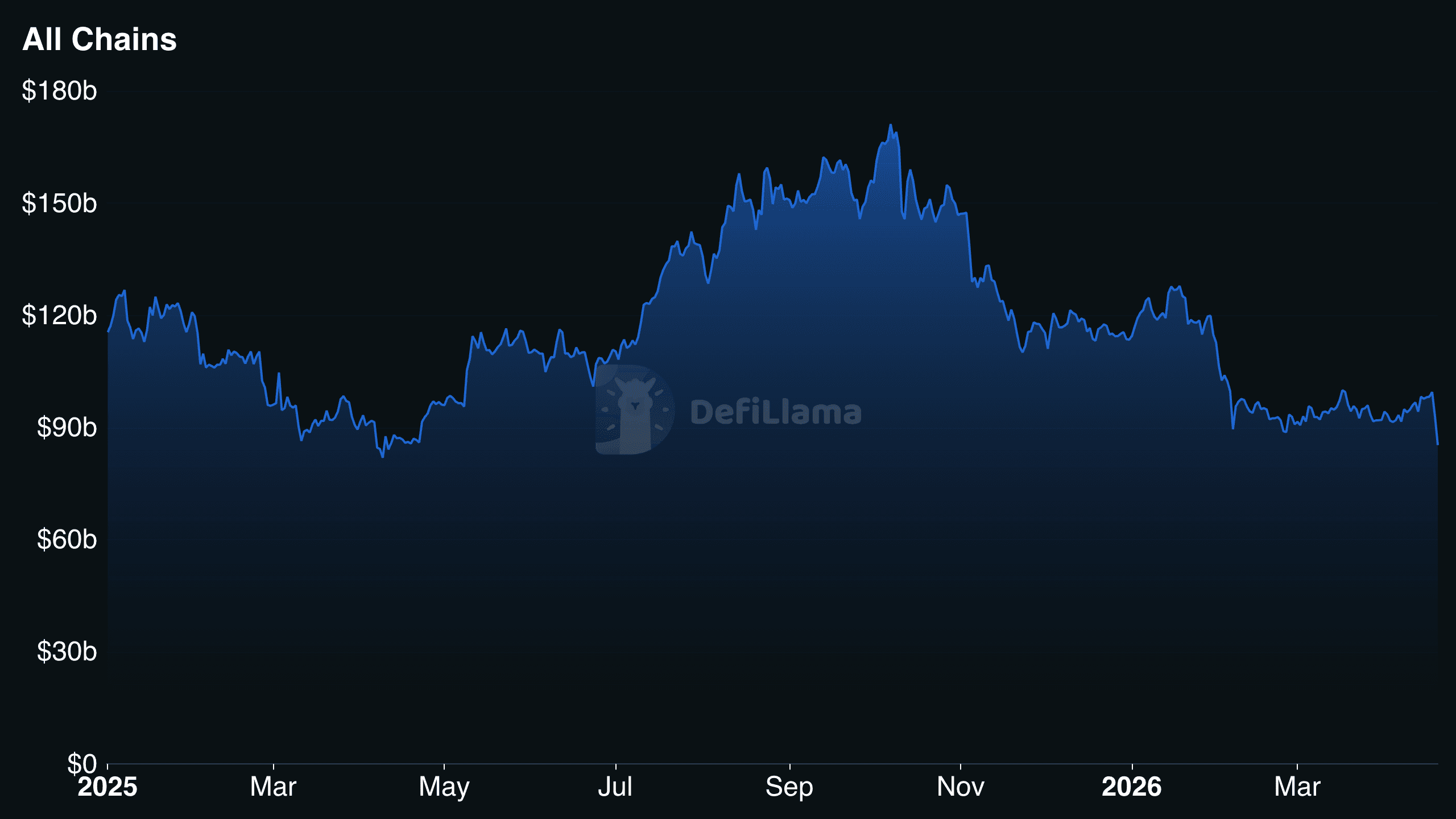
DeFi TVL dropped to about $85 billion, its lowest level in a year and roughly 50% below October peaks. Aave, the largest lending protocol that was central in the exploit, saw around $10 billion in deposits withdrawn.
"There’s a tremendous risk-reward imbalance in DeFi," David Shuttleworth from Anchorage Digital's protocol team said. "Users will no longer accept the slightly higher (and sometimes lower) than risk-free rate they get by depositing in lending pools," especially given the latest wave of exploits across protocols.
Read more: 'DeFi is dead': crypto community scrambles after this year's biggest hack exposes contagion risk

 blockchainreporter.net
 bitcoinworld.co.in