
 coindesk.com

Jeff Yan rarely speaks in public, avoids social media, and has never taken venture capital money. But in 2025, few individuals have had a bigger influence on the shape of decentralized finance (DeFi) and the crypto space itself.
This feature is a part of CoinDesk's Most Influential 2025 list.
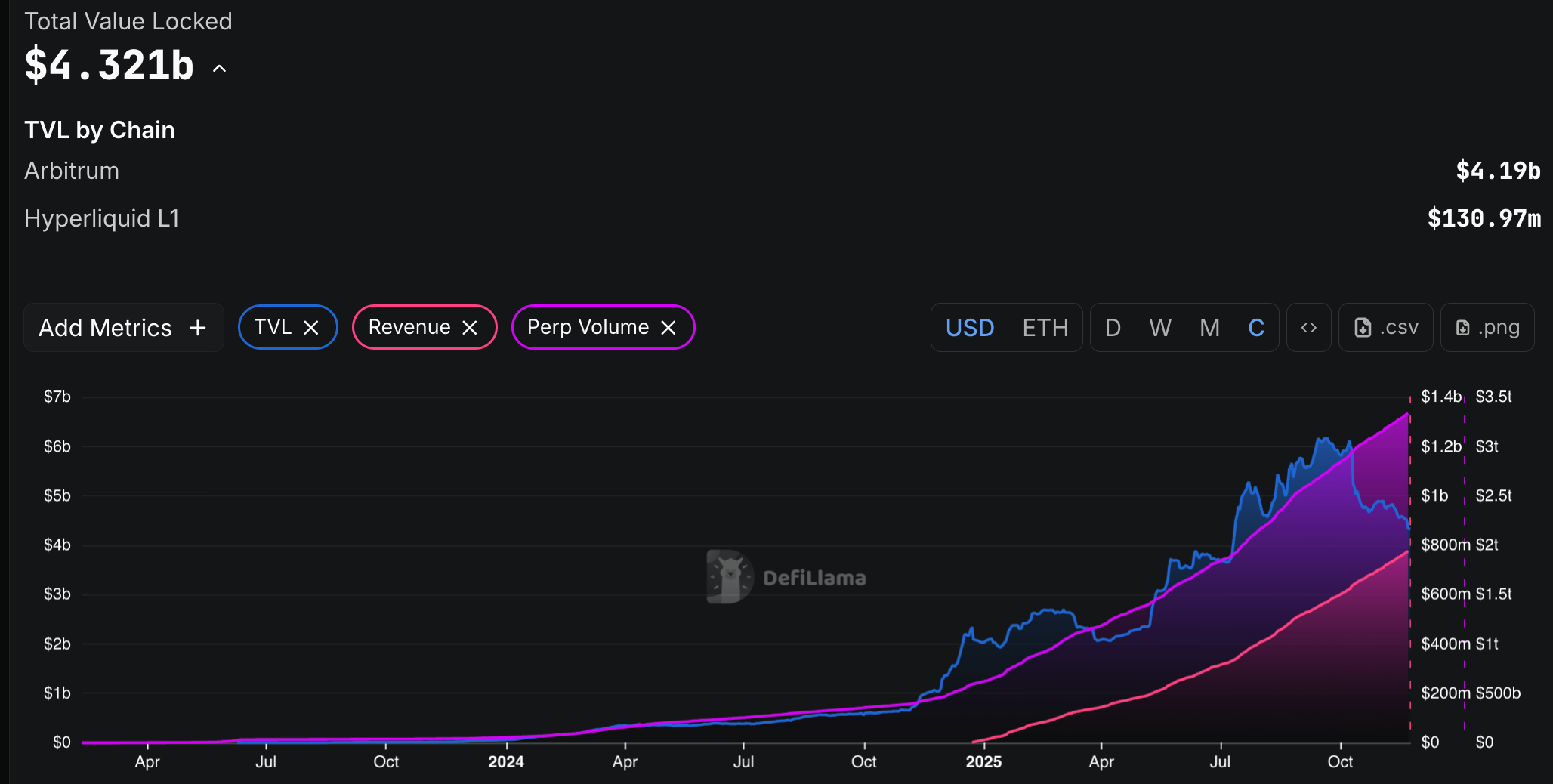
Yan is the founder of Hyperliquid, a decentralized exchange (DEX) for perpetual futures that processes around $10 billion in trades per day, with DefiLlama showing $308 billion in volume in October. With more than 570,000 users and a custom-built blockchain that matches the speed and reliability of centralized platforms, Hyperliquid has quietly become a dominant player in crypto derivatives.
It has done so without hype, investor backing, or a large team — just 11 core contributors, a vision rooted in technical precision, and a relentless focus on product led by Yan.
To understand Yan’s rise, it helps to know where he came from. Raised in Palo Alto, California by Chinese immigrant parents, Yan was a physics prodigy, taking home gold at the 2013 International Physics Olympiad.
He studied mathematics and computer science at Harvard, then joined Hudson River Trading (HRT), a high-frequency trading firm known for its ultra-low-latency strategies. After a short stint at Google, he left to start his own crypto trading firm, Chameleon Trading, during the bull run of 2020–2021.
Even then, Yan stayed out of the spotlight. His bots handled the markets; he handled the infrastructure. But the collapse of FTX in late 2022 changed things. As traders fled the ruins of centralized exchanges, Yan saw an opening as the preferred alternative, decentralized finance where users custody their own funds, weren’t competing with centralized alternatives. So he set off to build something better.
From code to core infrastructure
In 2023, Yan launched Hyperliquid on a custom layer-1 blockchain, designed from scratch for one purpose: fast, decentralized derivatives. The early version looked like a developer sandbox simply showing raw performance, without financial incentives to bring in users. But it worked. Hyperliquid offered sub-second finality, on-chain order books, and a user experience close to that of Binance.
Within months, it was processing over $1 billion a day. It now sees well over $10 billion a month.
The secret to the platform’s success? In Yan’s words: “Our philosophy is simple: create a product that users genuinely like and are willing to use."
New features like permissionless market creation (HIP-3) and Ethereum compatibility (via HyperEVM) turned Hyperliquid into a modular financial layer, not just a trading venue. Protocols like Felix and HyperLend have since built on it, drawn by its speed and shared incentives.
What makes this more remarkable is what Hyperliquid didn’t do. It never raised outside capital as Yan bootstrapped the entire project using profits from Chameleon Trading. There was no flashy airdrop announcement, no VC allocations, and no influencer campaigns. The platform grew through word-of-mouth, organic liquidity competitions, and performance.
When Hyperliquid finally launched its token, HYPE, in late 2024, it did so on its own terms. Roughly 31% of the supply went to early users, and no venture funds received allocations. The remaining supply, over two-thirds, was reserved for future ecosystem growth, airdrops, or long-vesting team incentives. By mid-2025, HYPE had reached a near $20 billion market cap, though the crypto drawdown has since dragged that figure down.
The model sparked copycats across DeFi. It became a new norm, as Hyperliquid funneled hundreds of millions in protocol fees back to users through buybacks and burns. HYPE even has its own digital asset treasury company Hyperliquid Strategies, which has moved to raise up to $1 billion to accumulate the token.
The quiet disruption
Yan is an unlikely poster child for the 2025 DeFi boom. He doesn’t court attention: he rarely appears on podcasts, isn’t extremely vocal on social media, and his published interviews are sparse. When he does speak up, like at TOKEN2049 in Singapore, he speaks plainly and avoids hype.
But his influence is tangible. Hyperliquid has forced competitors like dYdX to speed up their infrastructure and challenged the idea that big teams and big capital are required to build at scale.
Even controversies, like criticism of Hyperliquid’s liquidation system during the October 10 crash, have led to thoughtful technical defenses. Yan has argued that his models protect users by minimizing systemic risk, not maximizing protocol revenue.
Looking ahead, the roadmap remains vague. Iterative upgrades seem to be preferred to milestone-driven hype cycles. But if HIP-3 is any indication, Hyperliquid is expanding beyond its roots and is looking to house all of the financial system, onchain.
Through it all, Yan seems unfazed. He still doesn’t talk much. But in a market that’s often loud and erratic, his quiet focus has proven magnetic. The attitude is comparable to that of Binance founder Changpeng Zhao, who prefers focusing on building long-term solutions rather than chasing short-term trends.
"Our core philosophy is: cryptocurrency will change the way finance works. Traditional finance will eventually migrate to cryptocurrency. Hyperliquid will become the basic platform for these financial activities,” Yan said in an interview last year.
For builders, he’s become the performance-obsessed founder who codes more than he tweets. For users, he’s created a system where outcomes determine value.
 cryptopolitan.com
 0
0
 crypto.news
 cryptonewsz.com