
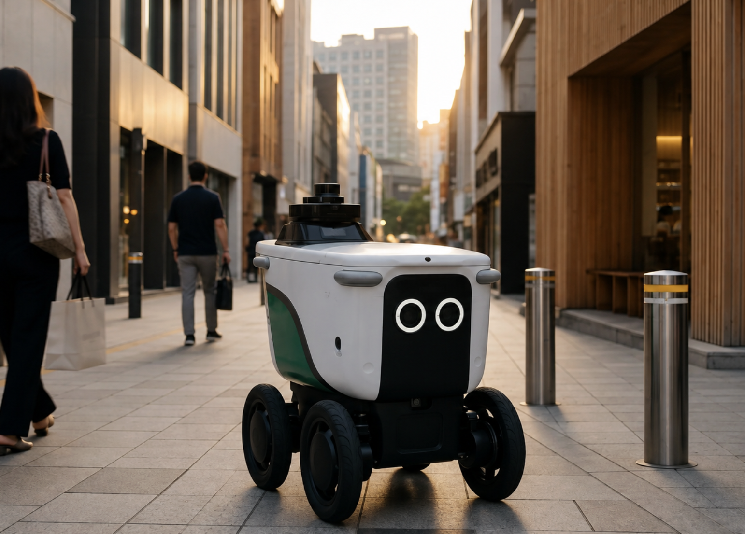

As robots become more autonomous, one question is becoming increasingly important. How does a machine know it's interacting with a real person?
World ID and peaqOS have introduced a new answer. Through an integration with robotic.sh, robots and machines running peaqOS can now verify that they are interacting with a unique human using World ID, without collecting names, facial data or other personal information.
Instead of revealing someone's identity, the system relies on zero-knowledge proofs that confirm a person is real while keeping their personal information private.
Giving Robots a Privacy-Preserving Identity Check
The integration allows autonomous machines to request and verify a World ID proof directly through peaqOS.
When a person confirms their identity through World App, the robot receives only proof that it is interacting with a verified human. In situations where continuity matters, such as completing a delivery, the system can also verify that the same person who initiated the request is the one finishing it, without exposing who that person actually is.
Unlike many identity verification services, the integration operates natively through robotic.sh without requiring API keys or charging per verification.
The need for private identity verification is growing alongside the rise of autonomous robotics. Delivery robots, shared mobility devices, vending machines and other autonomous systems increasingly need to distinguish between real people and bots while limiting the amount of personal information they collect.
Today's solutions often rely on PIN codes, customer accounts or government-issued identification. Those approaches introduce additional friction and require operators to store sensitive user information.
World ID replaces that model with cryptographic proof. Rather than asking who someone is, machines only need to know that they are interacting with a real, unique person who is authorized to complete the action.
From Medicine Deliveries to Shared Robots
One example outlined by the companies demonstrates an autonomous medical delivery. Before an order is accepted, the patient verifies using World App. At the pharmacy, a pharmacist also verifies before medication is loaded into the robot.
When the robot reaches its destination, the patient verifies once more, allowing the robot to confirm that the same verified person who placed the order is receiving the medication before unlocking its compartment.
The companies say the same approach could support a wide range of services. A promotional robot could enforce one giveaway per person without maintaining a customer database. Shared robots or autonomous machines could verify that users are real humans before granting access, reducing fraud while minimizing personal data collection.
Building Identity Into the Machine Economy
The integration also expands the role of peaqOS, which serves as the coordination layer connecting autonomous machines.
Machines running peaqOS use decentralized identifiers to establish their own digital identities, discover verification services through the Machine Market and coordinate identity checks from request to completion.
The process can generate an auditable record that a verification occurred while keeping proof metadata private, allowing operators to demonstrate that security checks took place without storing users' identities.
As AI-powered robots begin operating more independently in public spaces, proving that a human is real may become just as important as proving who they are.
By combining World ID's privacy-preserving verification with peaqOS's machine infrastructure, the two projects are laying the groundwork for autonomous systems that can securely interact with people while collecting far less personal information than traditional identity systems require.

 crypto.news
 thenewscrypto.com
 crypto-economy.com
