


 7
7
Stablecoins have quietly become one of the biggest growth stories in crypto, and Arbitrum is emerging as one of their largest homes.
The Ethereum Layer-2 network now holds roughly $4 billion in stablecoin supply, making it one of the largest stablecoin ecosystems across Ethereum scaling networks. Now, Spark Savings has expanded support for USDT0, joining USDC and USDS, meaning its ERC-4626 vaults now cover more than 90% of all stablecoins circulating on Arbitrum.
The milestone isn't simply another token integration. It reflects a broader shift in DeFi, where protocols are increasingly competing to become the default destination for idle stablecoin capital.
Stablecoins Are Becoming Productive Assets
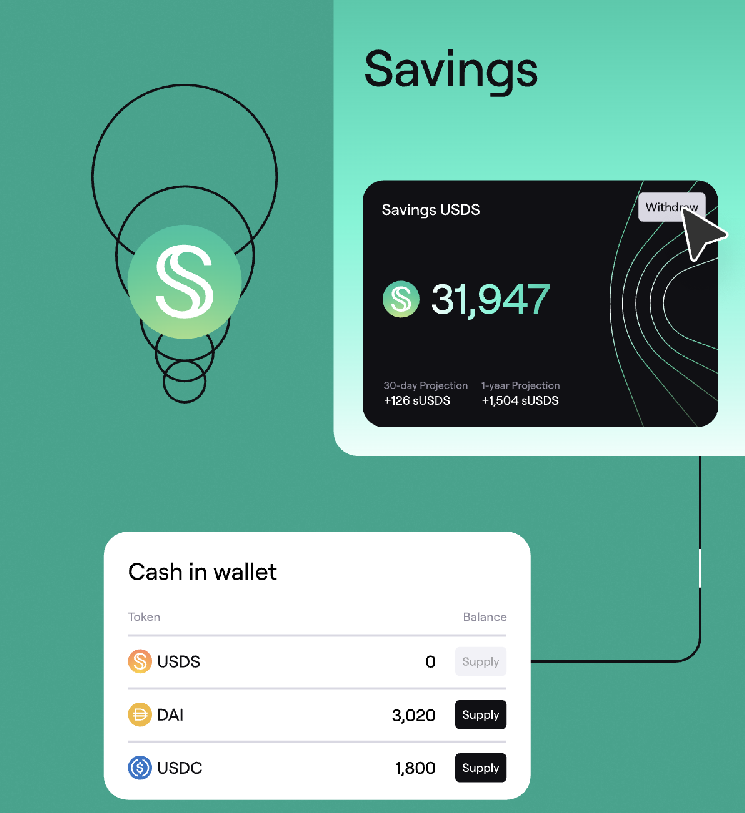
Historically, holding stablecoins often meant sacrificing yield in exchange for stability. Protocols like Spark are trying to change that.
Built on the ERC-4626 tokenized vault standard, Spark allows users to deposit stablecoins into yield-bearing vaults while maintaining compatibility across the broader DeFi ecosystem. Because ERC-4626 has become the industry standard for tokenized vaults, developers can integrate Spark's products into lending markets, decentralized exchanges and structured investment strategies without building custom infrastructure.
With the addition of USDT0, Spark now supports the three largest stablecoins on Arbitrum, allowing users to earn yield without swapping assets or navigating multiple protocols.
Why USDT0 Matters
The newest addition isn't traditional $USDT. It's USDT0, Tether's omnichain implementation built on LayerZero's Omnichain Fungible Token (OFT) standard. Rather than relying on wrapped assets or conventional bridges, USDT0 is designed to move natively across supported blockchains while maintaining unified liquidity.
As stablecoin liquidity spreads across dozens of Layer-2 networks, reducing fragmentation has become one of the industry's biggest challenges. Omnichain assets like USDT0 aim to make moving capital between ecosystems significantly more seamless.
For users, that means fewer bridges, fewer wrapped assets and a simpler path to earning yield.
The Stablecoin Race Is Heating Up
The timing is notable. Stablecoins have become one of the fastest-growing sectors in digital assets, with networks increasingly competing to attract liquidity through payments, lending, tokenized real-world assets and yield products.
Spark itself has been expanding aggressively. Beyond Arbitrum, the protocol has rolled out across Ethereum, Base, Avalanche, Optimism, Robinhood Chain and other networks, while total deposits across Spark Savings have surpassed $4.27 billion.
Current yields on supported stablecoins range between roughly 2.75% and 3.60% APY, depending on the asset.
The protocol has also been building beyond simple savings products. Earlier this summer, Spark migrated $150 million in stablecoin liquidity to Uniswap v4, introducing a model that allows idle liquidity to continue earning yield until it's needed for trading.
The strategy points toward a future where stablecoins no longer sit idle in wallets—they remain productive even while supporting broader DeFi markets.
The Bigger Picture
Spark's growing role also highlights the trade-offs that come with scale. Supporting more than 90% of Arbitrum's stablecoin supply makes the protocol a critical piece of the network's financial infrastructure, but it also concentrates risk around a single platform's smart contracts and governance. Because Spark's yields are governance-driven, returns can also change as protocol parameters evolve.
More broadly, the story isn't about another stablecoin integration. It's about stablecoins becoming productive financial assets. With roughly $4 billion in stablecoin liquidity, Arbitrum has become one of DeFi's largest capital hubs, and Spark is positioning itself as the default yield layer for that growing ecosystem.

 coinfomania.com
