


 4
4
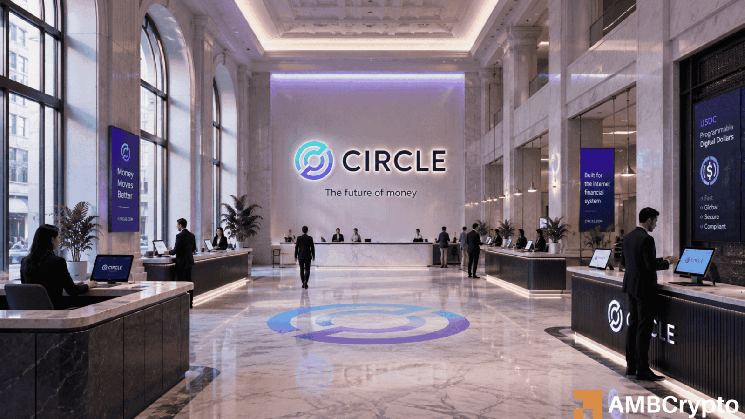
Circle is intensifying its push into institutional payments infrastructure, arguing that stablecoin-based settlement systems can replace the batch-processing model still used across much of global finance.
In a new paper published on 13 May, the USDC issuer described traditional payment and settlement rails as increasingly inefficient for modern global commerce.
It pointed to delayed liquidity cycles, reconciliation costs, and trapped working capital across banking and treasury systems.
The paper positions continuous blockchain-based settlement as an alternative to legacy systems such as ACH transfers, card network reconciliation, and T+1 or T+2 settlement structures commonly used in financial markets.
Circle argued that batch processing leaves capital sitting idle for hours or days while transactions wait for clearing windows.
Circle targets enterprise liquidity and treasury operations
The company framed stablecoin settlement less as a retail crypto use case and more as enterprise financial infrastructure.
According to the paper, businesses managing global payment flows increasingly want:
- real-time liquidity visibility,
- continuous settlement,
- automated reconciliation,
- and lower counterparty risk.
Circle cited estimates from PwC suggesting companies worldwide hold roughly $1.8 trillion in excess working capital tied partly to settlement inefficiencies.
The paper also referenced data from the Bank for International Settlements showing that around $2.2 trillion in foreign exchange trades face settlement risk daily while awaiting finalization.
Rather than focusing on speculative crypto activity, Circle repeatedly described stablecoin settlement as a tool for treasury optimization and operational efficiency.
Stablecoin infrastructure race accelerates
The publication arrives as competition intensifies around regulated blockchain-based financial infrastructure in the United States.
Major financial institutions and crypto firms are increasingly positioning stablecoins and tokenized assets as alternatives to traditional payment and settlement rails.
Just one day earlier, JPMorgan Chase & Co. filed for a tokenized money market fund designed to support stablecoin reserve management under the proposed GENIUS Act.
Circle’s latest paper also promoted its Circle Payments Network [CPN], which the company described as compliance-ready infrastructure designed to connect banks, payment providers, and enterprises through blockchain settlement rails.
Unlike many crypto-native payment systems, Circle emphasized interoperability with existing compliance, risk management, and institutional operational frameworks.
Stablecoins shift from crypto asset to financial infrastructure
The broader message running through the paper is that stablecoin issuers increasingly view blockchain settlement as foundational financial infrastructure rather than simply a crypto payment tool.
The company also suggested that real-time blockchain settlement could eventually support:
- programmable payments,
- instant foreign exchange conversion,
- and automated liquidity services.
Final Summary
- Circle argued that stablecoin-based continuous settlement systems can replace inefficient batch-processing models used in global finance.
- The paper highlights growing competition between blockchain settlement infrastructure and traditional banking payment rails.

 en.coinotag.com
 crypto-economy.com
 cointelegraph.com