



 5
5
Crypto projects spent years chasing users with token incentives, apps and speculation. Now, some of the industry's biggest pitches are starting to sound more like enterprise software sales.
That was the message from Hashgraph CEO Eric Piscini in a recent interview with TheStreet Roundtable, where he argued that the crypto market is moving away from user acquisition and toward business infrastructure.
"It's completely fair to say that at the industry level," Piscini said, referring to this shift.
He said Hashgraph has been targeting enterprise adoption since 2018, focusing on payment, organizational and supply-chain use cases.
Instead of asking businesses to embrace token culture, more firms are trying to sell blockchain as a practical tool for payments, compliance and coordination.
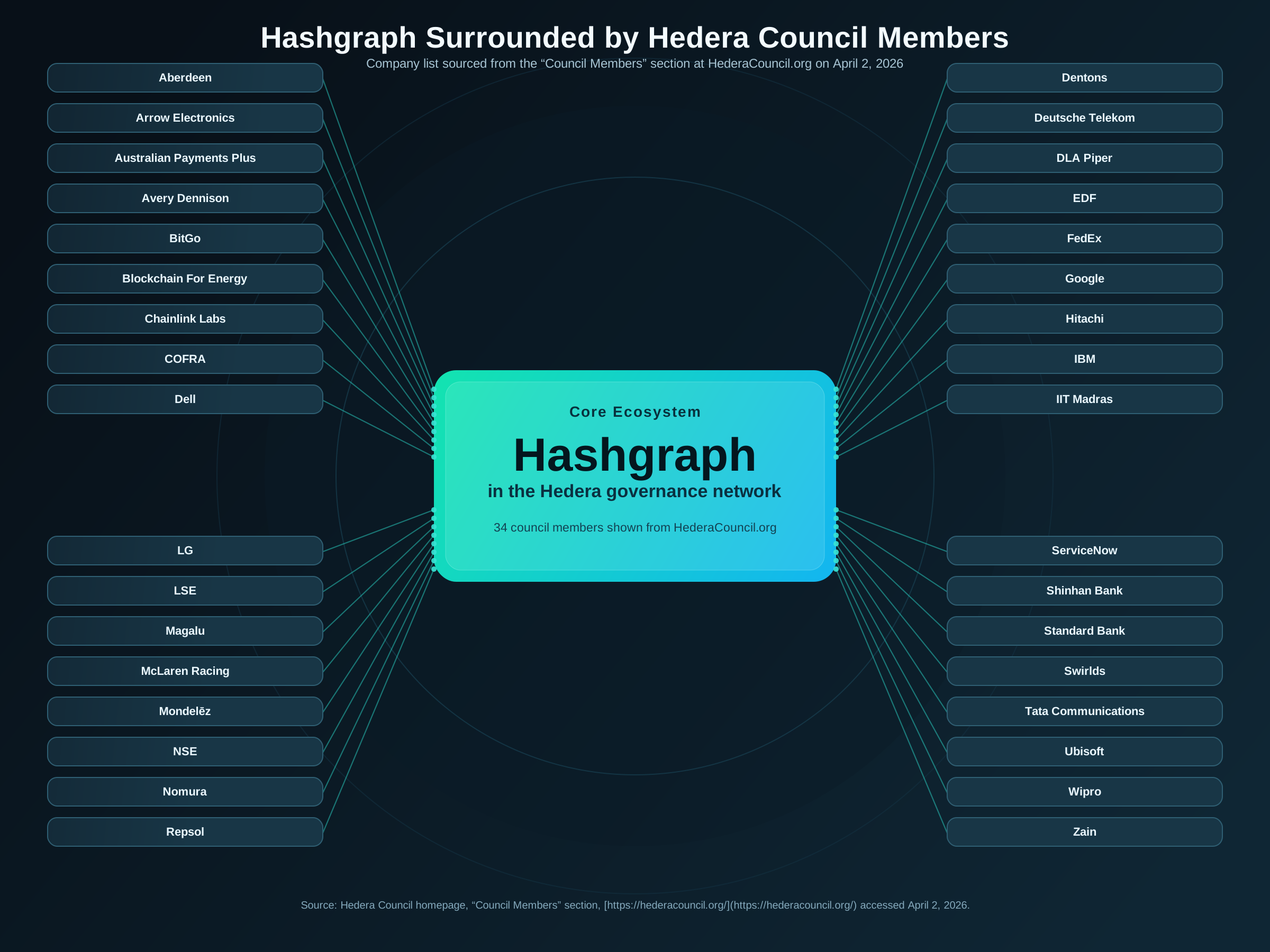
Pitching blockchain to Google, IBM, and other major corporations
Piscini said credibility was one of the main reasons major businesses were willing to engage.
When companies first started exploring crypto, many did not know where to begin. Hashgraph's approach, he said, was to offer a place where executives could talk to peers already working on blockchain rather than dive straight into the more chaotic corners of the industry.
That helped build momentum. Once recognizable firms like Google joined, others became more comfortable exploring the technology.
Piscini also said businesses have believed that blockchain had real value, but often did not know how to capture it. That created an opening for firms promising not just technology, but implementation support and a more enterprise-ready platform.
Hadera's unique node structure
That thesis lines up with Hedera's public structure.
The network says it is governed by known institutions through the Hedera Council, and official documentation says mainnet consensus nodes are permissioned and operated by council members.
For regulated businesses, that can be easier to underwrite than a system run by anonymous validators.
Why permissioned systems still appeal
Piscini made the compliance case most directly when discussing why Hashgraph did not open node operation to everyone.
"The first one you mentioned, credibility," he said. "The second one is compliance."
His example was simple: on a permissionless blockchain, transaction fees can go to validators whose identity and location may not be obvious. In regulated financial markets, he argued, that can create legal and sanctions risk.
More news
- Think tank sends brutal warning for crypto as it faces ‘hell’ without CLARITY
- Ripple CEO predicts new timeline for historic crypto legislation
- Coinbase stock dips after Barclays holds low price target
"That node can be run by North Korea," Piscini said. "So now suddenly you are paying a fee to North Korea. That's a criminal activity."
That argument gets at a growing divide in crypto infrastructure. Public blockchains still dominate mindshare, but enterprise buyers often care less about ideological openness than about governance, accountability and whether compliance teams can get comfortable with the system.
Hashgraph has been pushing further into that market. In 2025, the company introduced HashSphere, a private permissioned network built with Hedera technology for regulated enterprises seeking more control and privacy.
If Piscini is right, the next phase of crypto adoption will not look like another token boom. It will look more like blockchain slipping into the back end of business systems, where reliability and compliance matter more than hype.
