



 3
3
Even though Bitcoin itself is still stuck around $64,000, funding rates for the cryptocurrency have risen to their highest level in about 20 months, indicating a significant shift in derivatives positioning.
Traders are deleveraging
The action implies that traders are willing to pay more to keep leveraged long positions. Periodic payments between long and short perpetual futures traders are known as funding rates. Longs typically pay shorts when funding is positive, indicating that demand for bullish leveraged exposure is higher than demand on the other side. Therefore, the most recent increase indicates very positive sentiment regarding derivatives.
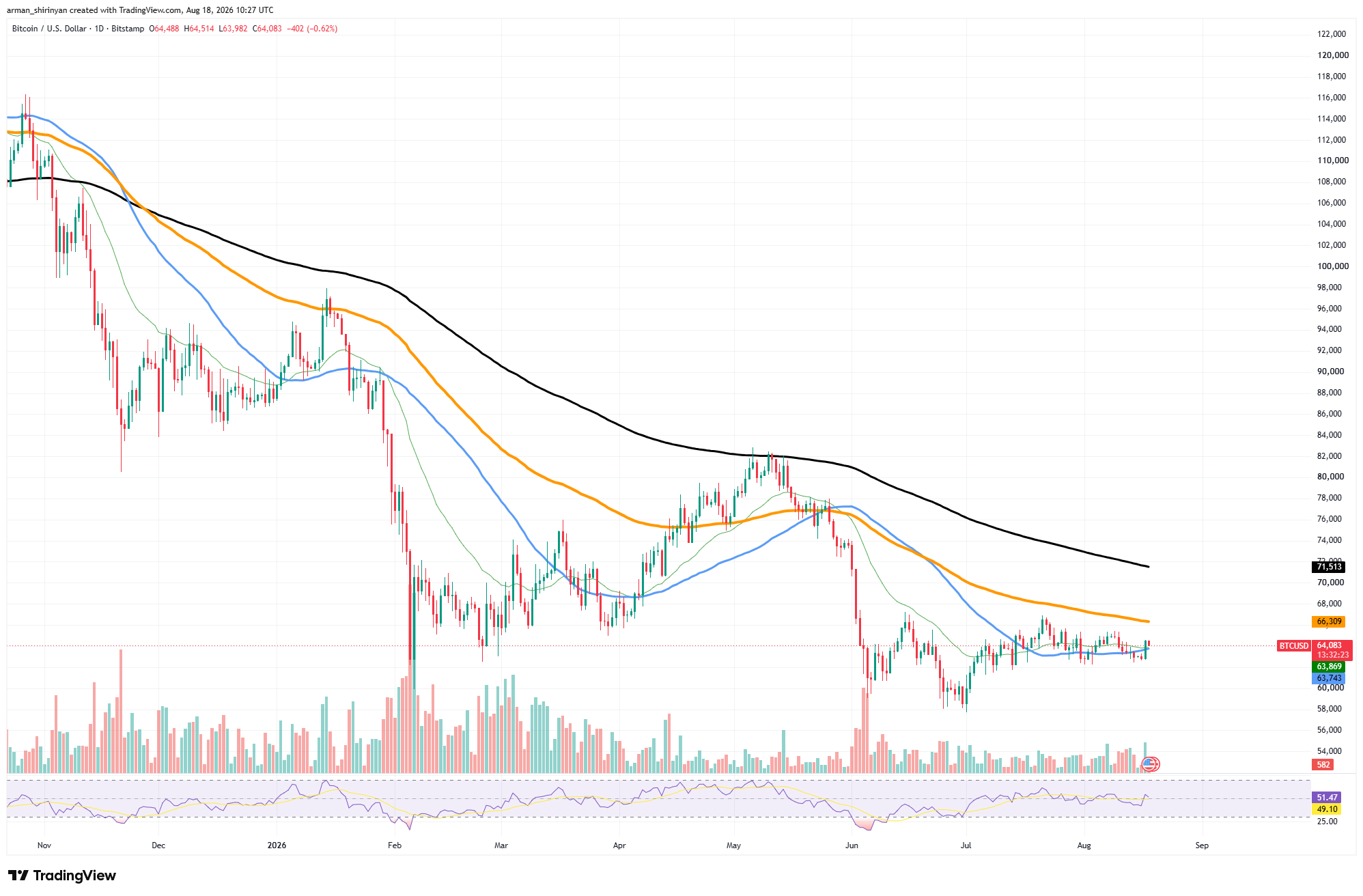
The majority of traders are taking long positions, as evidenced by the positive sentiment of the derivatives market within the current $BTC price range. After the June sell-off, Bitcoin has spent weeks consolidating and is currently trading at about $64,100.
Although Bitcoin made a comeback from the sub-$60,000 range, it has not been able to create a strong breakout. The price is still below significant resistance around $66,300 and near its short-term moving averages between $63,700 and $63,900. One of the reasons traders are increasing their long exposure seems to be this stabilization.
Bitcoin's key defense level
The $60,000–$62,000 range was consistently defended by Bitcoin, lowering initial expectations of another significant collapse. Additionally, the RSI has risen above 50 and is now close to 52, showing a slight improvement in momentum without approaching overbought conditions.
But there is a risk associated with the funding spike. High positive funding indicates that long positioning is becoming more and more concentrated. As long as bullish traders maintain control, this positioning may strengthen upward momentum if Bitcoin breaks above $66,000.
However, highly leveraged longs may become susceptible to liquidations if Bitcoin unexpectedly loses its current support structure, hastening downside volatility. The optimism seen in derivatives has not yet been validated by the price chart.
Bitcoin is still significantly below the longer-term average, which is around $71,500, and below the intermediate moving average, which is around $66,300. These continue to be significant obstacles before the general trend can turn bullish. As of right now, the 20-month funding high indicates that traders are placing heavy bets on Bitcoin maintaining its recent uptick.

 en.bitcoinsistemi.com
 en.cryptonomist.ch
 thenewscrypto.com
